 Save to Pinterest
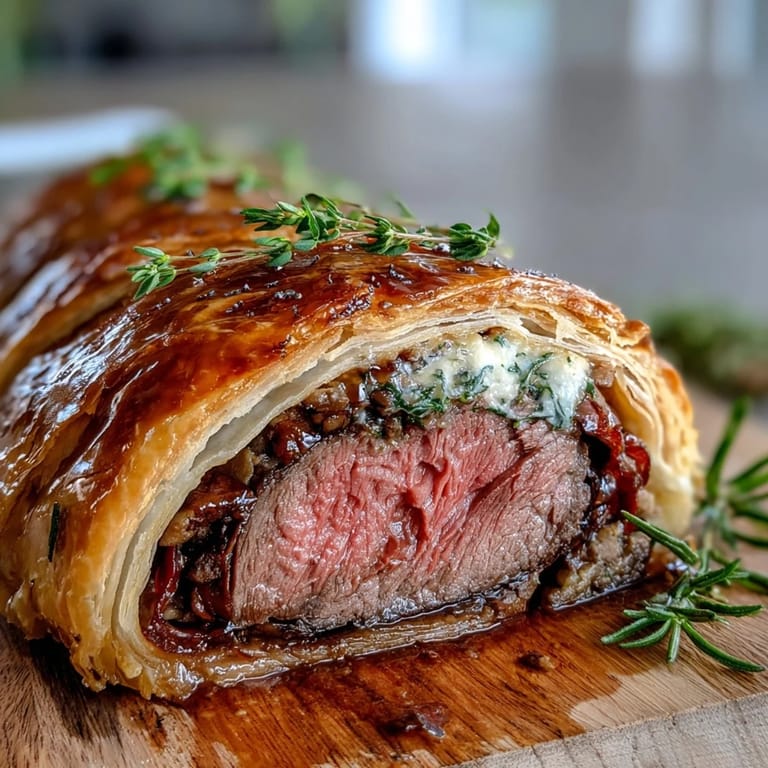
 The kitchen was too warm, my hands were shaking slightly, and I had just committed to making Beef Wellington for eight people who expected me to know what I was doing. I didn't, not really. But there's something about wrapping a perfectly seared piece of beef in mushrooms and pastry that feels like edible architecture, and I was determined to pull it off. The smell of thyme hitting hot butter is what steadied me that night, and by the time the golden pastry came out of the oven, I understood why this dish has survived decades of dinner parties. It's not just impressive, it's strangely forgiving once you stop overthinking it.
I made this for my sister's birthday once, and she cried a little when I sliced into it, which I'm choosing to believe was about the food and not the pressure of the occasion. The prosciutto had crisped just enough against the beef, and the pastry shattered under the knife in that satisfying way that means you didn't overbake it. We ate in near silence for the first few minutes, which is the highest compliment a cook can get. Later, she admitted she'd been secretly worried I'd serve her something microwaved, so the bar was low, but still.
Ingredients
- Beef tenderloin: The star of the show, and worth spending a bit more on since there's nowhere to hide with a cut this simple, trim it well so the pastry fits snugly.
- Cremini mushrooms: They have more flavor than white buttons and enough moisture to cook down into that paste-like duxelles, chop them finely or they won't meld together.
- Shallots and garlic: These add a sweet, mellow depth to the mushrooms without overpowering the beef.
- Fresh thyme: A little goes a long way, and it makes the whole kitchen smell like a French countryside you've never actually visited.
- Prosciutto: This creates a moisture barrier and adds salty, savory richness, lay it out with patience because gaps will haunt you later.
- Dijon mustard: Brushing this on the beef before wrapping adds a subtle tang that cuts through the richness.
- Puff pastry: Use store bought and feel no shame, just make sure it's fully thawed so it rolls without cracking.
- Egg wash: This is what gives you that glossy, bakery-window finish, don't skip it even if you're tired.
Tired of Takeout? 🥡
Get 10 meals you can make faster than delivery arrives. Seriously.
One email. No spam. Unsubscribe anytime.
Instructions
- Sear the beef:
- Season it generously, then sear fast over high heat until every side is deeply browned, this locks in flavor and gives you a head start on cooking. Let it cool completely or the pastry will turn soggy and you'll be sad.
- Make the duxelles:
- Cook the mushrooms low and slow until all the liquid evaporates and you're left with a thick, spreadable paste that smells like the forest floor in the best way. Taste it and adjust the seasoning, this layer matters more than you think.
- Lay out the prosciutto:
- Overlap the slices on plastic wrap to form a rectangle big enough to wrap the beef completely. Spread the cooled duxelles evenly over the prosciutto, leaving a small border.
- Wrap the beef:
- Brush the cooled beef with Dijon mustard, then use the plastic wrap to roll the prosciutto and mushrooms tightly around it into a log. Twist the ends, chill it for 20 minutes so everything sets.
- Encase in pastry:
- Roll the puff pastry into a rectangle on a floured surface, place the unwrapped beef in the center, then fold the pastry over and seal the edges. Flip it seam-side down onto a lined baking sheet.
- Egg wash and bake:
- Brush the pastry all over with beaten egg, chill for 10 minutes, then bake at 425°F until golden and the internal temp hits 120°F for rare or 130°F for medium-rare. Let it rest before slicing or all the juices will run out onto the cutting board.
 Save to Pinterest
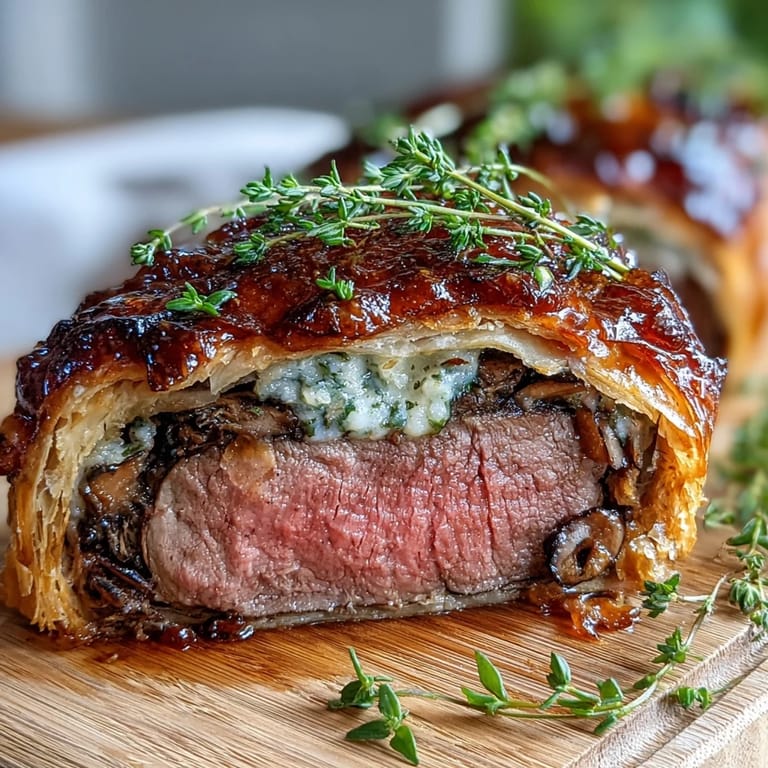
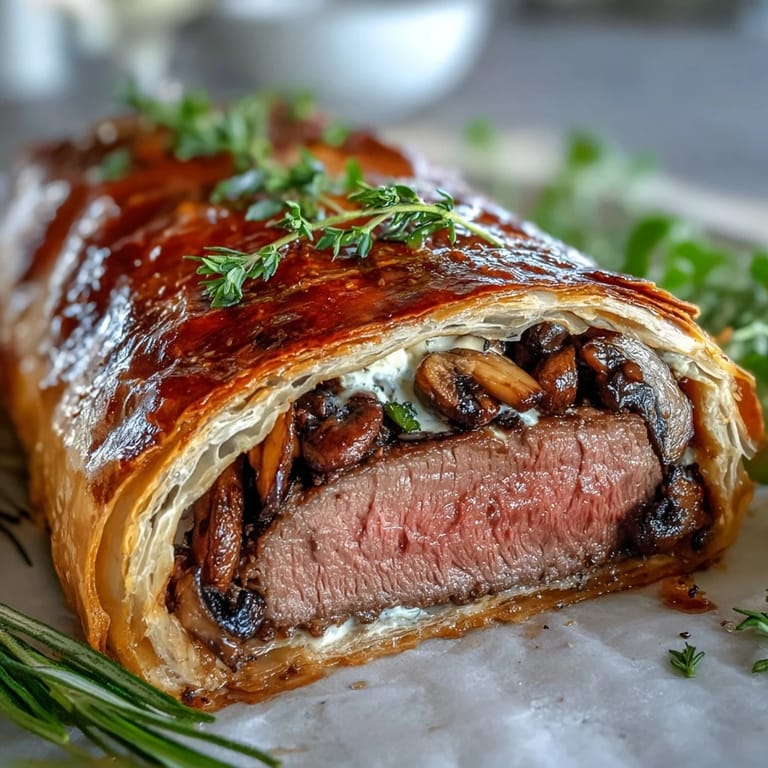
 The first time I sliced into a Wellington I'd made myself, I felt like I'd unlocked a secret level in cooking. It wasn't perfect, one end was more done than the other, but the layers were there, distinct and beautiful, and my guests took photos before they ate. Food doesn't have to be flawless to be memorable, it just has to be made with enough care that people can taste the effort.
Getting the Temperature Right
Beef Wellington lives and dies by internal temperature, and there's no shame in checking it obsessively. Pull it out when the thermometer reads 120°F if you like it rare, 130°F for medium-rare, because it will keep cooking as it rests. I learned this the hard way after serving a Wellington that was more medium-well than I'd planned, still delicious, but not the ruby-red center I'd been picturing. Now I set a timer, check early, and trust the thermometer more than my intuition.
Make-Ahead Magic
You can assemble the whole thing up to the point of baking, wrap it tightly, and refrigerate it for up to 24 hours, which means you can do the stressful part the day before and just bake it off when guests arrive. I've also frozen the wrapped, unbaked Wellington and baked it straight from frozen, adding about 10 minutes to the cooking time and checking the temp carefully. It's a lifesaver when you want to look effortlessly elegant but you're actually just very prepared and slightly anxious.
Serving and Pairing
This belongs on a big wooden board, sliced thick, with a simple red wine sauce or even just the pan drippings whisked with a bit of stock. Roasted vegetables, creamy mashed potatoes, or a bright green salad all work beautifully alongside it. I like to serve it with something acidic, a little arugula salad with lemon, because the richness of the beef and pastry needs a counterpoint.
- Let guests admire the whole Wellington before slicing, it's a showpiece and you earned the moment.
- A bold red wine, like Cabernet or Merlot, is the classic pairing and it really does make sense here.
- If you have leftover pastry scraps, cut out shapes and stick them on top before baking for a bakery-level finish.
 Save to Pinterest
 Beef Wellington isn't everyday food, but that's exactly why it matters. It's the dish you make when you want to prove something to yourself or show someone they're worth the effort, and it delivers every time.
Recipe Questions & Answers
- → Can I prepare Beef Wellington ahead of time?
Yes, you can assemble it completely up to 24 hours in advance. Wrap tightly in plastic wrap and refrigerate. Apply egg wash just before baking and add 5-10 minutes to the cooking time if baking from cold.
- → What's the best cut of beef to use?
Beef tenderloin (filet mignon) is ideal for its tenderness and uniform shape. Choose a center-cut piece for even cooking. Trim away any silver skin and fat before searing.
- → How do I prevent a soggy bottom on the pastry?
Ensure the mushroom duxelles is completely dry—cook until all moisture evaporates. Also, make sure the beef is completely cooled before wrapping, and chill the wrapped Wellington before baking to firm up the layers.
- → What internal temperature should I aim for?
For medium-rare, target 130°F (54°C) in the center. Remember the beef will continue cooking while resting. Use an instant-read thermometer inserted through the pastry into the thickest part of the meat.
- → Can I use a different type of mushroom?
Absolutely. Cremini, button, or a mix with shiitake or porcini work beautifully. The key is chopping them finely and cooking until completely dry to concentrate the flavor.
- → What should I serve alongside Beef Wellington?
Classic pairings include roasted asparagus, green beans, fondant potatoes, or creamy mashed potatoes. A rich red wine sauce or béarnaise complements the beef perfectly.