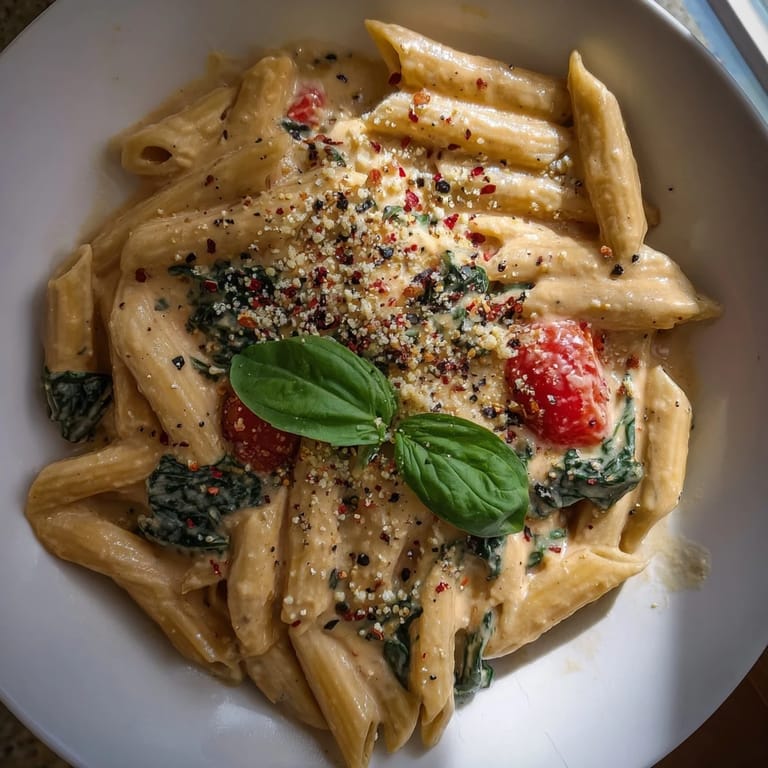
 Save to Pinterest
 I discovered this pasta almost by accident one Tuesday night when I opened the fridge to find a tub of cottage cheese staring back at me—not quite expired, but not getting any fresher. Rather than toss it, I wondered what would happen if I blended it into something creamy. The result was so silky and protein-packed that it's become my go-to when I need dinner on the table in under thirty minutes without feeling like I'm sacrificing nutrition.
My neighbor mentioned offhand that she always felt guilty about heavy cream-based pastas, and I made her a bowl of this one afternoon. She came back three days later asking for the recipe because her teenage son—the one who usually picks at dinner—asked for seconds. That's when I realized this dish had something special: it tasted like comfort food but didn't leave you feeling sluggish afterward.
Ingredients
- Pasta (12 oz): Whole wheat holds up beautifully to the sauce without getting mushy, but regular pasta works just fine if that's what you have on hand.
- Low-fat cottage cheese (1½ cups): This is the star—blending it smooth removes the lumpy texture that people fear, creating something closer to ricotta.
- Milk (½ cup): Dairy or unsweetened plant-based both work; it just loosens the sauce to the right consistency.
- Parmesan cheese (¼ cup grated): This adds sharpness and keeps the sauce from tasting one-dimensional.
- Garlic (2 cloves): Raw garlic mellows once blended, becoming sweet and aromatic rather than harsh.
- Extra-virgin olive oil (2 tbsp): Don't skip this; it adds a silky mouthfeel that balances the protein.
- Salt and black pepper: Taste as you go—cottage cheese can be bland, so seasoning generously matters here.
- Red pepper flakes (optional pinch): A tiny amount adds intrigue without making it spicy.
- Baby spinach and cherry tomatoes (optional): These wilt right in at the end, adding color and nutrition without extra work.
Tired of Takeout? 🥡
Get 10 meals you can make faster than delivery arrives. Seriously.
One email. No spam. Unsubscribe anytime.
Instructions
- Get the pasta started:
- Fill your pot generously with salted water—it should taste like the sea. Bring it to a rolling boil before adding pasta, and set a timer so you don't forget about it.
- Build your sauce:
- While the water heats, dump cottage cheese, milk, Parmesan, garlic, oil, salt, and pepper into a blender. Blend until it's completely smooth with no little white flecks visible; this takes about a minute of patient blending.
- Combine everything:
- Drain the pasta (remember to save that starchy water—it's your secret weapon for silky sauce) and return it to the warm pot. Pour in the sauce and toss gently, adding reserved pasta water one splash at a time until it flows like loose cream.
- Finish with vegetables:
- Stir in spinach and tomatoes if you're using them, and let everything cook for just a minute or two until the spinach turns dark green and silky. This quick cook keeps the vegetables from becoming mushy.
- Plate and serve:
- Divide into bowls immediately and tear fresh basil over top, finishing with a few more shakes of Parmesan while it's still steaming hot.
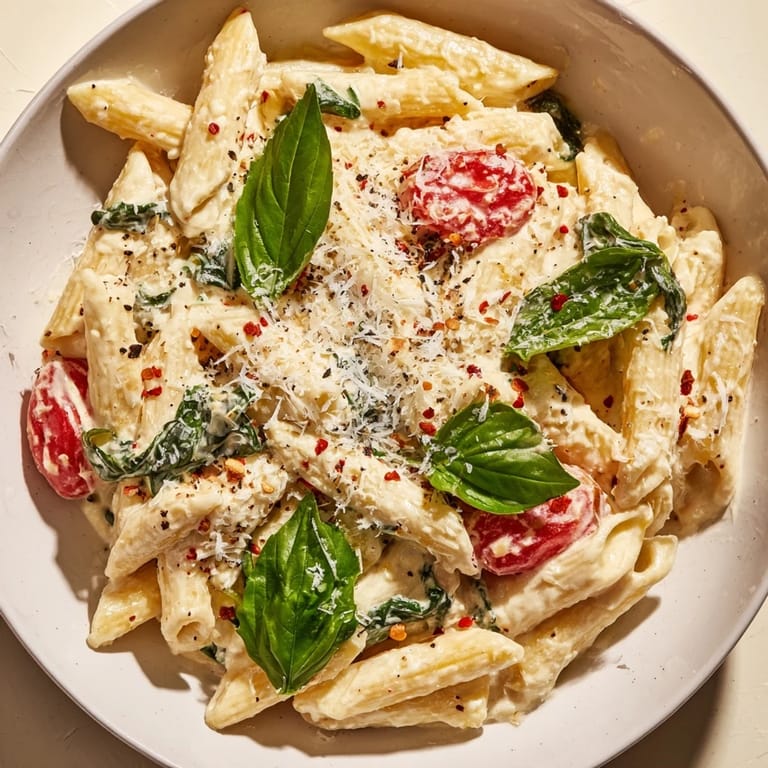 Save to Pinterest
 My sister, who grew up with me but somehow became the health-conscious one, sat down to this expecting to tolerate it. Instead, she got quiet the way people do when food surprises them. That silence told me everything—this wasn't a compromise meal or something you eat because you should. It was the kind of dish people actually want to come home to.
Why This Sauce Changed Everything for Me
For years I thought creamy pasta had to come from butter and cream, both of which left me feeling overstuffed. Discovering that cottage cheese could do the same job with half the heaviness felt like unlocking a cheat code. Once you realize how much protein is hiding in that humble tub, it stops being a last-resort ingredient and becomes something you buy intentionally.
Customizing Without Losing the Plot
The beauty of this recipe is how fearlessly it accepts additions. Add rotisserie chicken for extra protein, swap spinach for whatever green you have wilting in the crisper drawer, or throw in sun-dried tomatoes instead of fresh ones. I've even made it with roasted zucchini in the summer when I had too much of it, and it was just as good as the original.
Making This Weeknight After Weeknight
What started as a way to use up cottage cheese has become the pasta I make when I'm tired but don't want to order takeout. It's genuinely faster than delivery, cheaper than eating out, and tastes better than most cream sauces I've tried. The fact that you can tell people it's high-protein without sounding preachy is just a bonus.
- Double the sauce if you like it extra creamy—you can always thin it with more pasta water.
- Keep fresh basil on hand in the summer and frozen in winter; it's the finishing touch that makes this feel restaurant-worthy.
- This reheats perfectly if you make extra, though it may need a splash of water to loosen the sauce again.
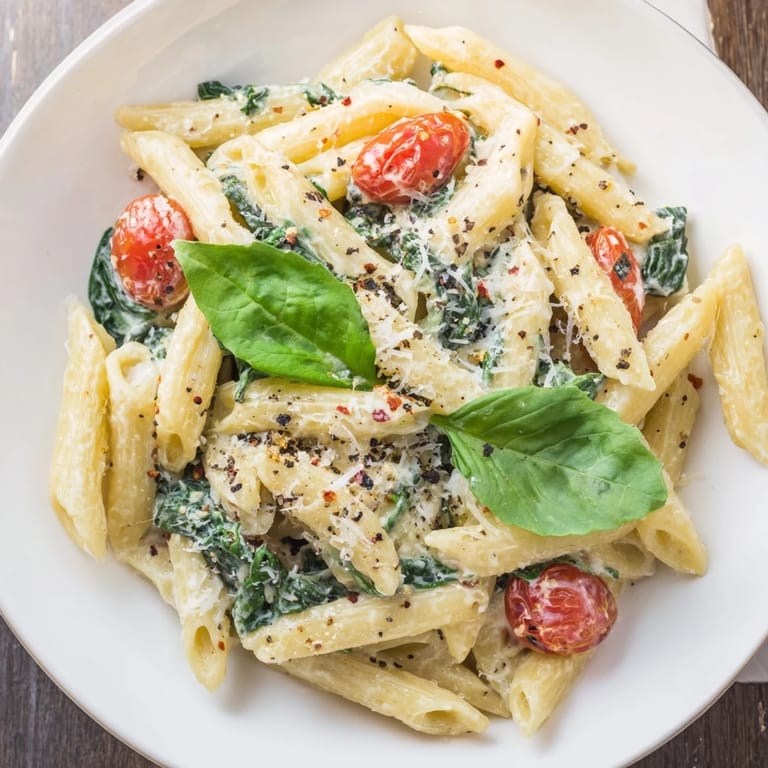 Save to Pinterest
 This is the kind of recipe that quietly becomes part of your regular rotation, the one you make without consulting a recipe card because you've memorized it. That's exactly when you know it's been a real discovery.
Recipe Questions & Answers
- → What type of pasta works best with the creamy sauce?
Whole wheat or regular pasta shapes like penne or fusilli hold the sauce well and provide a hearty texture.
- → Can I use plant-based milk in the sauce?
Yes, unsweetened plant-based milk works perfectly for blending with cottage cheese to maintain creaminess.
- → How do I adjust the sauce consistency?
Reserve some pasta cooking water and add it gradually to the blended sauce while mixing until desired creaminess is achieved.
- → Are there optional vegetables that complement this dish?
Baby spinach and cherry tomatoes add freshness and color, but you can substitute with arugula, kale, or peas as desired.
- → Can additional protein be added?
Cooked chicken breast or sautéed tofu cubes can be mixed in to boost protein content without changing the dish’s balance.