 Save to Pinterest
 My neighbor's kitchen window was open one evening last spring, and the smell of caramelized garlic and honey drifted straight into my backyard. I knocked on her door with a bottle of wine and left an hour later with this recipe scribbled on a grocery receipt. The glaze bubbled and clung to the chicken in a way that made me forget every bland dinner I'd ever served. It's been my weeknight rescue ever since.
I made this for my brother's birthday last year when he asked for something other than cake. He ate three thighs standing at the counter before I could plate anything else. My sister-in-law asked for the recipe twice in the same evening. Now it's what I bring to potlucks when I want people to stop talking and start eating.
Ingredients
- Bone-in, skin-on chicken thighs: These stay tender and flavorful during roasting, and the skin crisps up beautifully under the glaze.
- Salt and black pepper: Simple seasoning lets the glaze shine without competing for attention.
- Honey: It caramelizes in the oven and balances the salty soy with a sticky sweetness that coats every bite.
- Soy sauce: Low sodium works best so the glaze doesn't overpower, and you can always add more salt if needed.
- Garlic, minced: Fresh cloves bloom in the hot oil and perfume the entire dish with that unmistakable roasted garlic aroma.
- Rice vinegar or apple cider vinegar: A splash of acid cuts through the richness and keeps the glaze from tasting one-note.
- Water: Thins the glaze just enough so it doesn't burn before the chicken finishes cooking.
- Olive oil: Helps sear the skin to a deep golden brown and carries the garlic flavor through the sauce.
- Crushed red pepper flakes: Optional, but a pinch adds a gentle heat that wakes up the sweetness.
- Fresh parsley or green onions: A bright, herby finish that makes the plate look as good as it tastes.
- Toasted sesame seeds: They add a nutty crunch and a little visual flair if you're feeling fancy.
Tired of Takeout? 🥡
Get 10 meals you can make faster than delivery arrives. Seriously.
One email. No spam. Unsubscribe anytime.
Instructions
- Preheat and Prep:
- Set your oven to 400°F and pat the chicken thighs completely dry with paper towels. Season both sides with salt and pepper, pressing the seasoning gently into the skin.
- Sear the Chicken:
- Heat olive oil in a large oven-safe skillet over medium-high heat until it shimmers. Lay the thighs skin side down and let them sizzle undisturbed for 3 to 4 minutes until the skin turns golden and crisp, then flip and cook another 2 minutes before removing them to a plate.
- Build the Glaze:
- In the same skillet, toss in the minced garlic and stir for about 30 seconds until it smells toasty and fragrant. Pour in the honey, soy sauce, vinegar, water, and red pepper flakes if using, then bring everything to a gentle simmer.
- Coat and Bake:
- Nestle the chicken thighs back into the skillet skin side up and spoon some glaze over each piece. Transfer the skillet to the oven and bake for 18 to 22 minutes, opening the oven halfway through to baste the chicken with more glaze.
- Rest and Garnish:
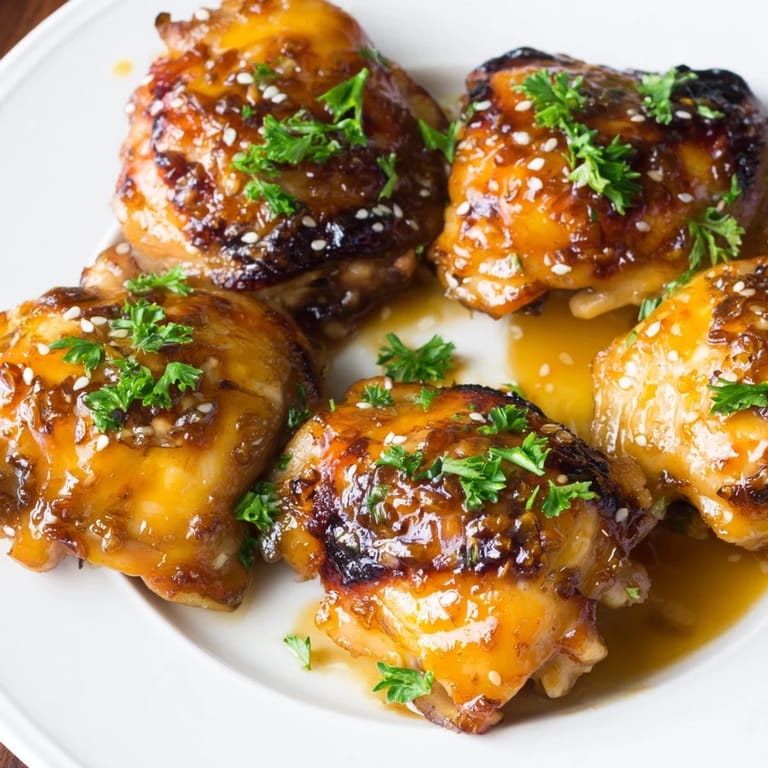
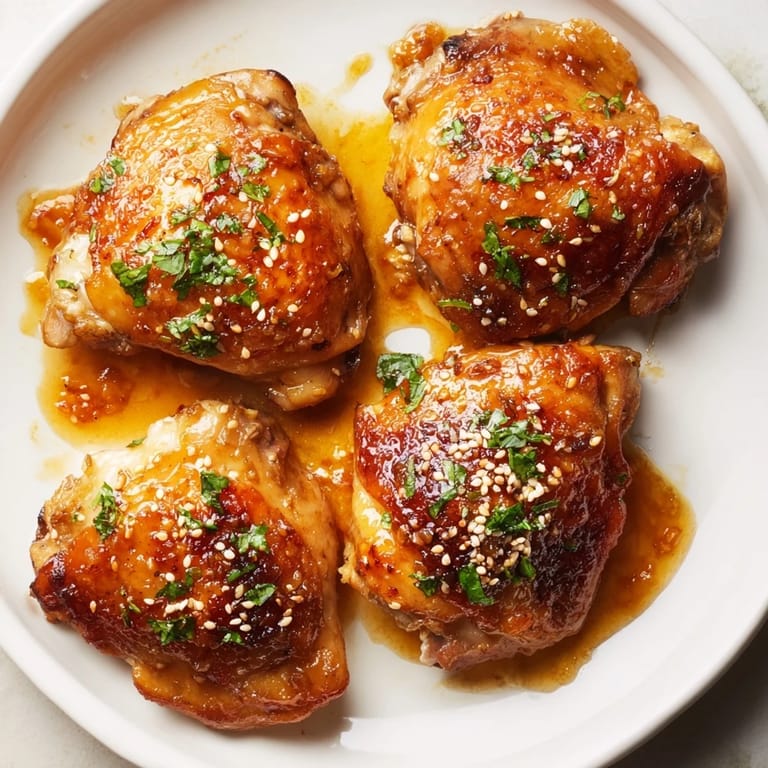
- Pull the skillet out when the chicken is cooked through and the skin looks glossy and caramelized. Let it rest for 5 minutes, then scatter parsley or green onions and sesame seeds over the top before serving.
 Save to Pinterest
 One winter night I served this with a pile of jasmine rice and roasted broccoli, and my partner looked up mid-bite and said it tasted like the kind of meal you remember years later. I realized then that some recipes aren't just about feeding people, they're about making ordinary evenings feel a little less ordinary.
Making It Your Own
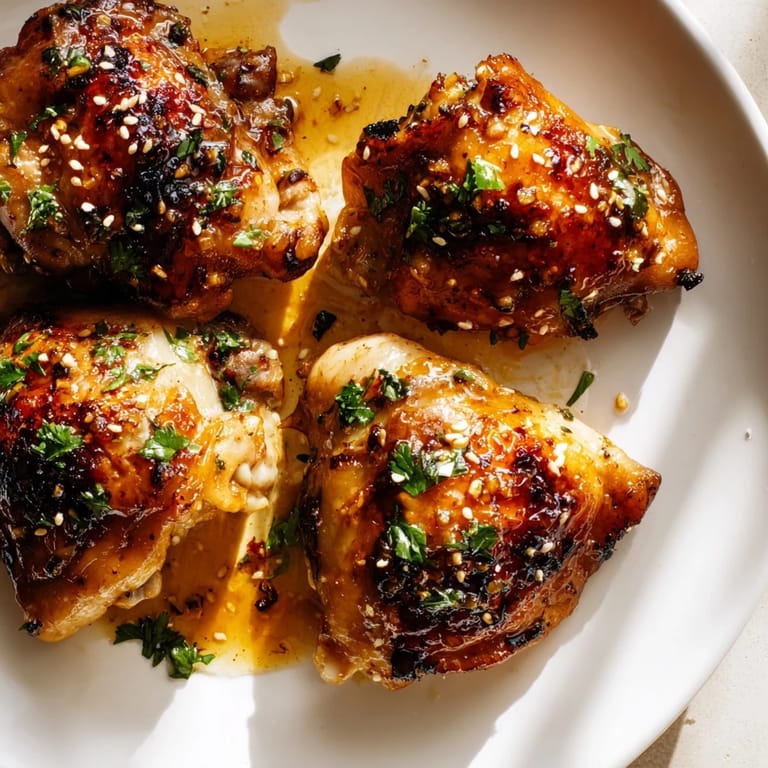
If you want extra-crispy skin, switch the oven to broil for the last 2 to 3 minutes and watch it closely so it caramelizes without burning. Boneless thighs or chicken breasts work too, just reduce the baking time by 5 to 7 minutes and check for doneness earlier. I've also swapped in tamari when cooking for gluten-free friends, and no one ever noticed the difference.
Serving Suggestions
This pairs beautifully with steamed jasmine or basmati rice to soak up every drop of glaze. I usually throw together a quick stir-fry of snap peas, bell peppers, and carrots in the same skillet after the chicken comes out. A simple cucumber salad with rice vinegar and sesame oil on the side adds a cool, crunchy contrast that balances the sticky sweetness.
Storage and Reheating
Leftovers keep in an airtight container in the fridge for up to three days. Reheat gently in a covered skillet over low heat with a splash of water to loosen the glaze, or warm in the oven at 325°F until heated through. The skin won't be as crispy the second time, but the flavor is still incredible.
- Freeze cooked chicken in the glaze for up to two months and thaw overnight in the fridge.
- Shred leftover chicken and toss it with noodles or salad greens for an easy next-day lunch.
- Drizzle any extra glaze over roasted vegetables or use it as a dipping sauce for spring rolls.
 Save to Pinterest
 This recipe has turned into one of those dishes I make without thinking, the kind that feels like a small triumph every time. I hope it brings the same easy joy to your table.
Recipe Questions & Answers
- → Can I use boneless chicken instead of bone-in thighs?
Yes, boneless thighs or breasts work well. Reduce the baking time by 5–7 minutes to prevent drying out. Boneless cuts cook faster, so check for doneness around 13–15 minutes.
- → How do I get extra-crispy skin?
After baking, broil the chicken for 2–3 minutes at the end. Watch carefully to prevent burning. This high heat crisps the skin while the meat stays tender inside.
- → What should I serve with this dish?
Steamed rice and stir-fried vegetables make ideal pairings. The glaze is flavorful enough to coat rice, and fresh vegetables balance the sweetness of the honey-garlic coating.
- → Is this gluten-free?
Regular soy sauce contains gluten. Use tamari or certified gluten-free soy sauce instead. Always check labels on all sauces and condiments to ensure they're gluten-free.
- → Can I prepare this ahead of time?
Season and refrigerate the chicken up to 24 hours ahead. Make the glaze separately and store it. Sear and bake when ready to serve for the best crispy skin and caramelization.
- → What if the glaze is too thick or too thin?
Add more water if the glaze reduces too quickly. If it's too thin after baking, simmer it separately on the stovetop until it reaches desired consistency, then drizzle over the chicken.