 Save to Pinterest
 There's something about whipped hummus that catches people off guard—the way it transforms from humble chickpeas into something almost cloud-like on the plate. I discovered this version while experimenting with roasting vegetables at the tail end of summer, when my kitchen smelled perpetually like charred peppers and I couldn't stop toasting nuts for every meal. The combination arrived almost by accident: I'd made hummus one evening, roasted vegetables the next, and suddenly they belonged together. Now whenever someone shows up at my door unexpectedly, this is what I reach for.
I remember serving this to a friend who swore they didn't like hummus, then watched them go back for thirds without realizing what they were eating. There's something about the charred edges of the vegetables and the nuttiness of the pine nuts that shifts the entire experience from healthy appetizer to something genuinely crave-worthy. That moment changed how I think about presentation—the swoosh of hummus matters as much as the ingredients themselves.
Ingredients
- Canned chickpeas: The shortcut here is intentional; they're already cooked and tender, which means your hummus stays silky instead of grainy, no matter how long you blend.
- Tahini: This sesame paste is the backbone of the creaminess, and cold is non-negotiable—warm tahini will seize up and ruin the texture.
- Fresh lemon juice: Bottled won't do the same job; the brightness needs to be sharp enough to cut through the richness.
- Extra-virgin olive oil: Use something you actually like tasting, because it will taste like itself here—this is no place for a harsh oil.
- Bell pepper, zucchini, red onion, and eggplant: The vegetables are forgiving about size, but cutting them into similar-sized pieces ensures they finish at the same time.
- Smoked paprika: This is what pulls the vegetables from simply roasted to unmistakably smoky and Mediterranean.
- Pine nuts: Expensive and worth it, but keep them moving in the pan—they go from golden to burnt in about thirty seconds.
- Sumac or zaatar: Optional only if you want the dish to be perfectly fine; include them if you want it to be unforgettable.
Tired of Takeout? 🥡
Get 10 meals you can make faster than delivery arrives. Seriously.
One email. No spam. Unsubscribe anytime.
Instructions
- Heat your oven and season the vegetables:
- Set the oven to 425°F and give it a few minutes to come to temperature. Toss your cut vegetables with olive oil, smoked paprika, salt, and pepper until every piece is coated—the seasoning needs to be on the vegetables themselves, not just pooling at the bottom of the pan.
- Roast until charred and tender:
- Spread everything on a baking sheet in a single layer and roast for 22 to 25 minutes, stirring once halfway through. You want them tender on the inside with dark, almost blackened edges—that's where the flavor lives.
- Build the hummus base:
- While vegetables roast, add chickpeas, tahini, lemon juice, minced garlic, olive oil, cumin, and sea salt to a food processor. Blend until completely smooth, then add cold water one tablespoon at a time while it runs, watching the texture transform from thick to airy.
- Toast the pine nuts:
- In a dry skillet over medium heat, stir pine nuts constantly for 2 to 3 minutes until they turn golden and smell toasted—they'll continue cooking for a moment after you remove them, so take them off the heat while they're still pale gold.
- Create your canvas:
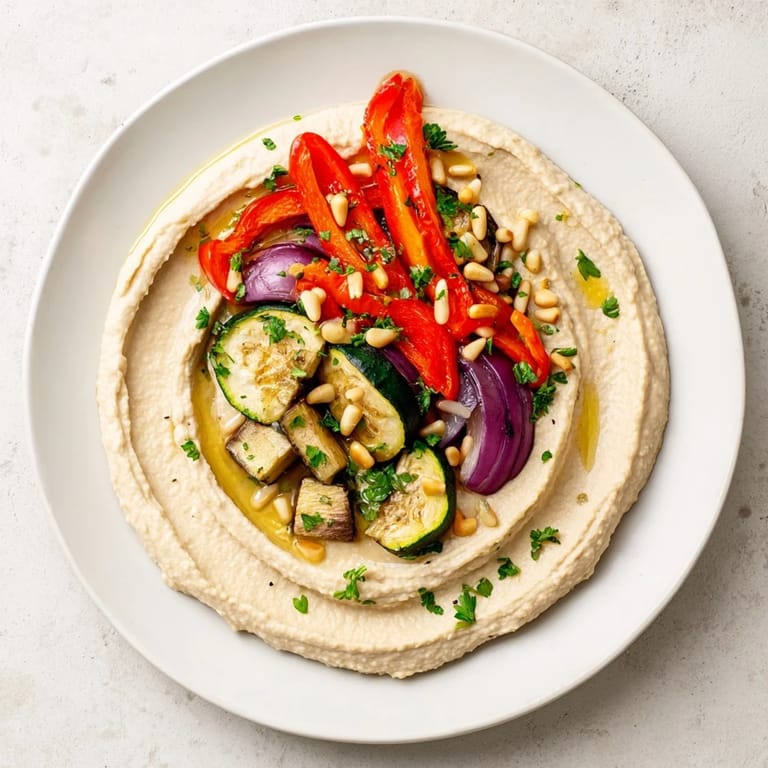
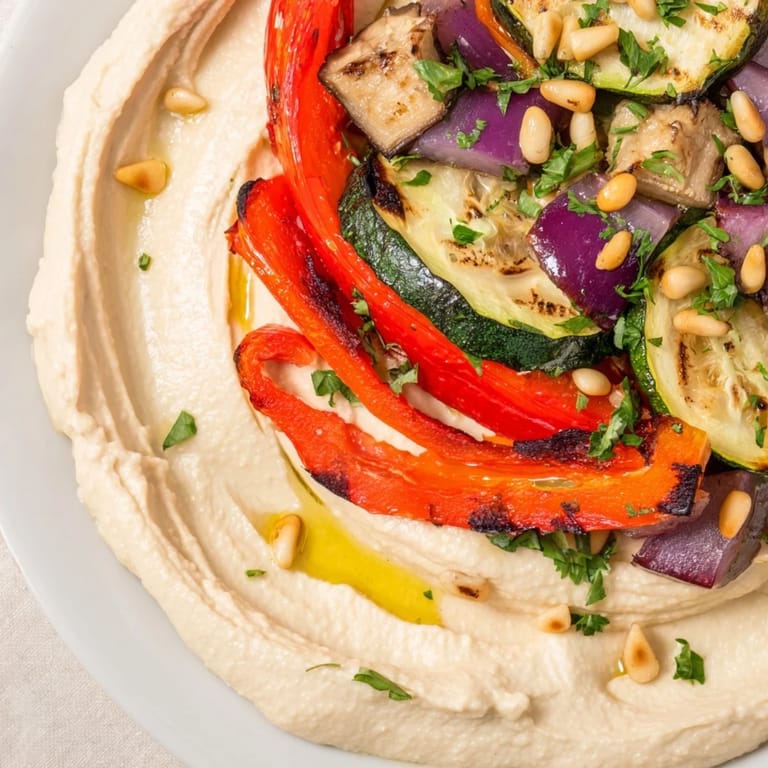
- Spread the hummus onto a serving platter or bowl, using the back of a spoon to create a swoosh or well in the center. The shape and presentation matter here because it's where the vegetables will nestle.
- Finish with drama:
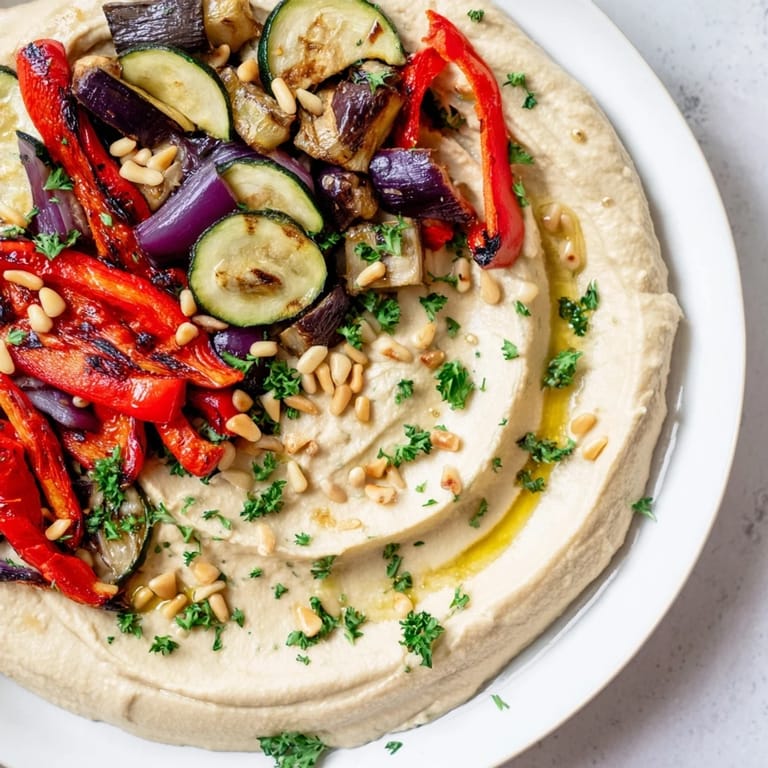
- Top the hummus with your warm roasted vegetables, then scatter toasted pine nuts and fresh parsley over everything. Sprinkle with sumac or zaatar if you have it, then drizzle generously with extra olive oil.
 Save to Pinterest
 There's a moment right after you plate this when everything is still warm, the hummus is still soft, and the vegetables are giving off a little bit of steam—that's when it tastes best. I've learned not to wait too long to serve it, because those vegetable edges are only that perfect combination of charred and warm for a window of about ten minutes.
Seasonal Vegetables and Endless Variations
Summer demands tomatoes and zucchini, fall brings squash and mushrooms, and winter is the time for roasted cauliflower and Brussels sprouts. I've made this recipe with whatever was on sale or already in the crisper drawer, and the results are always different but always worth eating. The ratio stays the same—about three cups of cut vegetables—but everything else shifts with the seasons and my mood.
Making It Your Own
Some versions get a whisper of harissa stirred into the hummus, others get a pinch of red pepper flakes scattered across the top. I've served it over greens as a salad, stuffed into warmed pita bread, spooned onto toasted bread as an appetizer, and piled onto a grain bowl with greens and feta. The formula works because the hummus is neutral enough to adapt, and the roasted vegetables are bold enough to anchor whatever direction you take it.
Serving and Sharing
This dish has a way of becoming the first thing to disappear from a table, whether it's a casual dinner with friends or a potluck where you weren't sure what to bring. Serve it warm or at room temperature, with warm pita bread, crispy toast, or raw vegetables on the side for dipping. I always make more hummus than I think I'll need, because someone always comes back for another spoonful, and there's something generous about having extra.
- The vegetables can be roasted up to four hours ahead and served at room temperature.
- Make the hummus earlier in the day and store it covered in the refrigerator; bring it to room temperature before serving for the creamiest texture.
- Toast the pine nuts right before assembly so they stay crispy and don't absorb moisture from the hummus.
 Save to Pinterest
 This is the kind of recipe that tastes like more work than it actually was, which makes it feel like a small gift to whoever's eating it. Build it once and you'll find yourself making it whenever you want to feel like you know what you're doing in the kitchen.
Recipe Questions & Answers
- → How do I get the perfect creamy consistency for the hummus base?
Blend chickpeas with tahini, lemon juice, garlic, olive oil, cumin, and sea salt, gradually adding cold water until smooth and whipped. Adjust seasoning to taste.
- → What vegetables work best for roasting in this dish?
A mix of bell pepper, zucchini, red onion, and eggplant provides great texture and smoky flavor. Seasonal substitutes like carrots or cauliflower can also be used.
- → How can I ensure the vegetables develop a nice char without burning?
Roast at a high temperature (around 425°F/220°C) for 22–25 minutes, stirring once midway to promote even cooking and charring without burning.
- → Why toast pine nuts before adding them as a topping?
Toasting pine nuts in a dry skillet brings out their natural nuttiness and adds a pleasant crunch as a finishing touch.
- → Can I prepare any components ahead of time?
The hummus base can be made in advance and refrigerated. Roasted vegetables are best prepared fresh but can be warmed gently before serving.
- → What are some optional flavor enhancers I can add?
Try sprinkling sumac or zaatar on top for a tangy or herbal note, or add a spoonful of harissa or chili flakes for some heat.