 Save to Pinterest
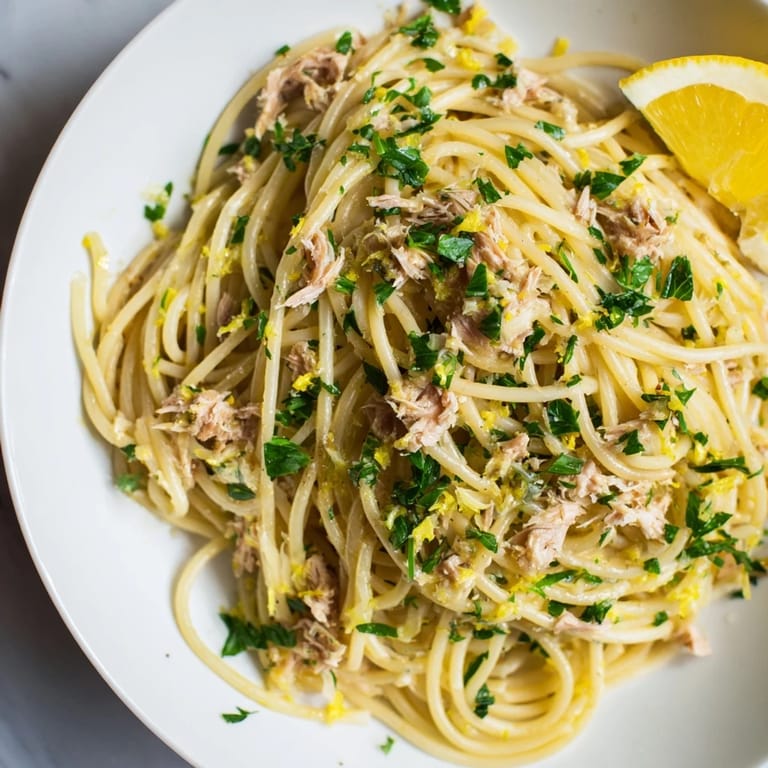
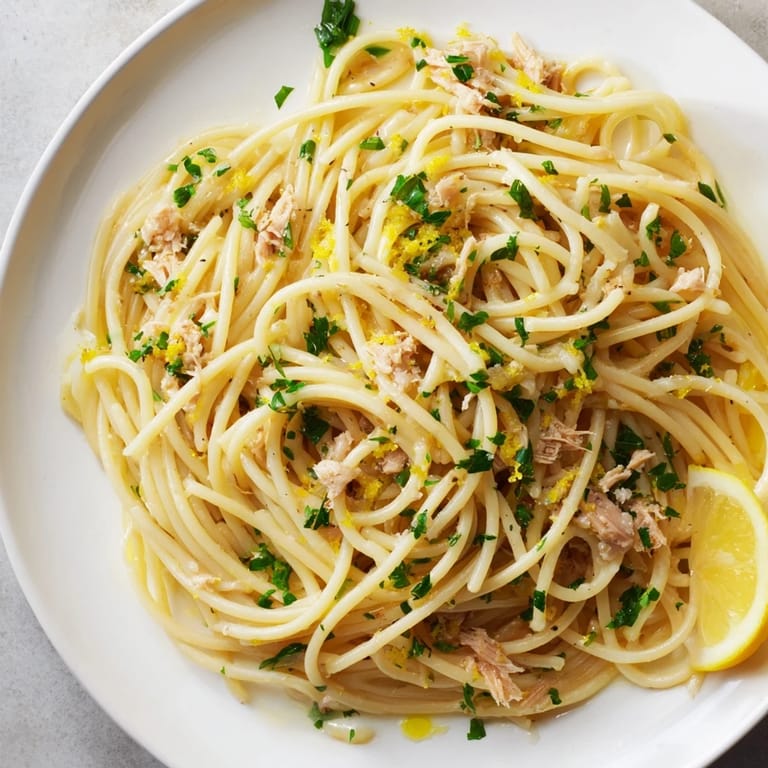
 There's something magical about the smell of garlic hitting hot olive oil that makes you feel like you're in a seaside Italian kitchen, even if you're just standing in front of your own stove on a random Tuesday. I discovered this lemon-garlic tuna spaghetti years ago when I was rushing to put dinner on the table with whatever was in my pantry—a can of tuna, half a lemon, and a sudden craving for something bright. The pasta came together in the time it took my roommate to set the table, and one bite proved that the best meals don't require hours of fussing. What started as pantry desperation became my go-to when I needed comfort without the complexity.
I made this for my friend who'd just moved into her first apartment, and she couldn't believe how simple it was—she thought anything with lemon and garlic had to be restaurant-level difficult. Watching her taste it, eyes lighting up like she'd just unlocked some secret kitchen knowledge, reminded me that the best recipes are the ones that make people feel capable, not intimidated.
Ingredients
- Spaghetti: 400 g (14 oz) dried pasta that holds up to tossing without falling apart; I've learned al dente is non-negotiable here.
- Olive oil: 2 tbsp of good quality, fruity if you have it—this is doing most of the heavy lifting flavor-wise.
- Garlic cloves: 3 cloves, sliced thin so they cook evenly and release their sweetness without turning bitter.
- Lemon: 1 whole fruit, zested and juiced fresh—bottled juice tastes nothing like the real thing in this dish.
- Canned tuna in olive oil: 2 × 160 g (5.6 oz) cans, drained gently because that oil is liquid gold for flavor, and flaked by hand, not pulverized.
- Red pepper flakes: 1/2 tsp optional, but they add a whisper of heat that wakes everything up.
- Fresh flat-leaf parsley: 1/4 cup chopped, added at the end so it stays bright and herbaceous.
- Pasta cooking water: 1/4 cup reserved—this starchy water is your secret weapon for binding the sauce.
- Salt and black pepper: To taste, because proper seasoning changes everything.
- For serving: Extra parsley and lemon wedges to let people adjust brightness to their preference.
Tired of Takeout? 🥡
Get 10 meals you can make faster than delivery arrives. Seriously.
One email. No spam. Unsubscribe anytime.
Instructions
- Get the pasta going:
- Bring a large pot of salted water to a rolling boil—it should taste like the sea. Cook your spaghetti according to the package timing until it's just tender enough to bite through without resistance, then fish out about 1/4 cup of that starchy cooking water into a small bowl before you drain everything. That cloudy water is going to become your sauce's best friend.
- Coax the garlic to life:
- While the pasta cooks, warm your olive oil in a large skillet over medium heat until it's shimmering but not smoking. Add your thinly sliced garlic and listen for that gentle sizzle—this is the moment where everything smells so good you'll want to eat the pan. Cook it for just 1 to 2 minutes, stirring every few seconds so it turns golden and fragrant but never bitter.
- Introduce the tuna:
- Drain your canned tuna, but do it gently—you're not wringing out a dishcloth. Add it to the pan with the garlic and break it up with the back of your spoon into tender flakes, not a fine paste. This is where you add your lemon zest and squeeze in that fresh juice, and if you're using red pepper flakes, now's the time.
- Bring it all together:
- Toss your drained spaghetti into the skillet with the tuna mixture and start tossing gently with tongs or two forks, like you're being kind to it. Pour in your reserved pasta water a splash at a time, tossing between additions, until you can see a light sauce clinging to every strand instead of everything sitting dry in the pan.
- Finish with green:
- Stir in your chopped fresh parsley until it's distributed throughout, then taste and adjust salt and pepper. Some days you'll need more of both, some days less—trust your palate.
- Serve while warm:
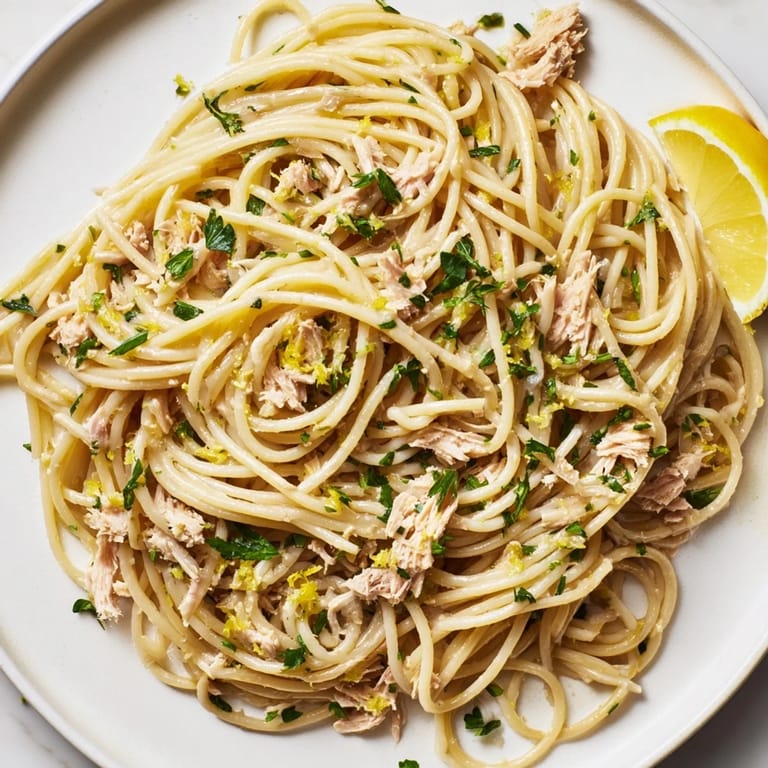
- Divide among plates, shower with extra parsley if you're feeling generous, and set out lemon wedges so people can squeeze more brightness over their bowl.
 Save to Pinterest
 There was an afternoon when my partner came home mid-afternoon for lunch, and I made this for him on impulse—nothing special, just what I could throw together. He sat at the counter with his fork, and the way he ate it quietly, without rushing, made me realize that sometimes the most memorable meals are the ones made with no occasion at all, just because it felt like the right thing to cook in that moment.
Why This Dish Works in Real Life
The beauty of lemon-garlic tuna spaghetti is that it doesn't pretend to be something it's not—it's a straightforward, honest meal that relies on ingredient quality rather than complicated technique. The Mediterranean flavors are light enough for a summer dinner but substantial enough to feel like real food when you're exhausted. Once you make it a couple of times, your hands remember the motion of tossing it, and it becomes something you can make without thinking, which somehow makes it taste even better.
Elevating Your Leftovers
If you somehow have leftovers—though I rarely do—warm them very gently in a skillet with a splash more olive oil and a squeeze of fresh lemon juice to revive the brightness. They won't taste exactly like the first night, but they're still good, still satisfying, still tasting nothing like reheated pasta usually does. I've eaten cold leftovers straight from the fridge for lunch too, and there's something refreshing about it in that form.
Making It Your Own
This recipe is a foundation, not a rulebook—once you've made it once or twice and it feels familiar, you can start riffing on it. Some cooks add capers for a salty brine note, some toss in halved cherry tomatoes for brightness and texture, some finish with a handful of fresh basil instead of parsley. The core—garlic, lemon, tuna, olive oil—is sacred, but everything around it is fair game for your mood and whatever's in your kitchen.
- Capers and halved cherry tomatoes turn this into something almost like a deconstructed salad—unexpected and delicious.
- A pinch of dried oregano or a small anchovy paste stirred into the garlic oil adds umami depth without announcing itself.
- Serving it at room temperature on a warm evening, with chilled white wine nearby, becomes an entirely different kind of dinner.
 Save to Pinterest
 This is the kind of recipe that teaches you something about cooking without trying to—that sometimes the simplest approach, built on good ingredients and no shortcuts, creates something that stays with you. I hope it becomes as much a part of your weeknight rotation as it is mine.
Recipe Questions & Answers
- → What type of tuna is best for this dish?
Use high-quality canned tuna packed in olive oil for the richest flavor and moist texture.
- → Can I substitute spaghetti with other pasta?
Yes, long pasta like linguine or fettuccine work well to hold the lemon and garlic sauce.
- → How do I prevent the garlic from burning?
Cook garlic on medium heat for 1-2 minutes until fragrant, stirring frequently to avoid browning.
- → What is a good way to add extra flavor to the sauce?
Adding capers or halved cherry tomatoes can boost the sauce’s richness and depth.
- → How can I adjust the spiciness of the dish?
Incorporate crushed red pepper flakes sparingly or omit them to control heat levels.