 Save to Pinterest
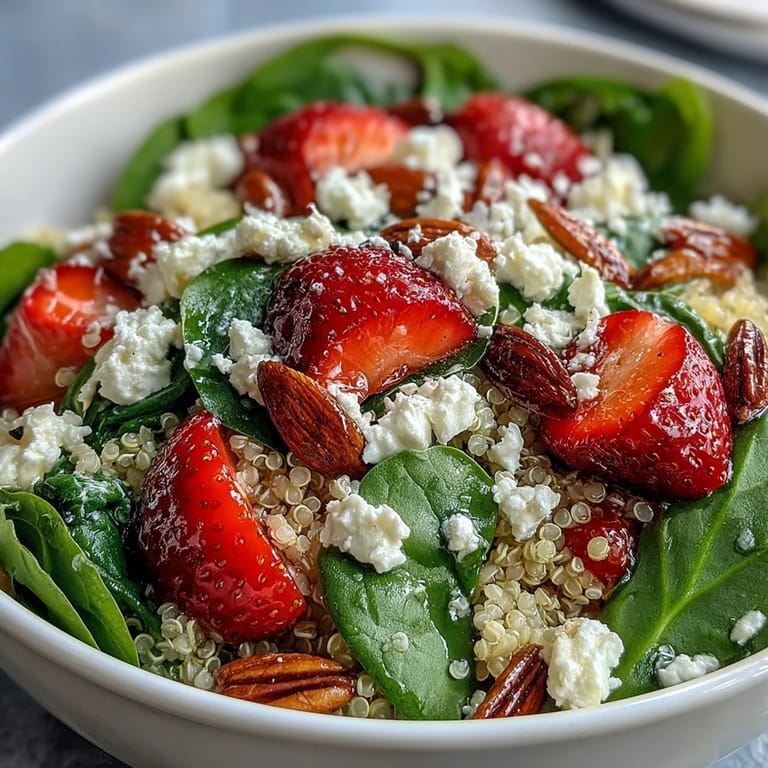
 There's something about assembling a strawberry feta salad that feels like you're creating edible jewelry. I discovered this combination on a Tuesday afternoon when my farmer's market haul included the most vibrant strawberries I'd seen all season, and I found myself standing in front of an open fridge wondering what could possibly do them justice. The answer arrived when I remembered a half-eaten container of crumbled feta and the leftover quinoa from meal prep, and suddenly everything clicked into place.
I made this for my neighbor last spring when she mentioned dreading another sad desk lunch, and watching her eyes light up when she tasted the first forkful reminded me that food doesn't need to be complicated to feel like a gift. She asked for the recipe that same afternoon, and now when I see her, she always tells me how much this salad has become part of her weekly rotation.
Ingredients
- Quinoa: This tiny grain becomes impossibly fluffy when cooked right, and it holds up beautifully against the acidic dressing without getting mushy or breaking apart.
- Fresh strawberries: Choose ones that smell sweet and feel slightly yielding; the quality of your fruit makes or breaks this salad since they're the star.
- Baby spinach: Raw spinach wilts slightly from the warm quinoa and the dressing, but it stays bright and doesn't turn bitter, which honestly surprised me the first time.
- Red onion: Sliced paper-thin, it adds a sharp bite that cuts through the richness of the feta without overwhelming the delicate strawberries.
- Cucumber: Adds a cool, hydrating crunch that keeps the salad feeling fresh and summery rather than heavy.
- Feta cheese: The creamy, salty counterpoint that makes every other ingredient taste more like itself; don't skimp on the quality here.
- Toasted almonds: Optional but highly encouraged, as they provide a textural moment that elevates the whole experience from nice to memorable.
- Extra-virgin olive oil: The foundation of a proper dressing; cheap oil makes the whole thing taste thin and forgettable.
- Balsamic vinegar: Its deep sweetness complements strawberries in a way that feels almost orchestrated, not accidental.
- Honey or maple syrup: Just enough to round out the balsamic's intensity and help everything emulsify into a cohesive glaze.
- Dijon mustard: This is the secret that keeps the dressing from tasting one-note; it adds complexity and helps bind the oil and vinegar together.
Tired of Takeout? 🥡
Get 10 meals you can make faster than delivery arrives. Seriously.
One email. No spam. Unsubscribe anytime.
Instructions
- Rinse and cook your quinoa:
- Run your quinoa under cold water in a fine mesh strainer until the water runs clear, which removes the natural coating that can taste bitter. Combine it with fresh water in a saucepan, bring to a boil, then immediately lower the heat, cover, and let it simmer gently for 12 to 15 minutes until the liquid disappears and those little spirals pop out—you'll see them unfurl as they finish cooking.
- Let it rest and cool:
- Once cooked, leave the pot covered for 5 minutes so the remaining steam finishes the job, then fluff it with a fork and spread it on a plate to cool faster. Warm quinoa will wilt your spinach and mess with the dressing's texture, so patience here really matters.
- Whisk together your dressing:
- In a small bowl, combine the olive oil, balsamic vinegar, honey, and mustard, whisking constantly until it emulsifies into something creamy and cohesive rather than staying oily and separated. Taste it before you commit to the salt and pepper; you want it to be bold enough to season the salad but not so sharp that it overpowers the delicate strawberries.
- Assemble your salad bowl:
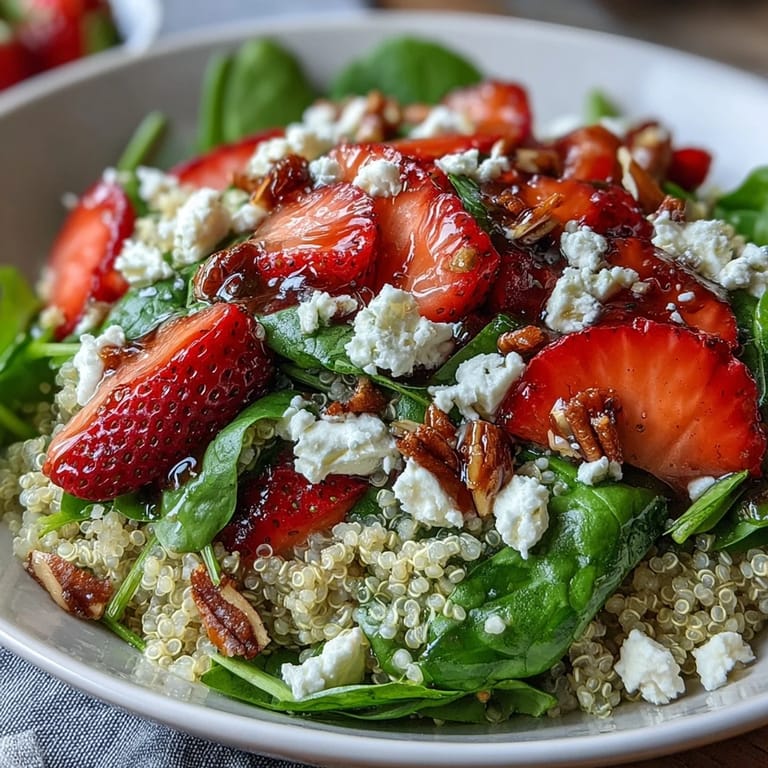
- Add the cooled quinoa to a large bowl along with the raw spinach, sliced strawberries, thin red onion slices, and diced cucumber, then crumble the feta directly over everything. Resist the urge to dress it immediately; give yourself a moment to appreciate how colorful it all looks.
- Dress and toss gently:
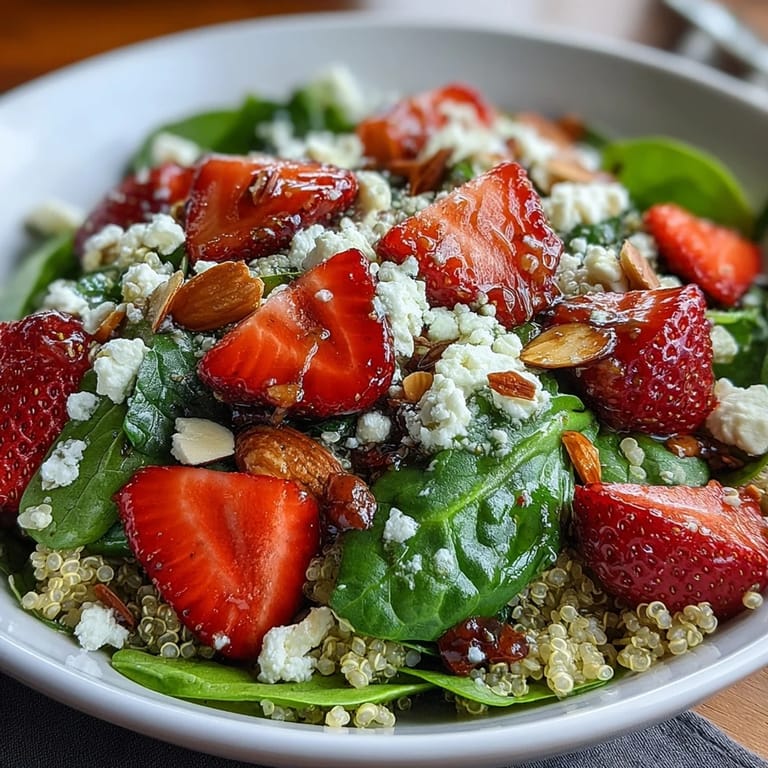
- Drizzle the dressing over the salad and toss with careful hands or two wooden spoons, using a folding motion rather than aggressive stirring so the strawberries and feta don't break down into mush. This gentleness is what keeps the salad looking composed rather than muddled.
- Add almonds at the very last moment:
- Toast your sliced almonds in a dry skillet until fragrant and golden, then scatter them on top just before serving so they stay crispy instead of absorbing moisture and turning soft. This final textural element is what transforms a good salad into one people actually remember.
 Save to Pinterest
 There was a moment during a lazy Sunday brunch when this salad sat on the table between three friends, and everyone reached for their forks at the same time without any coordination—that's when I realized it had transcended being just another recipe and become something we all actually wanted to eat. It's those unplanned moments that stick with you more than any planned dinner ever does.
Why This Salad Wins Every Time
The beautiful truth about this combination is that it works equally well as a standalone meal or as a side dish that doesn't compete with whatever else is on the plate. I've served it alongside grilled fish where the balsamic glaze echoed the char marks, alongside roasted chicken where the acidity cut through the richness, and eaten it solo when I wanted something that felt both nourishing and indulgent without the heaviness that often follows.
Making It Your Own
The skeleton of this salad is flexible enough that you can swap components without losing its essential character. Some people add grilled chicken or crispy chickpeas when they need more protein; others use arugula instead of spinach if they want something with more bite and peppery attitude. The vegan versions with cashew feta work beautifully, and I've seen people add pomegranate seeds, walnuts, or even candied pecans depending on the season and what their pantry holds.
Storage and Timing Wisdom
This salad is best eaten fresh, but you can prep components ahead if your schedule demands it—cooked quinoa lasts five days in the fridge, vegetables can be cut the morning of, and dressing keeps for a week and actually develops deeper flavor as it sits. Just keep everything separate until the moment you serve, treating it like a formula rather than a finished product until the very last second.
- Make your dressing first so the flavors meld while you're prepping everything else.
- Prep your vegetables and lay them out in small bowls so assembly feels quick and stress-free rather than chaotic.
- Remember that the fresher your strawberries and the better your feta, the less the dressing needs to do—sometimes less is actually more.
 Save to Pinterest
 This salad became a staple not because it's fancy but because it feels like a generous gift you give yourself on days when you deserve something that tastes as good as it looks. Make it once and you'll understand why it never stays off the rotation for long.
Recipe Questions & Answers
- → How do I cook quinoa for this salad?
Rinse quinoa under cold water, then simmer it in water until absorbed. Let it rest covered before fluffing with a fork and cooling to room temperature.
- → Can I substitute feta cheese in this salad?
Yes, vegan or plant-based feta alternatives work well, or you can omit it entirely to keep the dish dairy-free.
- → What dressing ingredients enhance the flavors?
A blend of extra-virgin olive oil, balsamic vinegar, honey or maple syrup, Dijon mustard, salt, and pepper creates a tangy, slightly sweet dressing that brightens the salad.
- → Are toasted almonds necessary?
Toasted almonds add a crunchy texture and nutty flavor, but they are optional and can be omitted for allergies or preferences.
- → Can this salad be prepared in advance?
Yes, prepare quinoa and dressing ahead, then combine with fresh ingredients just before serving to maintain crispness.
- → What are good ingredient substitutions?
Swap baby spinach with arugula or mixed greens; add grilled protein like chicken or chickpeas for extra substance.