 Save to Pinterest
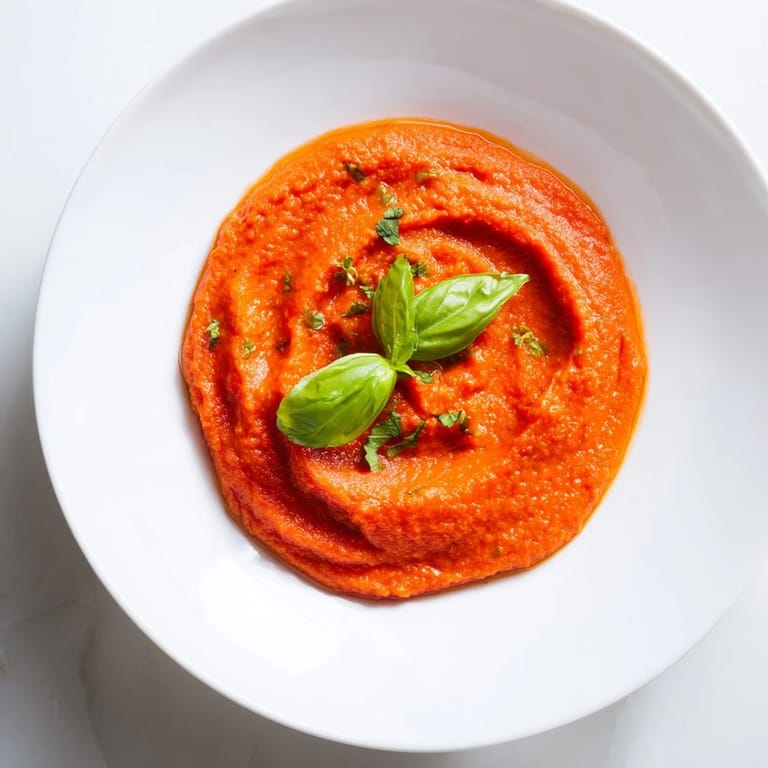
 There's a moment in every cook's life when you realize vegetables don't have to disappear into a sauce—they can become it. I stumbled onto this sauce one weeknight when my produce drawer looked more like a vegetable garden than a kitchen, and I was determined not to waste a single carrot or pepper. What started as improvisation became something my family now requests constantly, because somehow hidden inside this silky red sauce are all the vegetables that actually make us feel good.
I remember serving this to my neighbor who claimed he didn't eat vegetables—until he tasted it and asked for seconds without knowing what he was actually eating. Watching someone's face change when they realize the richness they're enjoying comes from humble vegetables is a small kitchen magic trick I never get tired of.
Ingredients
- Carrots: They bring natural sweetness that balances the tomato acidity, and they break down completely into the sauce for body without texture.
- Zucchini: This mild vegetable adds creaminess when blended and absorbs all the flavors around it beautifully.
- Bell pepper (red or orange): These are sweeter than green peppers and give the sauce a subtle depth and gorgeous color.
- Onion and garlic: The aromatic foundation that makes everything else taste like home.
- Celery stalk: It adds complexity that you won't identify but will absolutely taste.
- Crushed tomatoes: Use two cans because this is your sauce's backbone, and quality matters here more than anywhere else.
- Tomato paste: Two tablespoons concentrate the tomato flavor without watering things down.
- Olive oil: One tablespoon is all you need—this isn't a heavy sauce.
- Dried oregano and basil: These Italian staples do the seasoning work so you don't have to fuss with fresh herbs for hours.
- Salt, pepper, and sugar: The sugar is optional but revelatory—just a pinch tames aggressive acidity without making anything sweet.
- Red pepper flakes: For those moments when you want to wake the sauce up with a little heat.
- Fresh basil for garnish: A final green whisper on top transforms the whole bowl.
Tired of Takeout? 🥡
Get 10 meals you can make faster than delivery arrives. Seriously.
One email. No spam. Unsubscribe anytime.
Instructions
- Sauté the vegetables:
- Heat your olive oil until it shimmers, then add the onion, carrot, celery, zucchini, and bell pepper all at once. Let them soften over medium heat for 8 to 10 minutes—you're not rushing them, just coaxing out their sweetness. You'll smell the vegetables becoming tender, and that's when you know you're ready for the next step.
- Wake up the garlic:
- Add your minced garlic and let it sizzle for just one minute until it smells like you're cooking something real. Don't let it brown or it turns bitter.
- Toast the tomato paste:
- Stir in your tomato paste and cook for exactly one minute—this small step concentrates and deepens everything that comes next.
- Build your sauce:
- Pour in both cans of crushed tomatoes and add your oregano, basil, salt, pepper, and sugar if you're using it. Give it a good stir and watch it come together into something that smells unmistakably like dinner.
- Simmer gently:
- Cover the pan and let everything bubble away softly for 20 to 25 minutes, stirring occasionally so nothing sticks. The vegetables will become so tender they practically dissolve into the sauce.
- Blend until smooth:
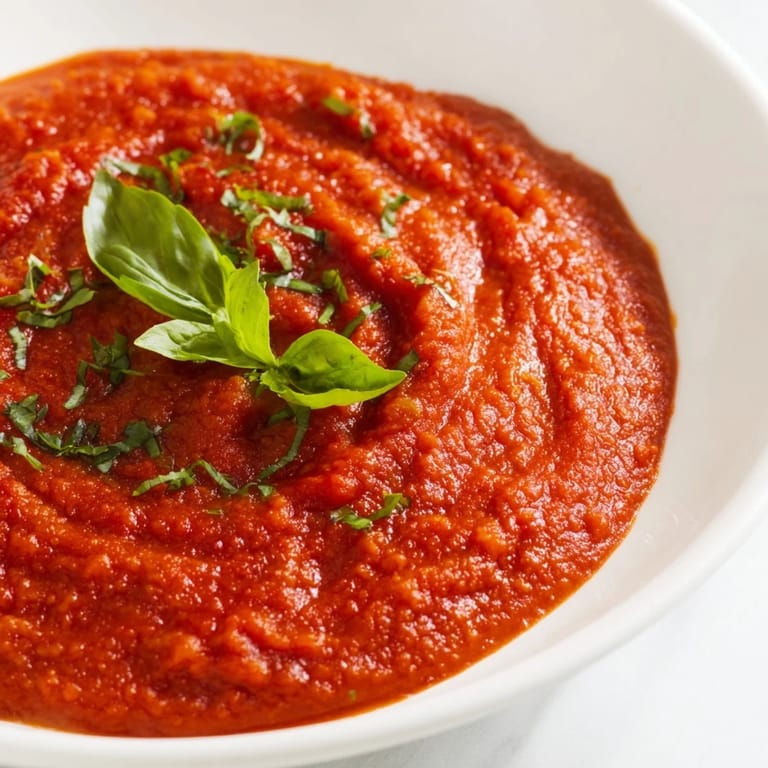
- This is the magic step—use an immersion blender right in the pot and watch all those vegetable pieces transform into silky sauce. If you don't have an immersion blender, carefully transfer everything to a countertop blender in batches and work back slowly.
- Final simmer:
- Return the sauce to low heat and let it bubble uncovered for another 5 to 10 minutes, which lets any excess moisture evaporate and flavors deepen even further. Taste it now and adjust your salt and pepper to your preference.
- Serve with joy:
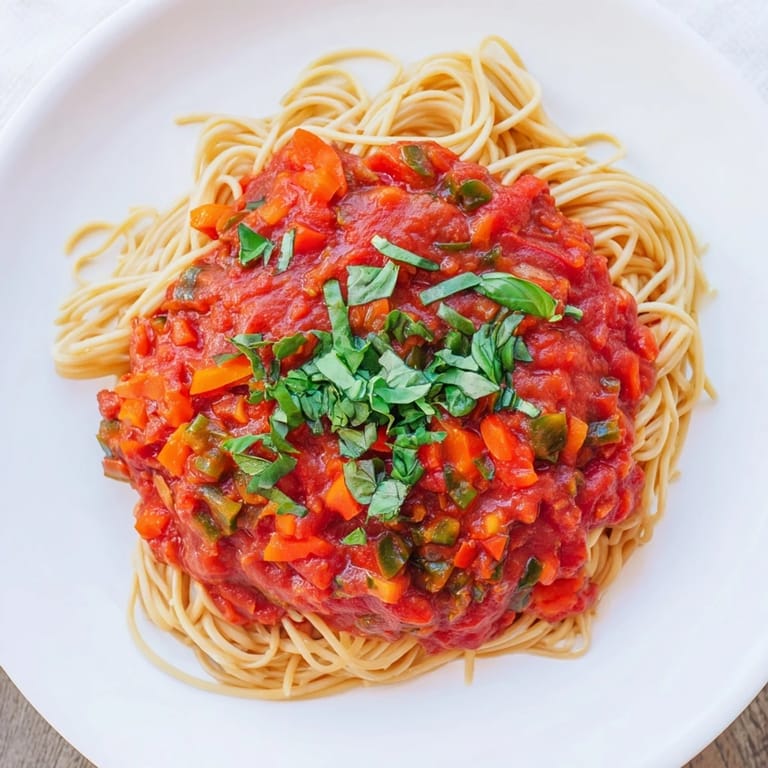
- Pour it over hot pasta and finish with fresh basil if you have it—that green on red is not just beautiful, it tastes like you care.
 Save to Pinterest
 There's something almost meditative about watching chunky vegetables become silk through the hum of a blender. I've made this sauce dozens of times now, and that moment still feels like a small kind of alchemy—rough ingredients becoming something refined, nourishing becoming delicious.
Making It Your Own
This recipe isn't a rigid formula, it's a starting point for your own experiments. I've stirred in handfuls of spinach, scattered broccoli florets through the vegetables, and even added a can of white beans on nights when my family needed something more substantial. The beautiful part is that this sauce welcomes additions without complaint—it's flexible enough to become whatever your kitchen and your hunger require.
Storage and Freezing
One of the best things about making this sauce is that it improves with time, and freezes beautifully for up to three months. I keep containers of it in my freezer like edible insurance against busy weeknights when cooking anything feels impossible. Thaw it overnight in the fridge or reheat it gently in a pot over low heat, and it tastes just as vibrant as the day you made it.
Pairing and Serving Ideas
While this sauce loves traditional pasta, I've learned it's far more versatile than that. It works beautifully over whole-wheat pasta for extra fiber, swirled into soups for added richness, or even spooned over roasted vegetables for a completely different meal. I once used it as the base for a lasagna and my guests couldn't believe how tender everything tasted, and another time I stirred it into rice for a quick one-pot dinner that fed my family of four for under five dollars.
- Whole-wheat or gluten-free pasta transform this into an even more nutritious meal.
- Try it over polenta, rice, or roasted vegetables for completely different but equally delicious applications.
- A dollop over soup or a grain bowl makes this sauce work harder than you'd ever expect.
 Save to Pinterest
 This sauce has become my answer to the question every home cook asks: how do I feed people I love something that's both nourishing and delicious? It's proof that the simplest ingredients, treated with attention and care, become something worth remembering.
Recipe Questions & Answers
- → How do I get a smooth texture in this sauce?
After simmering, blend the sauce with an immersion blender or a regular blender to achieve a creamy, uniform consistency.
- → Can I add other vegetables to the sauce?
Yes, spinach or broccoli florets can be added during cooking for extra nutrition and flavor.
- → What herbs enhance the tomato base best?
Dried oregano and basil add classic Italian herbal notes that complement the tomato and vegetables beautifully.
- → How long should I cook the vegetables before blending?
Sauté the chopped vegetables for 8–10 minutes until softened, then simmer the sauce for another 20–25 minutes before blending.
- → Is this sauce suitable for vegan diets?
Yes, this sauce contains only plant-based ingredients making it naturally vegan and vegetarian friendly.
- → Can I freeze the sauce for later use?
The sauce freezes well for up to 3 months, preserving freshness and flavor for convenient meals.