 Save to Pinterest
 My kitchen always smells differently when I'm making focaccia—there's this moment when the yeast hits the warm water and suddenly the whole room shifts into something alive and anticipatory. I discovered zaatar focaccia on a trip to a tiny bakery tucked away in a Jerusalem side street, where the baker was pulling golden-brown loaves from a wood-fired oven, each one dimpled and glistening with olive oil. The aroma of zaatar—that dusty, slightly tangy spice blend—mixed with briny olives completely rewired what I thought focaccia could be. Now I make it whenever I want that same feeling of Mediterranean warmth in my home.
I made this for friends on a lazy Sunday afternoon, and the smell alone had everyone hovering around the kitchen before it even came out of the oven. One friend who usually skips bread was back for thirds, fascinated by how the zaatar turned almost nutty as it baked. There's something about pulling this golden, glistening focaccia from the oven and hearing people's genuine delight that makes all those small steps feel worthwhile.
Ingredients
- Bread flour (500 g): Don't swap this for all-purpose flour—bread flour has higher protein content, which gives you that beautiful chew and structure that makes focaccia feel like actual bread rather than dense cake.
- Active dry yeast (7 g): The foaming step isn't just a check—it's your first real conversation with the yeast, and it tells you everything is going to work.
- Fine sea salt (1½ tsp for dough): Use fine salt here because it dissolves evenly into the dough; save the flaky stuff for the top where it catches light and flavor.
- Warm water (325 ml): Temperature matters—too hot kills the yeast, too cold and it just sits there confused; aim for around 40°C, which should feel warm to your wrist but not uncomfortable.
- Extra virgin olive oil (60 ml plus 2 tbsp): This is where quality actually shows—a good olive oil brings fruity, grassy notes that define the whole bread, so don't skip on this ingredient.
- Zaatar spice blend (2 tbsp): This dusty green-brown mixture of sumac, thyme, and sesame seeds is the soul of this focaccia; if you can't find it, you can make your own with dried thyme, sesame seeds, and sumac powder.
- Kalamata olives (100 g): Pitting them yourself makes a difference in flavor because you're not getting the metallic tang from pre-pitted versions in brine; if you must use pre-pitted, rinse them first.
- Flaky sea salt (1 tsp): This goes on top and needs to be coarse enough to see individual crystals; it's your textural contrast against the soft bread.
Tired of Takeout? 🥡
Get 10 meals you can make faster than delivery arrives. Seriously.
One email. No spam. Unsubscribe anytime.
Instructions
- Bloom your yeast:
- Dissolve the 7 g yeast in 325 ml warm water and let it sit for 5 minutes—you're looking for a foamy layer on top, which means your yeast is alive and ready to work its magic. If nothing happens, your yeast might be dead and it's better to know now than 90 minutes in.
- Bring the dough together:
- Mix your flour and fine salt in a large bowl, then add the yeast mixture and 60 ml olive oil, stirring until everything comes into a rough, shaggy dough with no dry flour pockets. This doesn't need to be pretty yet—just incorporated.
- Knead until smooth:
- On a lightly floured surface or using a stand mixer with a dough hook, knead for 8–10 minutes until the dough transforms into something smooth, elastic, and slightly springy when you poke it. You'll feel the difference—from rough and resistant to silky and alive.
- First rise:
- Place the dough in a lightly oiled bowl, cover it with a kitchen towel or plastic wrap, and let it sit in a warm spot for about 1 hour until it doubles in size. A warm spot near a window, on top of the fridge, or in a turned-off oven all work beautifully.
- Shape and second rise:
- Oil a large baking sheet or 9x13 cm pan generously, then gently stretch and press the dough to fill it evenly—it should be about 1 cm thick and feel pillowy, not thin and stretched out. Cover and let rise for 30 minutes, during which time it'll puff up again and develop an even more tender crumb.
- Dimple and top:
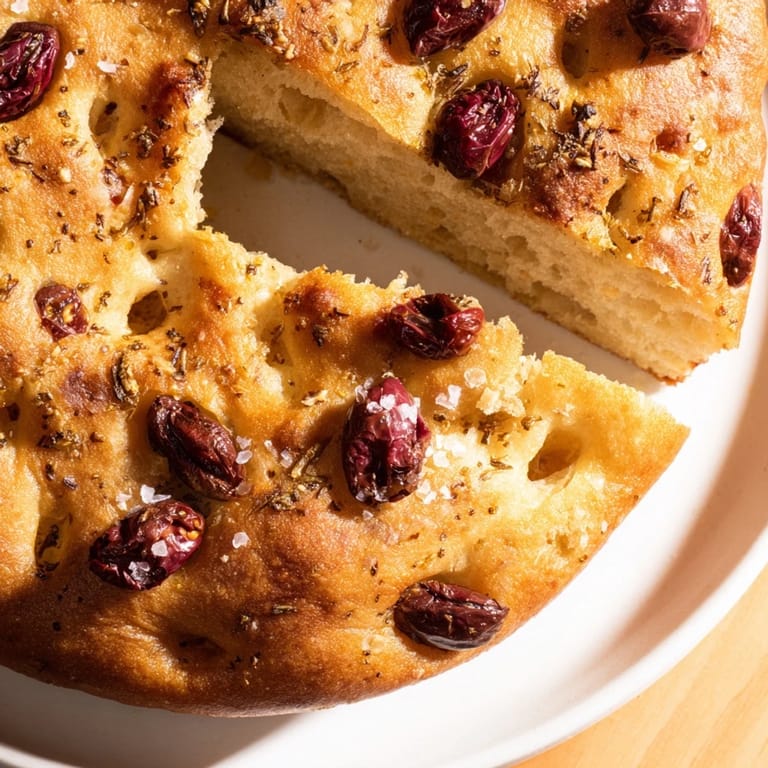
- Preheat your oven to 220°C, then use your fingertips to create deep, generous dimples all over the dough surface—think intentional indentations, not gentle touches. Drizzle with the 2 tbsp olive oil, scatter zaatar evenly, press the halved olives into those dimples, and finish with flaky sea salt.
- Bake to golden:
- Bake for 20–25 minutes until the top is deep golden brown and the edges are crispy enough to make that satisfying crunch. The bottom should also be golden, not pale—if you're unsure, slide a spatula underneath to peek at the color.
- Cool and serve:
- Let it cool for just a few minutes—enough so you won't burn your mouth—then slice and serve warm or at room temperature. It's best the day it's made, but if you have leftovers, a quick warm-up in the oven brings back most of that crispy exterior.
 Save to Pinterest
 I'll never forget the moment someone tore open a warm piece and the steam rose with this incredible smell—they closed their eyes like they'd just transported somewhere, and honestly, that's when focaccia stopped being just bread for me. It became this small bridge between kitchens and memories, between a stranger's bakery in Jerusalem and my own countertop.
Building Flavor Through Quality Ingredients
This focaccia teaches you something important about cooking: sometimes the simplest recipes showcase your ingredients the most. With only a handful of components—flour, yeast, olive oil, zaatar, and olives—there's nowhere for mediocre quality to hide. I learned this the hard way when I made a batch with regular olive oil and discovered that the expensive bottle I'd been avoiding actually transformed the entire loaf into something richer and more complex. The same goes for zaatar—a fresh blend from a good spice shop tastes completely different from something that's been sitting on a shelf for years. You're not creating intricate flavors here, you're amplifying the ones already present.
The Art of Knowing Your Oven
Every oven has its own personality, and this recipe is honest about showing it. Some ovens run hot and will brown the top in 20 minutes; others are cooler and need the full 25. I discovered my own oven's quirks the hard way—a batch that burned at the edges while staying pale on top taught me that I needed to rotate the pan halfway through. Now I just keep a close eye during that final stage, watching for deep golden brown rather than trusting the timer completely. Your instincts and your eyes matter more than any written time.
Serving Suggestions and Variations
The beauty of this bread is that it's endlessly flexible depending on what you have or what mood you're in. I've added sun-dried tomatoes when I wanted something a bit tangier, scattered some roasted garlic cloves for earthiness, and even substituted green olives when I wanted a milder, slightly less briny version. The framework stays the same—that fluffy dough, the olive oil, the zaatar—but the personality shifts. Serve it torn warm with hummus or labneh for dipping, or just on its own, letting people tear off pieces while it's still warm.
- Try mixing in 50 g sun-dried tomatoes or roasted garlic cloves for extra depth.
- Green olives deliver a gentler flavor if you find Kalamata olives too intense.
- Fresh thyme scattered on top before baking adds another layer of herbal complexity.
 Save to Pinterest
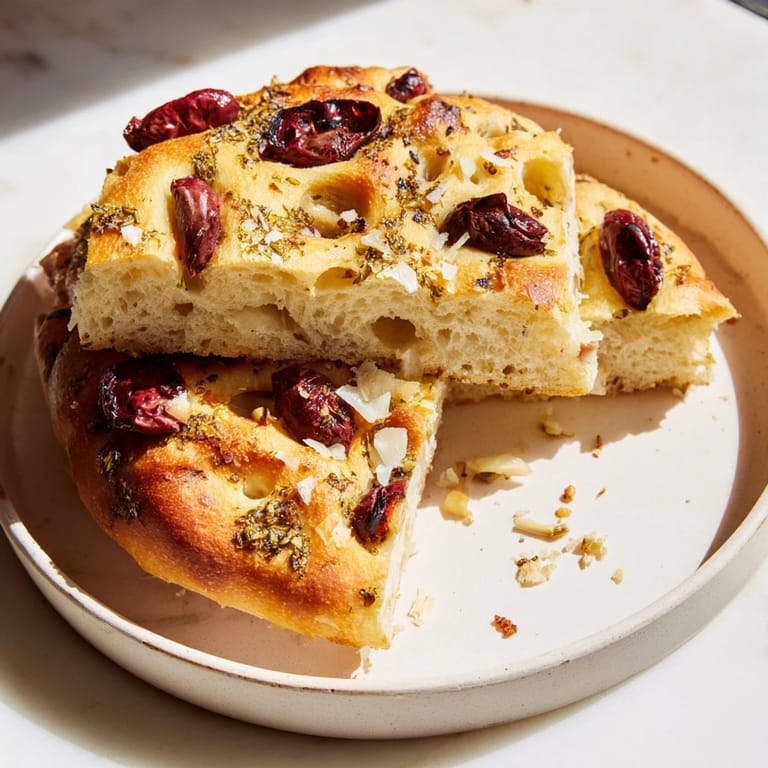
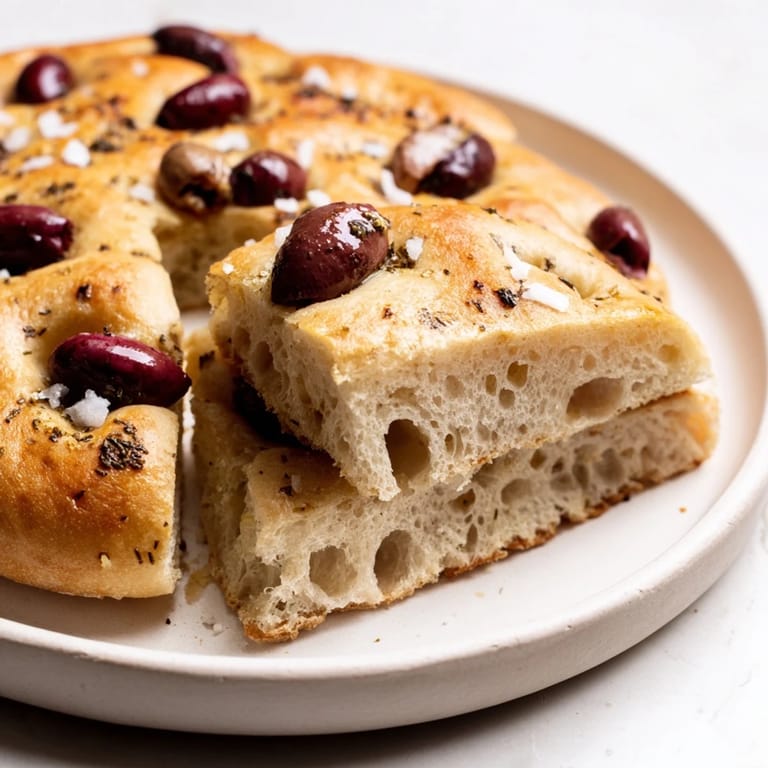
 There's something deeply satisfying about pulling a focaccia from the oven that looks like it came from a proper bakery—golden, glistening, fragrant, with olives and zaatar announcing themselves from the top. The first time you nail it is the moment you realize you've actually picked up a real skill.
Recipe Questions & Answers
- → What is zaatar and how does it affect the flavor?
Zaatar is a Middle Eastern spice blend featuring herbs like oregano, thyme, and sumac. It adds an earthy, tangy, and aromatic note to the focaccia.
- → Can I use green olives instead of Kalamata olives?
Yes, green olives provide a milder, less briny flavor that works well as an alternative topping.
- → How do I know when the dough has risen enough?
The dough should double in size during rising, becoming visibly puffier and soft to touch without collapsing.
- → What is the best way to create dimples in the focaccia dough?
Use your fingertips to press gently but deeply across the dough's surface, creating indentations that hold olive oil and toppings.
- → Can this focaccia be reheated without losing texture?
Yes, reheating in a warm oven helps maintain the crisp edges and soft interior without drying it out.