 Save to Pinterest
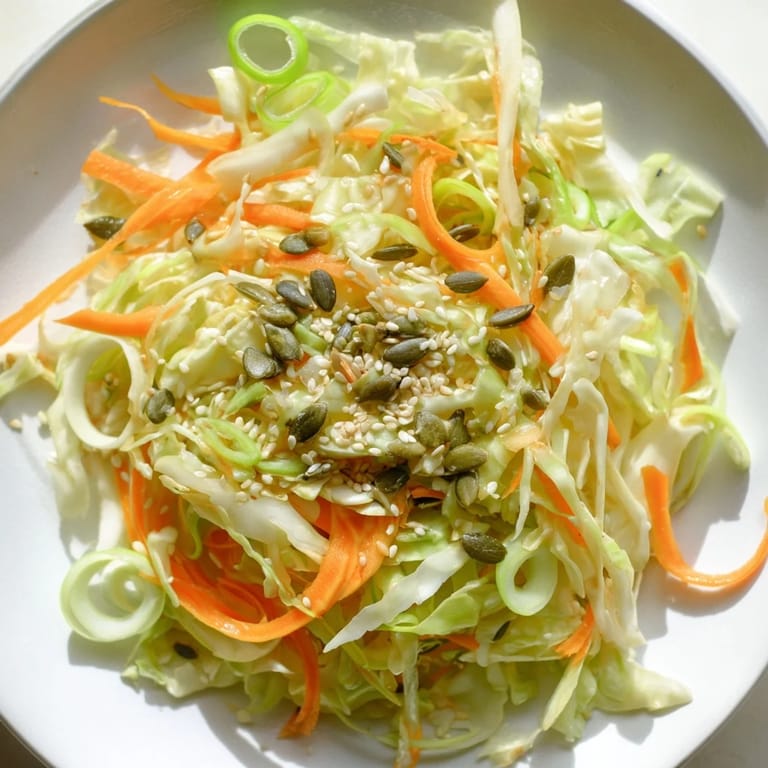
 I discovered the magic of cabbage cores by accident one afternoon when I was about to toss them into the compost. My neighbor had mentioned she always shredded hers for slaws, and something about not wasting the most nutritious part stuck with me. That first bowl taught me that the core isn't tough at all—it's actually the crispest, most fiber-packed treasure hiding inside the whole vegetable. Now I plan around using them, and this sesame slaw has become my go-to when I want something that feels restaurant-quality but takes barely any time.
I made this for a potluck last month when I wanted to bring something that wouldn't wilt in the car or need reheating. Watching people go back for thirds without realizing it was vegan made me realize I'd stumbled onto something really special. The sesame aroma alone had people asking questions before they even tasted it.
Ingredients
- Cabbage cores, finely shredded: The heart of this dish—they're naturally sweet, crunchy, and loaded with fiber that keeps you satisfied longer than regular cabbage.
- Green cabbage leaves: These add color contrast and a softer texture that balances the core's crunch.
- Carrot, julienned: Brings sweetness and a bright pop of color that makes the whole bowl look alive.
- Green onions: A quiet flavor booster that adds mild allium depth without overpowering.
- Toasted sesame oil: This is the soulmate ingredient—use the good stuff, because its nutty richness is what makes people ask for the recipe.
- Rice vinegar: Softer than regular vinegar, it plays nicely with the Asian-inspired vibe without harsh acidity.
- Soy sauce or tamari: The umami anchor that makes every bite taste more intentional.
- Maple syrup or honey: A whisper of sweetness that rounds out the saltiness and helps the dressing coat everything evenly.
- Fresh ginger and garlic: These two create a warm backdrop that ties the whole dressing together.
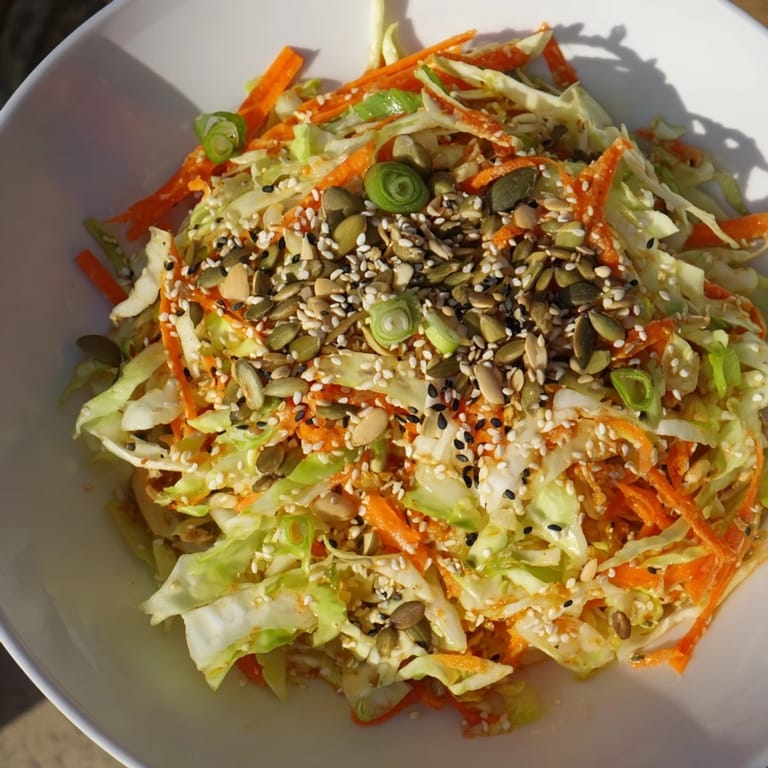
- Toasted sesame, pumpkin, and sunflower seeds: The textural MVPs—they toast faster than you'd expect, so watch them closely.
Tired of Takeout? 🥡
Get 10 meals you can make faster than delivery arrives. Seriously.
One email. No spam. Unsubscribe anytime.
Instructions
- Prepare your vegetables:
- Shred the cabbage cores on a box grater or with a sharp knife until they're in thin, even pieces. They should look almost feathery. This takes about five minutes and is oddly meditative.
- Build the dressing:
- Whisk the sesame oil, rice vinegar, soy sauce, maple syrup, ginger, and garlic together in a small bowl until the mixture looks emulsified and glossy. Taste it now—it should make your mouth water.
- Bring it all together:
- Toss the shredded vegetables in your largest bowl, then pour the dressing over top and mix thoroughly so every strand gets coated. Don't be gentle here; you're trying to get the vegetables to start releasing their own juices.
- Toast and top:
- If you haven't already, lightly toast the seeds in a dry pan over medium heat for two to three minutes—your kitchen will smell incredible. Sprinkle them over the slaw and toss again, or save some for a prettier garnish on top.
- Let it rest:
- Give the salad ten minutes to sit undisturbed, so the flavors meld and the vegetables soften just slightly while staying crisp. This is when the magic happens.
 Save to Pinterest
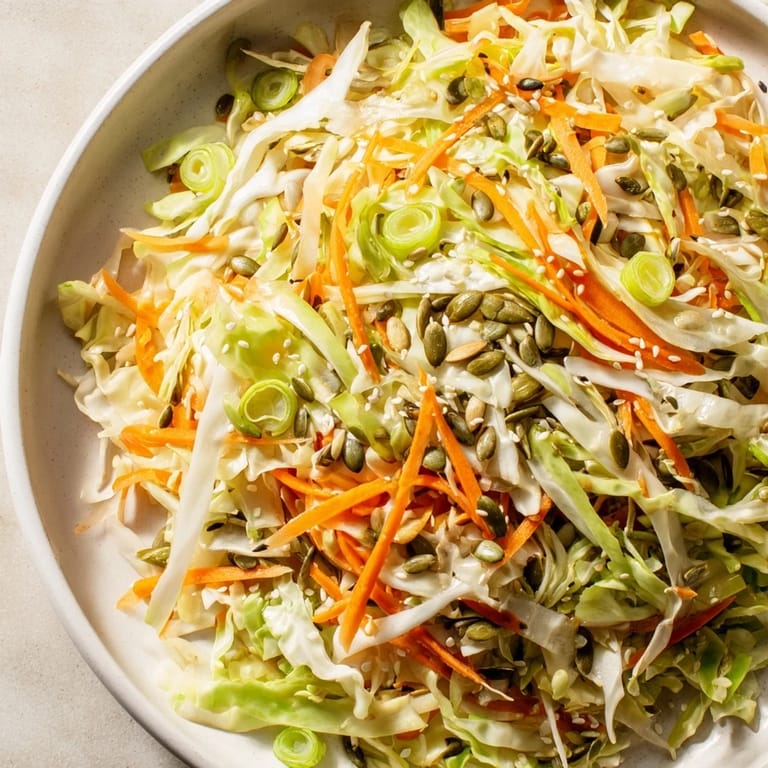
 I remember my sister taking one bite and immediately asking if I'd been hiding a secret cooking talent from her. Watching someone's face light up because of something you made from your own kitchen feels like a small kind of magic.
The Sesame Dressing Secret
The dressing is really just a basic vinaigrette dressed up in better clothes. What makes it sing is starting with toasted sesame oil instead of trying to add sesame flavor after the fact. The oil carries notes of nuttiness and warmth that regular oils can't touch. I learned this the hard way by buying cheap sesame oil once—the result tasted flat and one-dimensional. Now I buy a good bottle and keep it in the cupboard where it's cool and dark, because that nutty quality is what anchors the whole dish.
Making It Your Own
This slaw is a foundation, not a decree. I've added paper-thin sliced red radishes for extra bite, swapped the pumpkin seeds for cashews, and once tossed in thinly sliced red chili because I was in the mood for heat. Fresh mint or cilantro scattered on top at the last second brings a brightness that changes the whole character of the dish. The vegetables are flexible too—try shredded daikon radish, julienned beets, or thinly sliced red onion if you have them on hand.
Serving and Storage
This slaw is happiest served cold or at room temperature within a few hours of assembly, though it holds up better than most because the raw cabbage has a natural structure that resists becoming soggy. I've packed it for lunch in mason jars with the dressing in a separate compartment, kept the seeds in a small container, and assembled it right before eating. If you're making it for a crowd, keep some extra seeds separate and scatter them over just before serving to keep that crunch alive.
- If you have leftovers, store the slaw and dressing separately in the fridge for up to two days.
- The seeds stay crispest when kept dry and added right before you eat, not hours before.
- Cold straight from the fridge is perfect, but ten minutes at room temperature brings out more of the sesame oil's flavor.
 Save to Pinterest
 This slaw has become my answer to the question of what to bring to a potluck or what to eat when I want something bright and nourishing without thinking too hard. It's proof that sometimes the best dishes hide in plain sight, waiting in the part of the vegetable we almost threw away.
Recipe Questions & Answers
- → What type of cabbage is best for this slaw?
Using cabbage cores provides a crunchier texture, while green cabbage leaves add color and freshness to the slaw.
- → Can I substitute the sesame oil in the dressing?
Yes, you can use other nut or seed oils like walnut or avocado oil, but toasted sesame oil delivers a distinctive nutty flavor essential to the dish.
- → How can I add more heat to this slaw?
Adding sliced red chili or a dash of chili oil enhances the spiciness without altering the balance of flavors.
- → What is the purpose of the toasted seeds topping?
Toasted sesame, pumpkin, and sunflower seeds add crunch, nuttiness, and an appealing visual contrast to the slaw.
- → Is this slaw suitable for gluten-free diets?
Yes, by using tamari instead of soy sauce and ensuring all packaged ingredients are gluten-free, the dish fits gluten-free needs.