 Save to Pinterest
 My neighbor brought over a container of tabbouleh on a sweltering summer afternoon, and I was skeptical at first—just grain and herbs, how exciting could it be? But the moment I tasted it, something clicked. The brightness of lemon and mint made every bite feel like sitting in a sun-drenched kitchen somewhere near the Mediterranean. Now I make this whenever I need to remember that simple food, done right, can feel like a small celebration on a plate.
I served this at a potluck once, and it was gone before half the other dishes were touched. A friend asked for the recipe right there with a fork still in hand, and that's when I knew I'd stumbled onto something genuinely good. The parsley adds this unexpected freshness that people don't anticipate until they taste it.
Ingredients
- Fine bulgur wheat: The grain that absorbs liquid like a dream and stays tender without needing actual cooking—buy it fine-grain, not coarse, or you'll get a texture that feels more like gravel.
- Boiling water: Use it right off the heat; this is where the magic of bulgur happens in just 10 minutes flat.
- Sea salt: A pinch here seasons the grain while it absorbs, so it doesn't taste bland no matter what else you add.
- Ripe tomatoes: Choose ones that smell like tomato, not cardboard—this is where half your flavor comes from, so don't skimp.
- English cucumber: Thinner skin and fewer seeds, which means you skip the watery mess that regular cucumbers create.
- Fresh flat-leaf parsley: The true star that turns this from ordinary to luminous; buy it by the bunch and chop boldly.
- Fresh mint leaves: Adds a cool, almost surprising note that wakes up your mouth halfway through eating.
- Scallions: A mild onion flavor that doesn't overpower but reminds you something green and alive is happening here.
- Extra virgin olive oil: Use one you actually like tasting, because you'll taste it, unmasked and proud.
- Freshly squeezed lemon juice: Bottled lemon juice tastes like regret; fresh juice tastes like the whole point of this dish.
- Garlic clove: Just one, minced fine, so it dissolves into the dressing without announcing itself loudly.
- Ground black pepper: Freshly ground tastes alive; pre-ground tastes like it's been sitting in a cabinet since 2019.
- Feta cheese: Crumbled over top, it adds a salty, creamy contrast that feels indulgent without being heavy.
- Toasted pine nuts: They're optional but worth it—toasting them yourself brings out a buttery depth that raw nuts never quite reach.
Tired of Takeout? 🥡
Get 10 meals you can make faster than delivery arrives. Seriously.
One email. No spam. Unsubscribe anytime.
Instructions
- Prepare your grain base:
- Measure your bulgur into a large bowl with a pinch of salt, then pour boiling water directly over it and cover the bowl tightly. The steam will do the work—walk away for exactly 10 minutes, and when you lift the lid, you'll find tender grains and absorbed water. Fluff it gently with a fork and let it sit open to the air until it cools completely.
- Build your dressing:
- Whisk olive oil, fresh lemon juice, minced garlic, and black pepper together in a small bowl—this mixture should taste bright and a touch sharp before it meets the grain. Taste as you go; if it feels too acidic, add a tiny drizzle more oil; if it's flat, squeeze another few drops of lemon.
- Combine everything gently:
- When the bulgur has cooled, add your chopped tomatoes, cucumber, a generous pile of parsley, mint, and scallions directly to the bowl. Use a gentle hand when tossing—you're not trying to bruise anything, just coat every grain.
- Dress and season:
- Pour the dressing over the top and mix thoroughly until every piece glistens. Taste a spoonful and adjust salt or lemon to your preference; this is your food, make it sing for you.
- Let flavors find each other:
- If you have 10 minutes, chill it and watch as the flavors become less separate and more like friends at a party who've found their rhythm. If you're eating right away, that's fine too, but the wait does make a difference.
- Serve with joy:
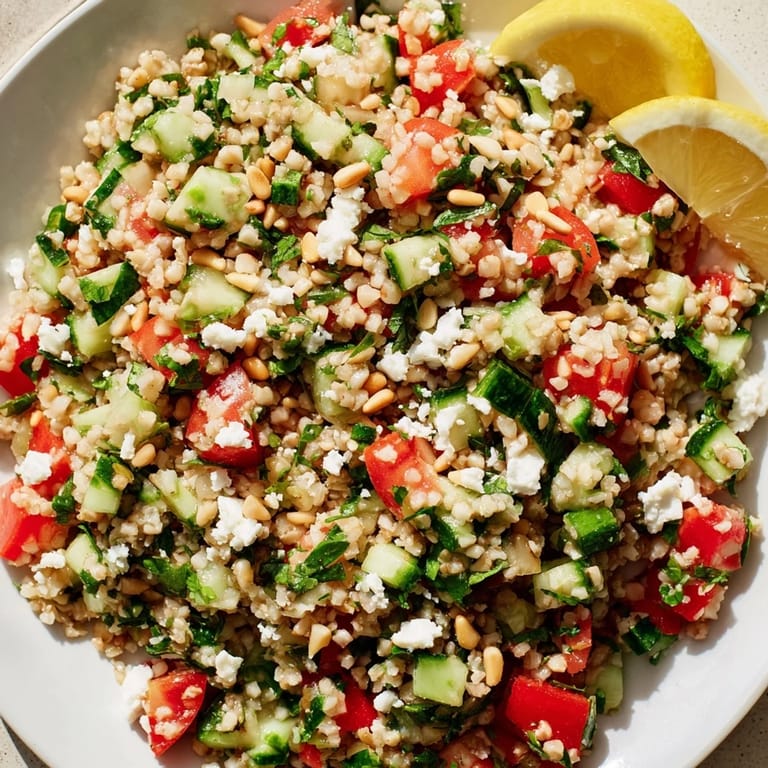
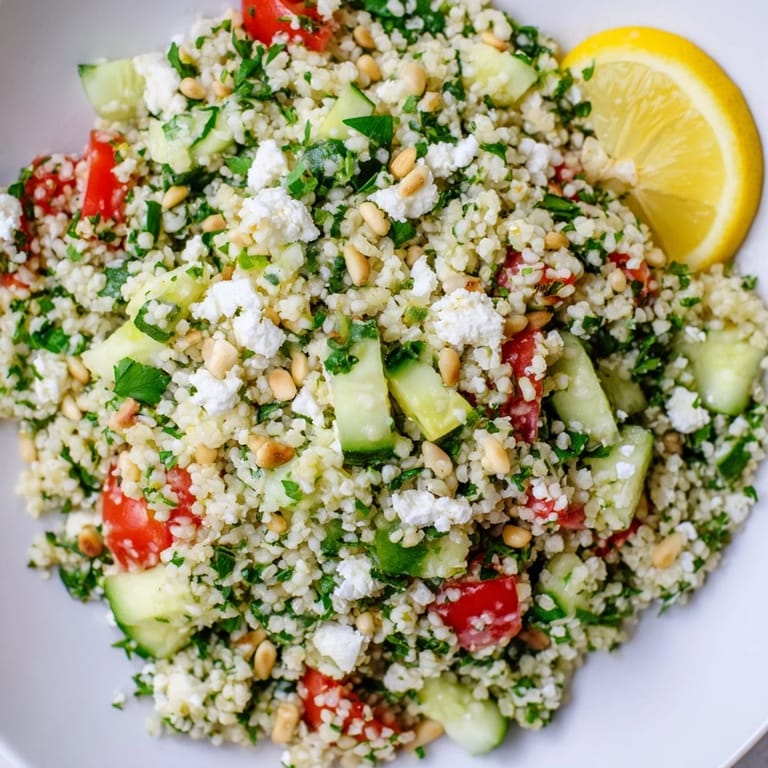
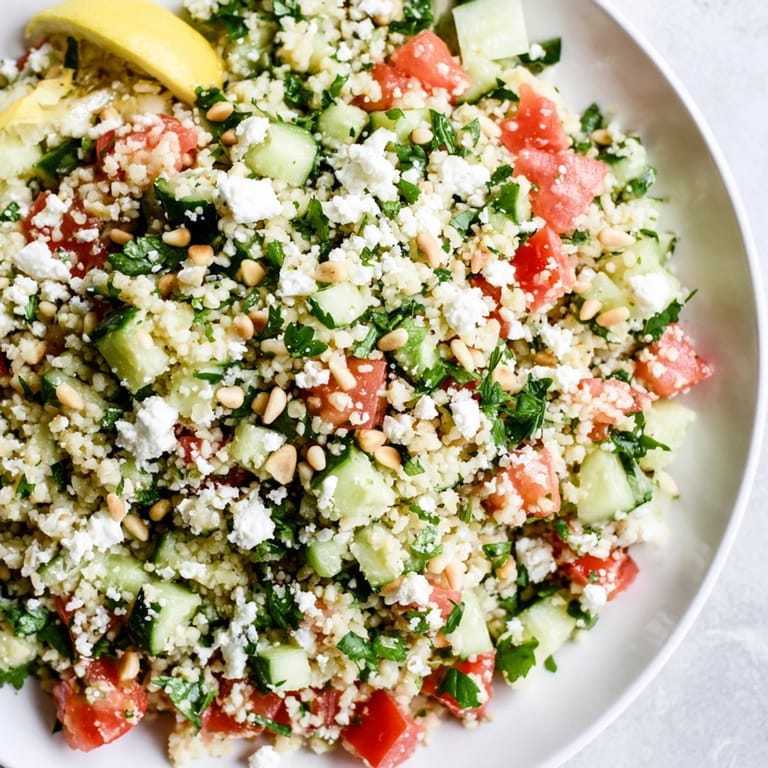
- Divide into bowls and scatter feta and pine nuts on top if you're using them, add a wedge of lemon on the side, and eat while you can see what you're doing—it's that vibrant.
 Save to Pinterest
 There's something about eating tabbouleh outdoors on a warm day that feels like you've gotten something right in life. The simplicity is deceptive—it asks so little but delivers something that feels both nourishing and celebratory at once.
Making It Your Own
This recipe is a framework, not a rulebook. I've added chickpeas when I wanted protein without fuss, thrown in diced red onion when I wanted more bite, and once swapped half the parsley for cilantro because that's what I had growing on my porch. The dressing ratio matters, but the vegetables are forgiving—use what looks good at the market and adjust the quantity of herbs to your taste. Some people make this almost as a salad with just a whisper of bulgur; others load it with grain and treat it like a grain bowl. There's no wrong version as long as you keep the fresh, bright spirit alive.
Storage and Keeping
Tabbouleh actually improves slightly as it sits overnight in the refrigerator, the flavors becoming more integrated and mellow. Keep it covered in an airtight container, and it stays fresh and pleasant for up to two days. If you're packing it for lunch, wait to add the feta and pine nuts until you're ready to eat—they soften and lose their textural appeal if they sit in the dressing overnight. On day two, you might taste that it's gone slightly less bright; a quick squeeze of fresh lemon juice brings it back to life.
Variations That Work
For gluten-free eating, swap the bulgur for cooked quinoa—the flavor changes slightly, becoming more delicate and nutty, but the freshness of the herbs carries it beautifully. If you want more substance, add grilled chicken, roasted chickpeas, or crumbled tofu; this dish is generous enough to welcome protein without losing its character. Serve it alongside grilled vegetables, warm pita bread, or alongside roasted fish for a complete meal.
- Try adding pomegranate seeds or diced apple for sweetness and a textural pop you don't expect.
- Experiment with different herbs—dill, basil, or cilantro each shift the flavor in subtle but worthwhile ways.
- Don't sleep on serving this at room temperature even in cool weather; it's not just a summer food, just a fresh-feeling one.
 Save to Pinterest
 Make this when you want to remember that food doesn't need to be complicated to be wonderful. It's the kind of dish that tastes like care but asks almost nothing of you.
Recipe Questions & Answers
- → What grain is used as the base?
Fine bulgur wheat forms the base, soaked in boiling water until tender, creating a light and fluffy texture.
- → Can the grain be substituted?
Yes, cooked quinoa is a great gluten-free alternative that maintains a similar texture and flavor balance.
- → How is the dressing made?
The dressing combines extra virgin olive oil, freshly squeezed lemon juice, minced garlic, and ground black pepper for a bright, zesty finish.
- → Which herbs add freshness to the bowl?
Fresh flat-leaf parsley and mint leaves provide aromatic and vibrant herbal notes that complement the other ingredients.
- → Are there optional additions for extra texture?
Toasted pine nuts add crunch and crumbled feta offers a creamy, salty contrast, enhancing the bowl’s complexity.