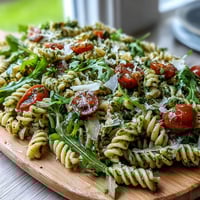
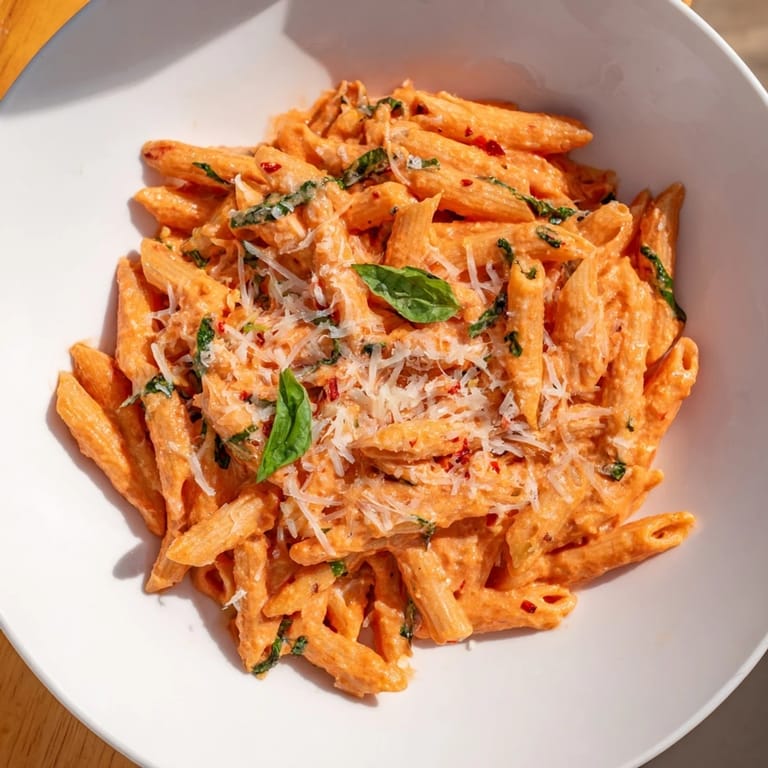
 Save to Pinterest
 There's something about watching cream swirl into a tomato sauce that makes you feel like you've unlocked an Italian grandmother's secret. I discovered this one-pot pasta on a weeknight when I was exhausted and had exactly thirty minutes before dinner needed to be on the table. No complicated steps, no stack of dishes waiting afterward—just one pot and the kind of comfort that tastes like you've been cooking for hours. The first time I made it, my kitchen filled with this incredible aroma of garlic and basil that had my partner asking questions before we'd even sat down.
I remember making this for my sister when she was going through a rough patch, and she sat at my kitchen counter just breathing in the steam coming off the pot. By the time we sat down to eat, she was already smiling. That's when I realized this wasn't just easy pasta—it was the kind of dish that quietly takes care of people.
Ingredients
- Penne or fusilli pasta (350 g): The ridged or curly shapes catch the creamy sauce beautifully; avoid thin noodles that get mushy in the liquid.
- Olive oil (2 tbsp): This is your foundation—use something you'd actually taste, not the cheapest bottle.
- Yellow onion (1 medium): Chop it fine so it melts into the sauce and becomes invisible sweetness.
- Garlic (4 cloves): Mince it small; this is where the magic starts, and size matters for even cooking.
- Red pepper flakes (1/2 tsp): Optional, but they add a warmth that balances the cream.
- Crushed tomatoes (800 g canned): San Marzano if you can find them—they're sweeter and less acidic.
- Tomato paste (2 tbsp): Concentrate that tomato flavor; don't skip this small amount.
- Sugar (1 tsp): Balances the acidity of the tomatoes so the sauce tastes round and complete.
- Salt and black pepper: Fresh ground pepper makes a real difference here.
- Heavy cream (200 ml): The luxurious finish that transforms tomato into silk.
- Parmesan cheese (60 g): Grate it fresh; pre-grated has cellulose that makes the sauce grainy.
- Fresh basil (1 cup): Add it at the very end so the bright flavor stays alive.
- Water or vegetable broth (600 ml): Broth adds subtle depth, but water works if that's what you have.
Tired of Takeout? 🥡
Get 10 meals you can make faster than delivery arrives. Seriously.
One email. No spam. Unsubscribe anytime.
Instructions
- Sauté your aromatics:
- Heat the olive oil in your pot over medium heat and add the onion, letting it soften and turn translucent over three to four minutes. This is your base, so don't rush it.
- Wake up the garlic:
- Stir in the minced garlic and pepper flakes, cooking just until the kitchen smells incredible—about one minute. You're looking for fragrant, not brown.
- Build your sauce:
- Add the crushed tomatoes, tomato paste, sugar, salt, and pepper, stirring until everything is combined and the paste dissolves into the liquid. This is where it starts tasting like something real.
- Add the pasta:
- Pour in the uncooked pasta and the water or broth, stirring to make sure the pasta is submerged and nothing sticks to the bottom. Bring everything to a boil.
- Let it simmer:
- Lower the heat to medium-low, cover the pot, and let it bubble gently for twelve to fourteen minutes, stirring occasionally. The pasta will soften, the liquid will reduce, and you'll watch it transform into something creamy even before the cream goes in.
- Finish with cream:
- Stir in the heavy cream and freshly grated Parmesan, cooking uncovered for just two to three minutes more until the sauce turns silky and coats the pasta. Taste and adjust salt if needed—some pastas release starch and make the sauce saltier than you'd expect.
- Final flourish:
- Remove from heat and fold in the fresh basil, letting its brightness cut through all that richness. Serve immediately with extra basil and Parmesan scattered on top.
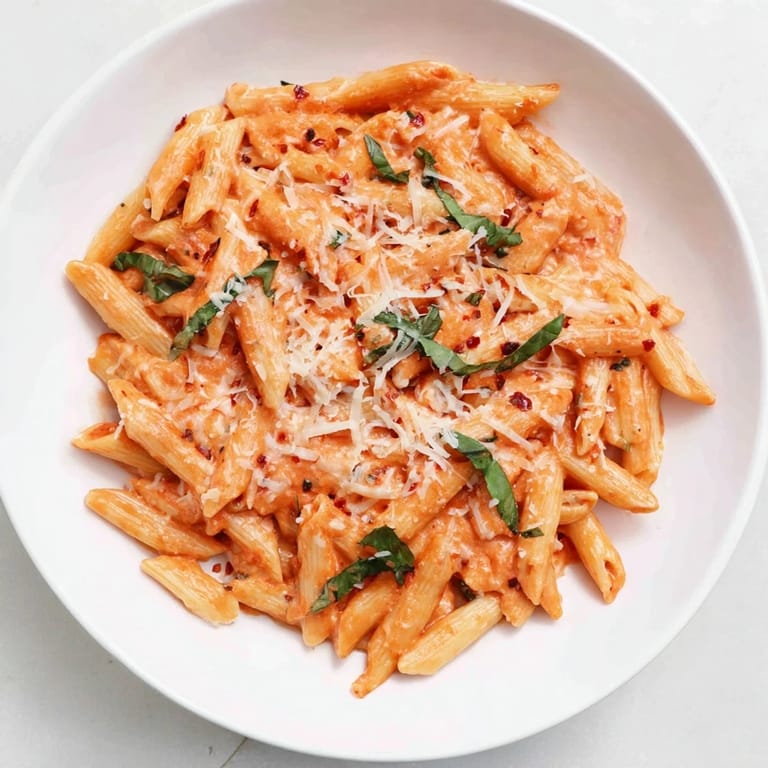 Save to Pinterest
 There's a moment, right when you fold in the basil and the whole pot fills with that green, peppery smell, when you know you've made something worth savoring. It's not fancy or pretentious—it's just food that makes you feel cared for.
Why One-Pot Pasta Changed Everything
I used to think cooking multiple components meant you cared more about the final result. Then I made this and realized that cooking everything together actually builds flavor in ways you can't achieve separately. The pasta absorbs the sauce as it cooks instead of sitting in salted water and then being tossed with sauce afterward. It's more efficient and honestly tastes better, which is the best argument for doing less work.
The Cream to Tomato Ratio
Some recipes drown pasta in cream until you can barely taste the tomato, and others are so light they're not really creamy at all. This balance—where you taste both and neither overpowers—took me a few tries to get right. The secret is adding the cream at the very end, just for two or three minutes, so it becomes part of the sauce rather than a separate component. You want it luxurious but still recognizable as tomato-based.
Making It Your Own
The beauty of this recipe is that it's a canvas. I've added sautéed mushrooms, wilted spinach, and even crispy prosciutto pieces when the mood struck. The structure stays the same—onion, garlic, tomato base, pasta in liquid, then cream—but the details are flexible. Just remember to keep the total liquid amount roughly the same so your timing doesn't shift.
- For a vegan version, use plant-based cream and cashew cheese, and it tastes just as satisfying.
- Fresh mozzarella torn over the top adds a creamy richness that complements the sauce beautifully.
- A small pinch of nutmeg stirred into the cream right before adding it brings unexpected warmth and depth.
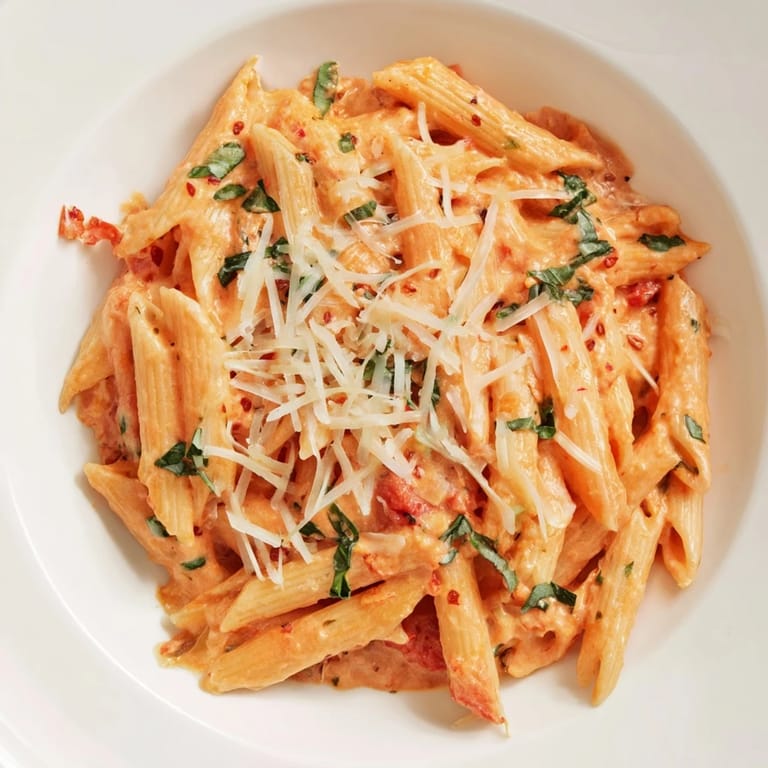 Save to Pinterest
 This pasta has become my answer to the question of what to cook when you want something that feels like home. It comes together in the time it takes to have a conversation, and somehow tastes like you've been thinking about it all day.
Recipe Questions & Answers
- → Can I use different pasta types for this dish?
Yes, penne or fusilli work best due to their shape, but any short pasta like rigatoni or rotini will also cook well in the sauce.
- → How do I make this dish vegan-friendly?
Replace heavy cream with plant-based cream and use vegan cheese alternatives to maintain the creamy texture.
- → Is there a way to add more vegetables?
Adding sautéed mushrooms, spinach, or roasted veggies during cooking can boost nutrition and flavor without altering the base technique.
- → What’s the best way to ensure pasta cooks evenly in one pot?
Make sure the pasta is fully submerged in liquid, stir occasionally, and simmer gently to avoid sticking and ensure even cooking.
- → Can I prepare this ahead of time?
It’s best served fresh to enjoy the creamy texture; leftovers can be gently reheated with a splash of water or broth to restore moistness.