 Save to Pinterest
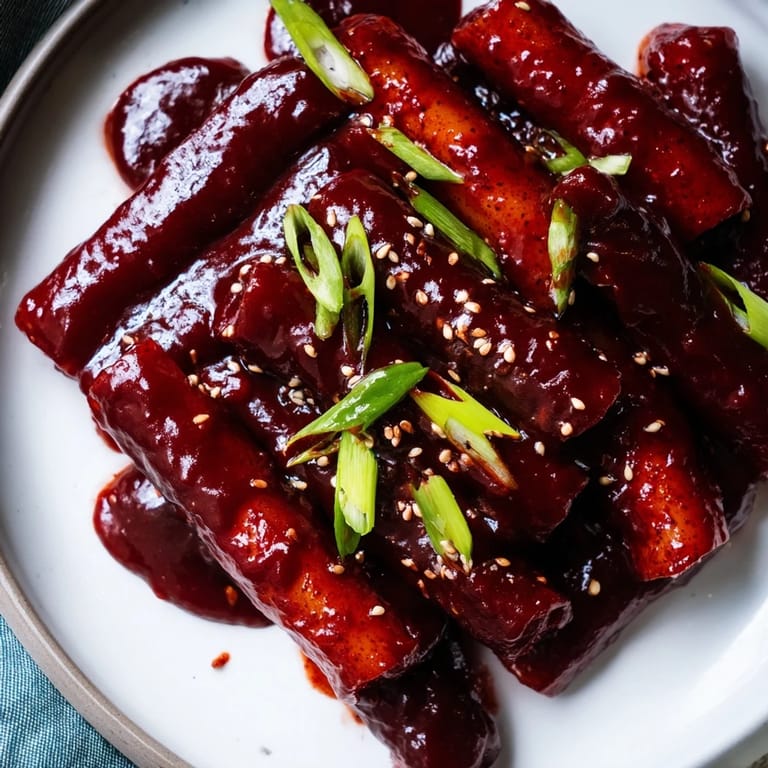
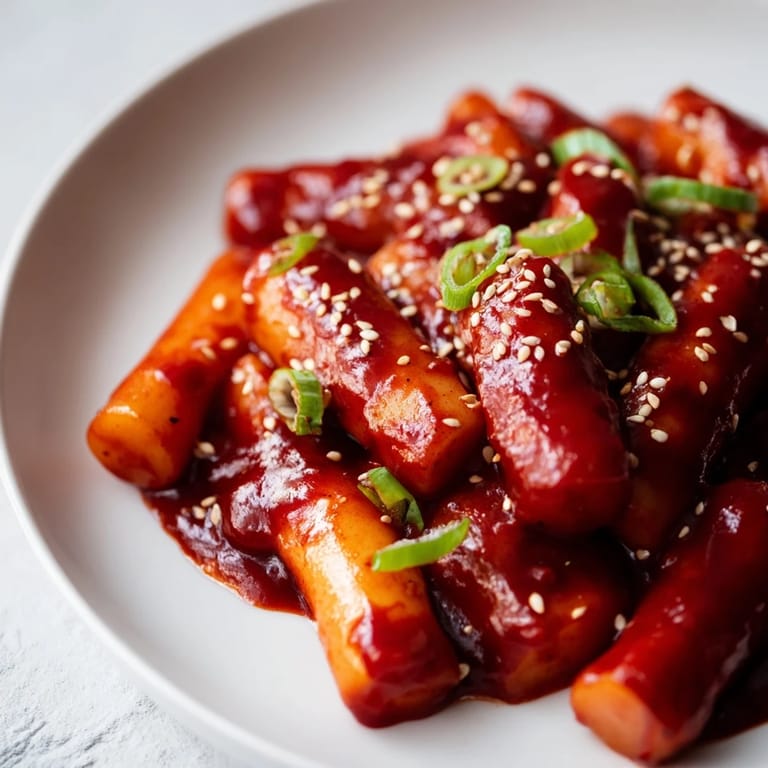
 The first snow of winter always makes me crave tteokbokki. I was craving something warm and chewy one cold afternoon, and my friend Ji-won taught me how to make it from scratch in her tiny kitchen. The smell of gochujang bubbling in the pot, sweet and fiery at once, filled the room and made everything feel right. We stood over the stove, stirring and tasting, laughing at how red our lips turned. That bowl of glossy, spicy rice cakes became my comfort on every chilly day since.
I made this for my roommates during finals week, and it became our study fuel. We would take breaks between essays and equations, crowding around the pot with chopsticks, fishing out rice cakes still glossy with sauce. The steam fogged up the kitchen window, and someone always fought over the last boiled egg. It was messy, loud, and exactly what we needed when everything else felt too serious.
Ingredients
- Korean rice cakes (tteok): These cylindrical beauties turn impossibly chewy and soft when simmered, soaking up every bit of spicy sauce. If they are rock hard from the fridge, a quick soak in warm water brings them back to life.
- Gochujang (Korean chili paste): This fermented paste is the soul of the dish, delivering deep umami, sweetness, and a slow building heat that does not overwhelm. Do not skip it or substitute with sriracha, it is not the same.
- Gochugaru (Korean chili flakes): These coarse red flakes add a brighter, sharper kick and that signature red glow. You can reduce the amount if you are cautious with spice, but a little goes a long way in flavor.
- Soy sauce: It adds salty depth and balances the sweetness of the honey and sugar. I always use regular soy sauce, but tamari works if you need it gluten free.
- Sugar and honey: The combo of granulated sugar and honey creates a glossy, slightly sticky sauce that clings to every rice cake. Corn syrup works too if that is what you have on hand.
- Garlic: Freshly minced garlic punches up the aromatics and makes the whole pot smell like a street vendor is cooking in your kitchen. Do not use jarred, it is not as bright.
- Dried kelp (kombu) and anchovies: These build a savory broth that is miles better than plain water. If you are keeping it vegetarian, just use the kelp and you will still get a subtle oceanic sweetness.
- Green onions: Sliced on the diagonal, they add a fresh, sharp bite that cuts through the richness right at the end. I always add them in the last two minutes so they stay bright green.
- Boiled eggs: Optional but highly recommended, they soak up the spicy sauce and turn into little flavor bombs. Peel them ahead of time to save yourself the hassle mid cook.
- Sesame seeds: A sprinkle at the end adds a nutty crunch and makes the whole dish look like it belongs in a magazine.
Tired of Takeout? 🥡
Get 10 meals you can make faster than delivery arrives. Seriously.
One email. No spam. Unsubscribe anytime.
Instructions
- Wake up the rice cakes:
- If your rice cakes are hard or cold from the fridge, soak them in warm water for about 10 minutes. They will soften up and cook more evenly, turning perfectly chewy instead of chalky.
- Build the broth:
- In a medium pot, combine 3 cups of water with the dried kelp and anchovies if using. Let it simmer gently for 10 minutes, then fish out the kelp and anchovies with a spoon or strainer, leaving behind a fragrant, savory base.
- Mix in the sauce:
- Add the gochujang, gochugaru, soy sauce, sugar, honey, and minced garlic to the broth. Stir well until the paste dissolves completely and the liquid turns a brilliant, glossy red.
- Add the rice cakes and vegetables:
- Toss in the drained rice cakes, sliced onion, and cabbage if you are using it. Bring everything to a gentle boil, stirring occasionally so nothing sticks to the bottom.
- Simmer until thick and chewy:
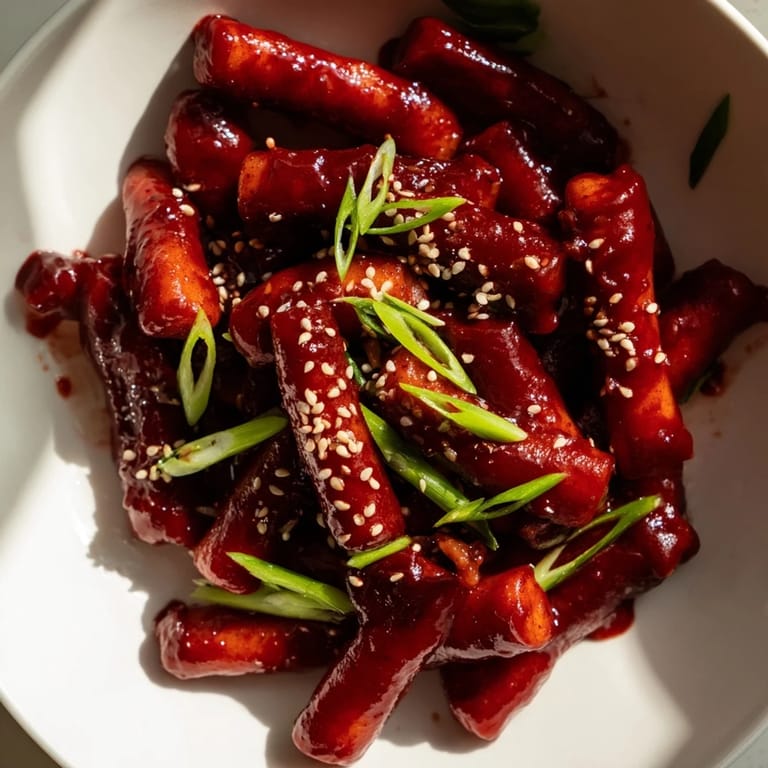
- Let the pot bubble away for 10 to 15 minutes, stirring now and then, until the sauce thickens and clings to the rice cakes like a spicy glaze. The rice cakes should be soft and springy, not hard or mushy.
- Finish with greens and eggs:
- In the last 2 minutes, add the green onions and boiled eggs so they warm through and soak up some of that fiery sauce. Do not overcook the onions, you want them fresh and bright.
- Serve hot and garnish:
- Transfer everything to a serving platter or bowl, sprinkle sesame seeds over the top, and serve immediately while it is still steaming. The sauce will thicken more as it cools, so eat it hot for the best texture.
 Save to Pinterest
 I brought this to a potluck once, and people who had never heard of tteokbokki could not stop eating it. They asked what the chewy things were, why it was so addictive, and if I could teach them. Watching them chase rice cakes around the bowl with chopsticks, laughing at the spice, made me realize food does not need translation. It just needs to taste this good.
Making It Your Own
Once you have the basic sauce down, tteokbokki becomes a blank canvas. I have added sliced fish cakes for extra chew, thrown in ramen noodles during the last few minutes for a heartier meal, and even stirred in mozzarella cheese at the end for a creamy, stretchy twist. Some nights I keep it simple with just rice cakes and green onions. Other times I raid the fridge and toss in whatever vegetables need using, cabbage, mushrooms, even zucchini. The sauce is forgiving and flavors everything it touches.
Storing and Reheating
Leftovers keep in the fridge for up to two days, though the rice cakes will firm up as they cool. When you reheat, add a few tablespoons of water and warm everything gently on the stove, stirring until the sauce loosens and the rice cakes soften again. I do not recommend the microwave, it makes the texture rubbery. If you want to meal prep, cook the sauce separately and store the rice cakes dry, then combine and simmer fresh when you are ready to eat.
Serving Suggestions
Tteokbokki is street food at heart, so it is meant to be eaten casually, straight from the pot or piled on a plate with other snacks. I love serving it alongside crispy fried dumplings, pickled radish for crunch and tang, or a simple cucumber salad to cool things down. If you want to make it a full meal, add a bowl of steamed rice and some kimchi on the side.
- Pair it with a cold beer or a sweet iced barley tea to balance the heat.
- If you are feeding a crowd, double the recipe and keep it warm in a slow cooker.
- Leftovers make an amazing late night snack, eaten cold straight from the fridge when no one is watching.
 Save to Pinterest
 Every time I make tteokbokki, I am back in that tiny kitchen with Ji-won, laughing and tasting and turning our lips red. It is the kind of recipe that sticks with you, not just because it tastes incredible, but because it brings people together over a bubbling pot of something warm, spicy, and impossible to resist.
Recipe Questions & Answers
- → Can I prepare tteokbokki ahead of time?
Yes, you can prepare the broth and chop ingredients up to 24 hours ahead. Cook the rice cakes fresh when ready to serve for the best chewy texture. Leftover tteokbokki keeps refrigerated for 3 days; reheat gently with a splash of water.
- → What's the difference between gochujang and gochugaru?
Gochujang is a fermented chili paste that provides depth and umami, while gochugaru is dried chili flakes that add texture and heat. Both are used together in tteokbokki for complex flavor and appropriate spiciness.
- → How do I make tteokbokki vegetarian?
Omit the anchovies and use kelp-based broth instead. Make sure your gochujang is made without fish-based ingredients. All other components are naturally vegetarian, making a fully plant-based version easy to achieve.
- → Why are my rice cakes mushy?
Overcooking causes mushiness. Soak refrigerated cakes only 10 minutes, and simmer for 10-15 minutes maximum. Start checking at 10 minutes; they should be soft but still hold their shape with a slight chew.
- → Can I adjust the spice level?
Absolutely. Reduce gochugaru for mild heat or increase it for extra kick. Start with less and taste as you cook. You can also add a splash of sugar or honey to balance intense spiciness.
- → What vegetables work well in tteokbokki?
Beyond onion and cabbage, try sliced mushrooms, carrots, sweet potato, spinach, or zucchini. Add firmer vegetables early and delicate ones near the end to maintain proper texture in the simmering sauce.