 Save to Pinterest
 Last summer, I was standing in my kitchen on one of those sweltering afternoons when nothing seemed appetizing, but my body was asking for something nourishing and alive. I grabbed a head of cauliflower almost by habit, tossed it with spices I had scattered across my counter, and while it roasted into golden, caramelized chunks, I started building layers around it: warm lentils brightened with lemon, a silky yogurt sauce touched with tahini and cumin. What emerged felt less like a meal and more like a discovery, as if I'd finally figured out how to make vegetables sing in a way that felt both comforting and exciting.
I brought this to a potluck where everyone was bringing something complicated and fussy, and I almost felt self-conscious about how simple it looked. But within minutes, people were circling back for thirds, and someone asked if I'd be willing to teach them how to make the tahini yogurt because it tasted like nothing they'd ever had before. That's when I realized this dish has this quiet power to it, the kind that doesn't announce itself but lingers long after you've finished eating.
Ingredients
- Cauliflower florets, 1 large head: Cut them into roughly 2-inch pieces so they caramelize evenly without burning at the edges; I've learned that uniformity matters more than you'd think.
- Olive oil, 2 tbsp for cauliflower, 2 tbsp for lentils: Don't skip this or use cooking spray as a substitute, because the oil is what builds those golden, crispy edges.
- Ground cumin, 1 tsp plus 1 tsp more: This spice is the thread that ties the whole dish together, appearing in the roasting blend and the yogurt sauce.
- Smoked paprika, 1/2 tsp: It adds a subtle depth that makes people pause and wonder what you did differently.
- Salt and freshly ground black pepper: Taste as you go because this is where you balance everything.
- Green or brown lentils, 1 cup rinsed: They hold their shape better than red lentils, which is crucial for the texture of this dish.
- Water, 3 cups: Use filtered water if you can, especially if you have hard tap water, because it affects how the lentils cook.
- Bay leaf, 1: Simmering with the lentils adds a subtle background note that brightens everything.
- Lemon, 1 whole: Fresh lemon juice and zest make the entire dish pop in a way bottled juice never will.
- Red onion, 1 small finely diced: The sharpness cuts through the richness and adds color you can see.
- Fresh parsley, 1/4 cup chopped: Add this while the lentils are still warm so it releases its fragrance.
- Plain Greek yogurt, 1 cup: The thickness matters, so don't use the runny kind; if you're vegan, cashew yogurt works beautifully.
- Tahini, 2 tbsp: Stir it well before measuring because it separates, and quality tahini makes a real difference here.
- Garlic clove, 1 finely grated: Grating it with a microplane disperses it evenly through the yogurt instead of leaving hard bits.
- Toasted sesame seeds, 2 tbsp: Toast them yourself for thirty seconds in a dry pan, and the flavor deepens immediately.
- Fresh cilantro or parsley for garnish: Choose whichever you prefer; cilantro leans herbaceous and bold, parsley is milder and green.
- Lemon wedges for serving: People love squeezing fresh lemon over everything at the table.
Tired of Takeout? 🥡
Get 10 meals you can make faster than delivery arrives. Seriously.
One email. No spam. Unsubscribe anytime.
Instructions
- Heat your oven and prep your stage:
- Set your oven to 425°F and line a baking sheet with parchment paper while it preheats. This only takes a moment but sets you up to move quickly once the cauliflower is ready.
- Season and spread the cauliflower:
- Toss your florets with olive oil, cumin, smoked paprika, salt, and pepper until every piece is coated, then lay them out in a single layer. Don't crowd them or they'll steam instead of roast; I've learned this the hard way.
- Roast until golden and tender:
- Let them go for 25 to 30 minutes, giving them a stir halfway through. You'll know they're done when the edges are deeply browned and a fork slides through the floret easily.
- Cook the lentils gently:
- Bring water, lentils, bay leaf, and salt to a boil, then drop the heat down to a simmer and let them cook uncovered for 18 to 20 minutes. You want them soft but still holding their shape, not falling apart into mush.
- Wake up the warm lentils:
- While they're still hot, stir in the lemon zest, lemon juice, olive oil, diced red onion, and parsley. The warmth coaxes out flavors and lets everything meld together beautifully.
- Whisk the tahini yogurt smooth:
- Combine Greek yogurt, tahini, lemon juice, cumin, grated garlic, salt, and pepper in a bowl and whisk until there are no streaks of tahini left. It should be creamy and pourable.
- Assemble on a platter:
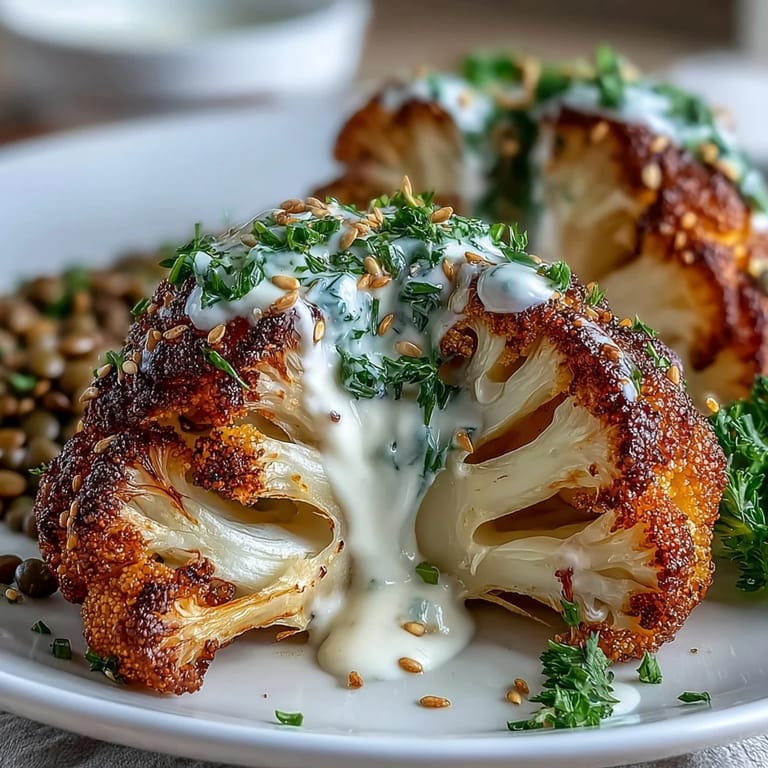
- Spread the warm lentils as your base, then pile the roasted cauliflower on top. Drizzle the tahini yogurt over everything, letting it pool in the corners.
- Finish with seeds and herbs:
- Sprinkle sesame seeds and fresh herbs across the top, and set lemon wedges around the platter for people to use as they like.
 Save to Pinterest
 I remember serving this to someone who'd just become vegetarian and was worried they'd feel like something was missing from their plate. They took one bite of the layers together—the earthiness of the lentils, the sweetness of the cauliflower, the cool creaminess of the yogurt—and their eyes went wide. That moment, when food becomes about more than just nutrition or taste, is when I know I've made something that matters.
The Magic of Layering Flavors
What makes this dish come together isn't any single ingredient but rather how they talk to each other. The cumin appears three times in different forms—roasted with the cauliflower, whisked into the yogurt, and floating as a taste memory across the lentils—so it becomes a familiar friend rather than a spice you notice. The lemon zest adds brightness that cuts through the richness, while the tahini brings a grounding earthiness that makes everything feel complete and whole.
Why Temperature Matters Here
I used to serve this straight from the fridge, thinking cold would be more refreshing, but the magic happens when the lentils are still warm and the cauliflower has cooled just slightly. The warmth opens up the flavors, lets the spices bloom, and makes the yogurt sauce feel like silk against your tongue. You can serve it at room temperature easily enough, but if you have time, warm is the way to go.
Variations That Keep It Interesting
The beauty of this dish is how forgiving it is, how it welcomes additions and swaps without losing its soul. I've thrown in pomegranate seeds when they were in season and it added both tartness and texture, tossed in toasted pine nuts for crunch, and once even added crispy chickpeas when I wanted something more substantial. The foundation is strong enough to hold whatever your pantry offers.
- Pomegranate seeds, toasted nuts, or crispy chickpeas all add texture and interest without changing the core flavors.
- Try serving it as a grain bowl base by stirring in cooked farro or quinoa to make it heartier.
- A drizzle of pomegranate molasses or tahini thinned with water works beautifully if you want to adjust the sauce texture.
 Save to Pinterest
 This is the kind of dish that reminds me why cooking matters, why gathering around food and feeding each other is one of the most human things we do. Make it for yourself on a quiet Tuesday or for a table full of people who need something nourishing and beautiful.
Recipe Questions & Answers
- → Can I make this dish ahead of time?
Yes, the roasted cauliflower, lemon lentils, and tahini yogurt can all be prepared up to 2 days in advance. Store components separately in the refrigerator and assemble when ready to serve. The lentils actually develop more flavor after sitting overnight.
- → What type of lentils work best?
Green or brown lentils hold their shape beautifully during cooking and are ideal for this dish. Avoid red lentils as they become too soft and mushy. Rinse thoroughly before cooking to remove any debris.
- → How do I achieve the best roasted cauliflower?
Spread florets in a single layer without overcrowding the pan. This allows proper air circulation for even caramelization. Turn halfway through cooking and roast until edges are deeply golden and cauliflower is tender throughout.
- → Can I substitute the tahini yogurt?
For a nut-free alternative, try sunflower seed butter or simply increase the lemon and garlic in plain yogurt. The sauce should be tangy, creamy, and well-seasoned to complement the roasted vegetables.
- → What other garnishes work well?
Pomegranate seeds add beautiful color and sweetness. Chopped toasted walnuts or pine nuts provide crunch. Fresh mint leaves offer a bright contrast. A final drizzle of good olive oil elevates the presentation.