 Save to Pinterest
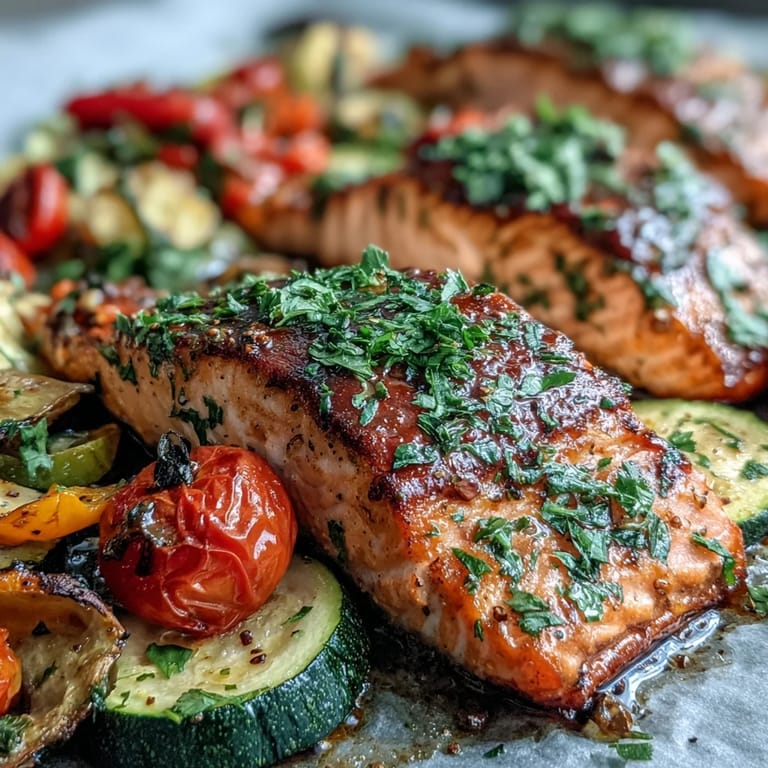
 There's something almost meditative about watching salmon turn golden on a sheet pan while the vegetables around it caramelize into something sweeter than they started. My neighbor stopped by one Tuesday evening asking what smelled so good, and I realized I'd been so focused on getting dinner ready that I'd forgotten to stress about the day. One pan, honest ingredients, twenty-five minutes—that's when I learned that weeknight cooking doesn't need to be complicated to feel like something worth celebrating.
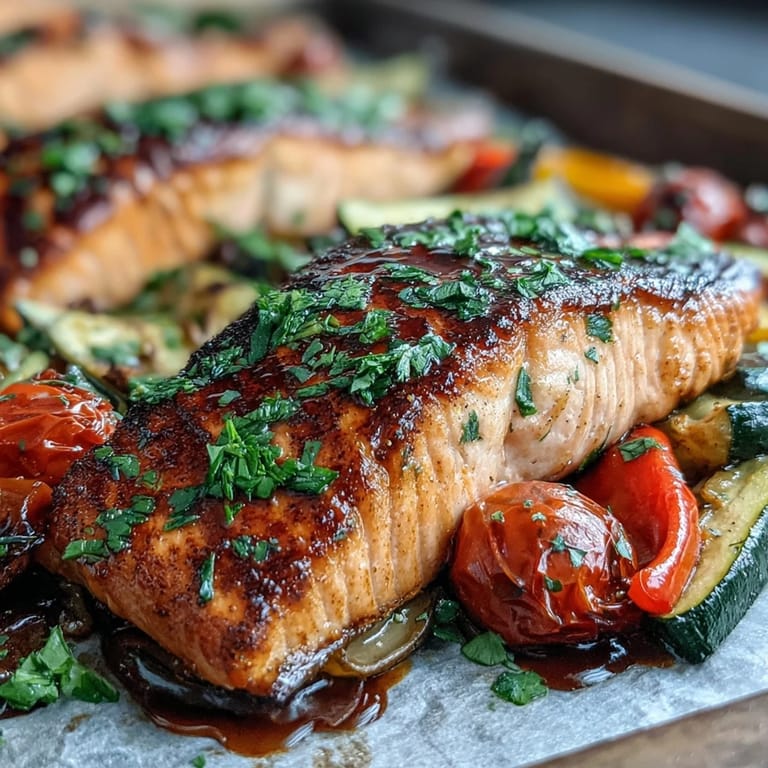
My sister came home from a long work shift, and I threw this together while she showered. When she came down and saw the colors on that sheet pan—the reds and yellows and the pink of the salmon—something shifted in her expression. She sat down without even taking off her shoes, and we ate in the kind of quiet that means the food is doing its job.
Ingredients
- Skinless salmon fillets (4, about 5-6 oz each): Look for fillets that are roughly the same thickness so they cook evenly; if one is noticeably thinner, tuck it under slightly to match the others.
- Olive oil: Use a decent quality here since it's tasted directly rather than hidden, but save your most precious bottle for finishing dishes.
- Lemon zest: Fresh makes a difference that surprised me—the oils in the zest brighten everything in a way bottled juice never quite does.
- Red onion, carrots, bell peppers, zucchini, cherry tomatoes: These vegetables are forgiving about size and technique; they want to caramelize, not soften into submission.
- Dried Italian herbs: A shortcut I stopped being embarrassed about—it's honest seasoning that works.
- Fresh parsley: The final green note that reminds you this is alive and fresh, not just nourishing.
- Lemon wedges: Keep these whole so people can squeeze as much or as little as they want—that small choice matters.
Tired of Takeout? 🥡
Get 10 meals you can make faster than delivery arrives. Seriously.
One email. No spam. Unsubscribe anytime.
Instructions
- Heat your oven and prep the pan:
- Set the oven to 425°F and line a large sheet pan with parchment or foil—this isn't fussiness, it's the difference between easy cleanup and regret. The parchment keeps everything from sticking and helps the vegetables caramelize more evenly.
- Build your vegetable base:
- Toss the onion, carrots, peppers, zucchini, and tomatoes with olive oil, herbs, salt, and pepper in a large bowl until every piece is lightly coated. Spread them across the sheet pan in a single layer, leaving a little space because crowding them means steaming instead of caramelizing.
- Give vegetables a head start:
- Roast for 10 minutes while you finish prepping the salmon—this isn't arbitrary timing, it's the window where vegetables begin to soften while you still catch them before they're too tender.
- Prepare your salmon:
- Pat the fillets dry with paper towels (this helps them brown better), then brush lightly with olive oil and scatter lemon zest, salt, and pepper across the top. The dryness matters more than you'd think.
- Unite everything on the pan:
- Pull the sheet pan out, nestle the salmon fillets among the vegetables, and return it all to the oven. The vegetables will continue cooking while the salmon reaches that tender, flaking point—usually 12 to 15 minutes depending on fillet thickness.
- Finish and serve:
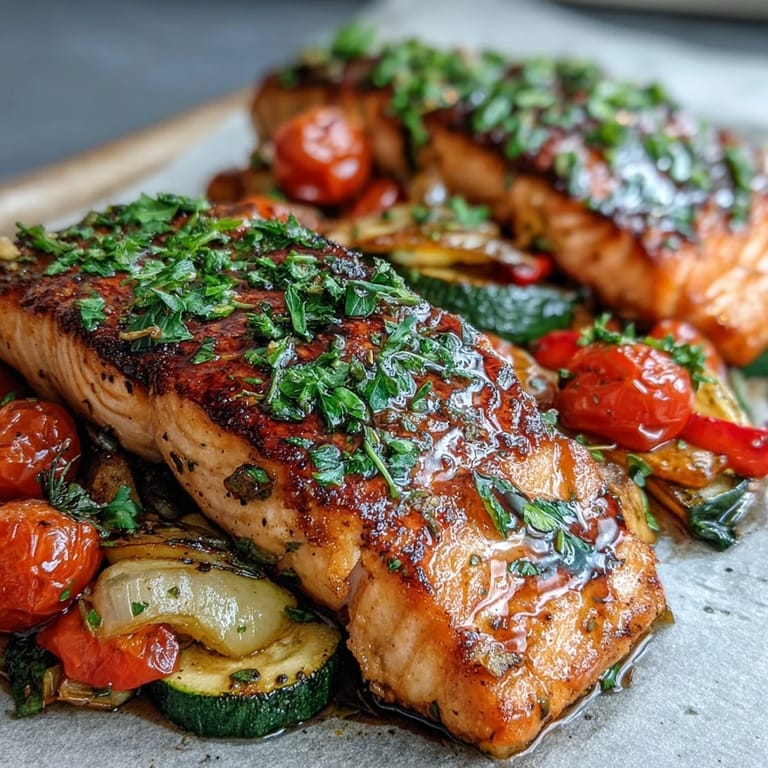
- Remove from the oven, scatter fresh parsley over everything, and bring the whole pan to the table with lemon wedges on the side. There's something about serving it this way that makes people eat slower and enjoy more.
 Save to Pinterest
 I made this for my daughter's first dinner with her new roommate, wanting something that would taste like I'd spent hours worrying about them. They split the pan between the two of them, laughing about how there were no dishes waiting, and I realized that sometimes the most generous thing you can do is give people time back.
When to Make This
Tuesday through Thursday evenings are made for this dish—the ones where you're too tired for takeout but not desperate enough to resort to frozen. Spring and summer are obvious choices when peppers are bright and tomatoes taste like something, but fall works beautifully too with roasted vegetables turning deeper and sweeter. Winter versions work if you add root vegetables like parsnips or adjust your timing slightly.
Swaps That Work
Asparagus, broccoli, or Brussels sprouts can replace any vegetable here depending on what's in your crisper drawer or what you're craving. Cod or halibut swap in for salmon without changing anything else, though the cooking time might shift slightly depending on thickness. A sprinkle of feta or a drizzle of balsamic before serving adds richness if the night calls for something a little more indulgent.
The Small Things That Matter
Uneven vegetable sizes mean uneven cooking—try to keep pieces roughly similar so everything finishes together. Overcrowding the pan is tempting but creates steam instead of the caramelization that makes this special. The lemon wedges aren't decoration; they're the thing that brings everything into focus at the last moment.
- Taste a vegetable piece before serving to make sure the seasoning is right—sheet pan cooking can sometimes need an extra pinch.
- If your oven runs hot, start checking at the 12-minute mark rather than assuming the full 15 minutes.
- Leftovers taste even better the next day, but eat them cold or reheated gently so the salmon doesn't dry out.
 Save to Pinterest
 This meal taught me that dinner doesn't need to be fussy to be memorable. It just needs to be honest, and made with the kind of attention that says you were thinking of the people eating it.
Recipe Questions & Answers
- → What vegetables work best for this dish?
Red onion, carrots, bell peppers, zucchini, and cherry tomatoes are excellent choices. You can also substitute asparagus, broccoli, sweet potatoes, or any other seasonal vegetables that roast well and cook in roughly the same timeframe.
- → How do I know when the salmon is done?
The salmon is ready when it flakes easily with a fork and reaches an internal temperature of 145°F (63°C). The flesh should be opaque and slightly pink throughout, with no translucent areas remaining.
- → Can I use frozen salmon fillets?
Yes, but thaw them completely first and pat them very dry before seasoning. Excess moisture will prevent proper browning and affect the final texture. Thaw in the refrigerator overnight for best results.
- → Why roast the vegetables before adding the salmon?
Most vegetables need longer cooking time than salmon to become tender and develop caramelization. Starting them 10 minutes early ensures everything finishes at the same time, with perfectly cooked fish and properly roasted vegetables.
- → What sides or beverages pair well with this bowl?
A crisp white wine like Sauvignon Blanc complements the salmon beautifully. For a complete meal, serve over quinoa or rice to absorb the roasting juices, or enjoy as-is for a lighter low-carb option.
- → Can I meal prep this for the week?
This dish reheats well and is great for meal prep. Store individual portions in airtight containers for up to 3 days. Reheat gently in the microwave or enjoy cold over greens for a satisfying lunch.