 Save to Pinterest
 One Tuesday evening, my coworker Sarah came back from lunch raving about a salmon bowl she'd grabbed from this tiny spot near her office, describing the way the ginger-soy glaze caught the light on the fish. I was skeptical at first, skeptical that something so simple could be that good, but I decided to recreate it that weekend. The first bite at my kitchen counter completely changed how I thought about weeknight dinners, and honestly, it's been a staple ever since.
I made this for my sister's family on a Sunday afternoon when I was trying to prove that healthy eating didn't mean boring salads and grilled chicken breasts. Watching her eight-year-old ask for seconds on the salmon was the moment I realized this recipe had real staying power, not just for adults chasing wellness but for people who actually care about flavor first.
Ingredients
- Salmon fillets: Four 150-gram pieces with or without skin; buy them from a fishmonger if possible because they'll tell you if it's fresh and you'll taste the difference immediately.
- Soy sauce: Low sodium works best so you control the saltiness rather than the bottle controlling you.
- Honey or maple syrup: This rounds out the salty-spicy profile and creates that sticky glaze that catches the heat.
- Fresh ginger: Grate it yourself instead of using the jar version; the bite is completely different and worth the thirty seconds.
- Garlic cloves: Two cloves minced fine, not pressed, because the texture matters when it hits the hot pan.
- Rice vinegar: The acidity cuts through richness and keeps the marinade from being one-note.
- Sesame oil: Use the dark toasted kind; a little goes further and smells like actual sesame instead of nothing.
- Sriracha or chili paste: Optional, but I always add it because the subtle heat makes everything taste brighter.
- Sesame seeds: Toast them yourself in a dry pan for two minutes if you have time; they're punchier and fresher.
- Jasmine or sushi rice: Jasmine absorbs the marinade drizzle beautifully and stays tender without getting mushy.
- Edamame: Frozen shelled ones are your friend here; no extra prep and they're always tender.
- Shredded carrots: Buy them pre-shredded if your schedule is tight, but shred them yourself if you have ten minutes because they're crisper.
- Red bell pepper: Slice it thin so it softens quickly and picks up the sesame oil flavor.
- Baby bok choy or snap peas: Either works; bok choy gets silkier while snap peas stay snappy.
- Green onions: Slice them thin and scatter them on last so they don't wilt into nothing.
- Avocado: Add it right before serving or it'll brown and look sad by the time you eat.
- Cilantro or microgreens: Optional, but they give the bowl this final fresh note that rounds everything out.
- Lime wedges: Squeeze them over the bowl at the end; the brightness is essential.
Tired of Takeout? 🥡
Get 10 meals you can make faster than delivery arrives. Seriously.
One email. No spam. Unsubscribe anytime.
Instructions
- Build the marinade:
- Whisk together soy sauce, honey, ginger, garlic, rice vinegar, sesame oil, and sriracha in a bowl, and pour two tablespoons into a small container to save for drizzling later because you'll want it at the end. The finished mixture should smell sharp and slightly sweet, and when you taste a tiny drop on your finger, it should make you pause for a second.
- Marinate the salmon:
- Place your salmon fillets in a shallow dish or resealable bag and pour the marinade over them, turning to coat everything evenly. Refrigerate for 15 to 30 minutes; even 15 minutes makes a difference, but don't stress if you're in a rush because the ginger and garlic still do their work.
- Start the rice:
- Rinse jasmine rice under cold water until the water runs mostly clear, then combine with water and a small pinch of salt in a saucepan. Bring to a boil, drop the heat to low, cover, and simmer for exactly 15 minutes without lifting the lid because the steam is doing important work.
- Stir-fry the vegetables:
- Heat one tablespoon of sesame oil in a large nonstick skillet over medium-high heat and add edamame, carrots, bell pepper, and bok choy, stirring constantly for three to four minutes until they're crisp-tender with a little color. You want them still snappy, not soft, because they'll keep cooking slightly from residual heat after you pull them off the pan.
- Sear the salmon:
- Remove salmon from the marinade and discard what's left, then add a splash of fresh oil to the same skillet if it looks dry. Sear the fillets over medium-high heat for three to four minutes per side until the exterior has a light crust and the inside is cooked through, then sprinkle with sesame seeds while they're still hot so they stick.
- Assemble and serve:
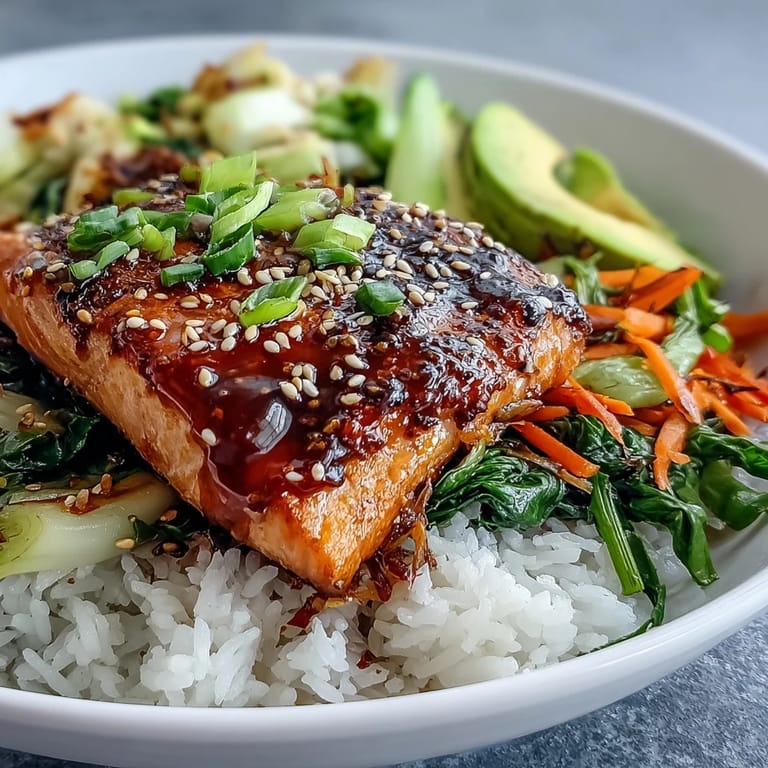
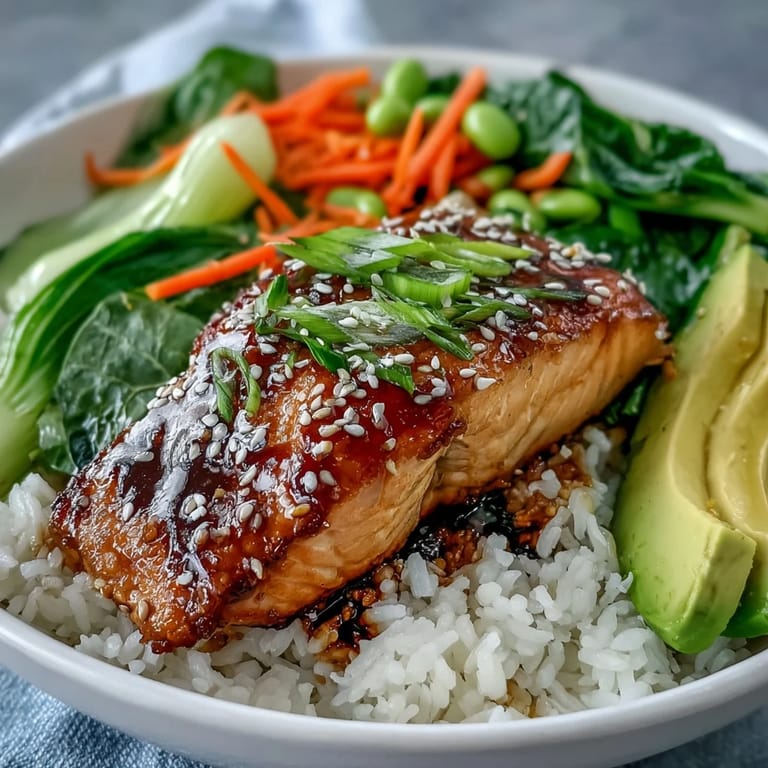
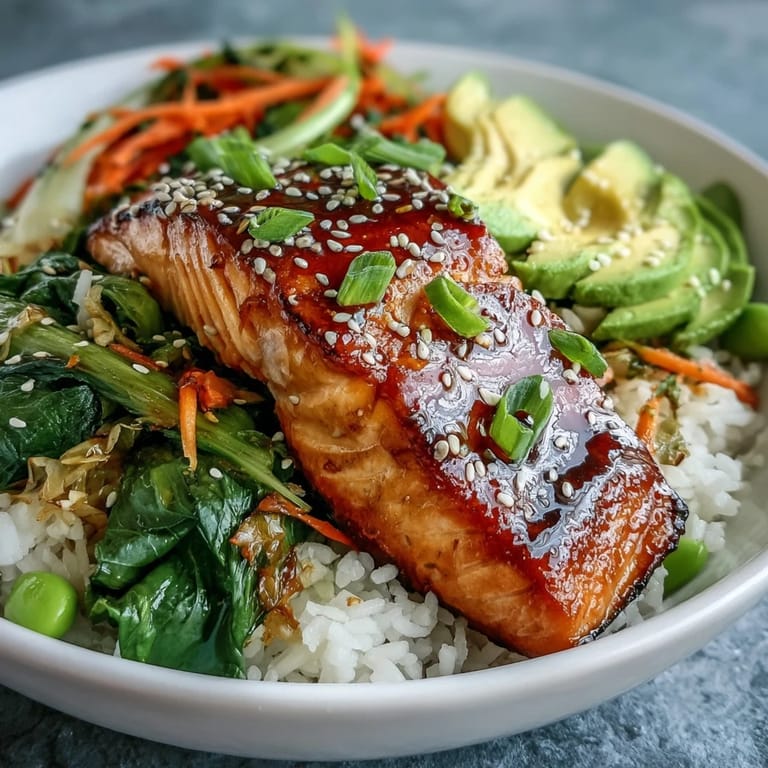
- Divide fluffy rice among four bowls, top each with vegetables, one salmon fillet, avocado slices, green onions, and any cilantro or microgreens you're using. Drizzle the reserved marinade over everything and serve immediately with lime wedges on the side.
 Save to Pinterest
 My neighbor came over after I made this, drawn in by the smell of ginger and sesame oil drifting through our shared hallway wall, and we ended up sitting on my kitchen counter eating directly from the bowls and talking about nothing important until the rice got cold. That's when I knew this wasn't just a recipe, but something that makes people want to slow down and stay awhile.
The Glaze That Changed Everything
The magic of this bowl lives entirely in that soy-ginger glaze, and understanding why it works is half the battle. The honey melts into the soy and sesame oil, creating this glossy coating that caramelizes slightly when the salmon hits the hot pan, and that's where the depth comes from, not from any single ingredient but from how they transform together. I spent months trying to figure out why restaurant versions tasted so good, and it turns out they're just letting the same four flavors do what they naturally do: salt from soy, sweetness from honey, heat and bite from fresh ginger, and richness from sesame oil.
Making It Your Own
This bowl has endless room for variation, and honestly, that's why it stays interesting in my rotation. Some weeks I swap in brown rice or cauliflower rice depending on what I'm feeling, other times I add pickled ginger or sliced radish for a sour note, and once I threw in crispy shallots because I had them and couldn't resist. The core stays the same, but the personality changes, which means it never feels repetitive even when you're making it every other week like I do.
Timing and Temperature Matter More Than You Think
The one thing that separates a mediocre salmon bowl from a really good one is understanding heat and timing, which sounds fancy but just means keeping everything moving at the right pace. Your rice needs to be fluffy and warm, your vegetables should be fresh and still slightly crisp, and your salmon should be cooked through but not dry, which happens when you respect the three to four minute window per side. Everything hitting the bowl warm is essential because cold components turn the whole thing into something sad when it should feel vibrant.
- Cook the rice first because it'll stay warm while you handle everything else.
- Get your vegetables in the pan while the salmon marinates so nothing is sitting around cold.
- Sear the salmon last so it finishes hot and the glaze is still sticky when it hits the bowl.
 Save to Pinterest
 This bowl has quietly become my answer to almost every question about quick weeknight cooking, and it's because it tastes intentional without demanding anything fancy from you. Make it once and it'll probably make it into your regular rotation too.
Recipe Questions & Answers
- → Can I use frozen salmon fillets?
Yes, frozen salmon works well. Thaw completely in the refrigerator before marinating to ensure even flavor penetration and proper cooking.
- → What vegetables can I substitute?
Feel free to swap in snap peas, shredded cabbage, sliced cucumber, or steamed broccoli based on what's available or in season.
- → Is this suitable for meal prep?
Absolutely. Store components separately in airtight containers for up to 3 days. Reheat salmon and vegetables gently before assembling.
- → Can I make this gluten-free?
Simply replace regular soy sauce with tamari or coconut aminos. Ensure all other ingredients, particularly the sriracha, are certified gluten-free.
- → How do I know when the salmon is done?
The salmon is finished when it flakes easily with a fork and reaches an internal temperature of 145°F (63°C). The flesh should appear opaque throughout.
- → Can I grill the salmon instead?
Certainly. Grill over medium-high heat for 4-5 minutes per side, basting with marinade during the last few minutes for a smoky charred flavor.