 Save to Pinterest
 One Tuesday evening, I was scrolling through my phone while waiting for water to boil when a photo of a glistening teriyaki salmon bowl stopped me mid-scroll. The glossy glaze caught the light in that perfect way that made me think about how restaurant food always looks impossibly good until you realize it just takes a few smart moves at home. I closed my phone and decided to figure it out that night, and what emerged from my kitchen was so good I made it three times that week without meaning to.
I made this for my sister when she was visiting and mentioned she was tired of takeout boxes piling up in her recycling bin. Watching her take that first bite and immediately ask for the recipe felt like the small victory it was, and now she texts me photos of her versions with different vegetables depending on the season.
Ingredients
- Salmon fillets (4, about 150g each): Look for fillets that feel firm and smell like the ocean, not fishy, and let them sit at room temperature for ten minutes before cooking so they cook evenly.
- Soy sauce (60 ml): This is the backbone of everything, so grab the good stuff if you can, and if you need gluten-free, check the label because not all soy sauce is created equal.
- Mirin (60 ml): This sweet rice wine is what makes the glaze sticky and glossy, and it's worth keeping in your pantry because it elevates so many dishes beyond just this one.
- Brown sugar (2 tbsp): A bit of sweetness balances the salt, but resist the urge to add more or the sauce tips toward cloying instead of balanced.
- Rice vinegar (1 tbsp): This keeps everything bright and prevents the sauce from sitting too heavy on your palate.
- Sesame oil (2 tsp): Use the dark stuff and measure carefully because its flavor is concentrated and a little goes a long way.
- Garlic and ginger (2 cloves garlic, 1 tsp ginger): Both minced fresh, because the dried versions miss the sharpness that makes this sauce taste alive.
- Cornstarch slurry (1 tsp cornstarch plus 2 tsp water): This is the secret to that restaurant-quality glaze that clings to the salmon instead of running off into the bowl.
- Bell pepper, carrot, broccoli, and sugar snap peas: Any combination of crisp vegetables works here, and the joy is in that textural contrast between tender salmon and vegetables that still have a bit of snap.
- Jasmine or sushi rice (300 g): Jasmine rice is forgiving and fluffy, which is exactly what you want under something as rich as glazed salmon.
- Sesame seeds and spring onions (optional garnishes): These feel optional until you taste how they finish the bowl, then they suddenly feel essential.
Tired of Takeout? 🥡
Get 10 meals you can make faster than delivery arrives. Seriously.
One email. No spam. Unsubscribe anytime.
Instructions
- Prepare the rice foundation:
- Rinse the rice under cold water until the water runs clear, which takes longer than you think but makes a real difference in the final texture. Combine with water in a saucepan, bring to a boil, then drop the heat down low, cover it, and let it simmer gently for fifteen minutes before turning off the heat completely and letting it rest covered for five more minutes.
- Build the teriyaki magic:
- While the rice is doing its thing, combine soy sauce, mirin, brown sugar, rice vinegar, sesame oil, minced garlic, and grated ginger in a small saucepan over medium heat, stirring until you see the sugar dissolve into the liquid. Once everything looks unified and glossy, stir in that cornstarch slurry and watch as the sauce transforms into something thick and cling-worthy within a minute or two.
- Sear the salmon:
- Season your salmon fillets simply with salt and pepper, then heat a nonstick skillet over medium-high heat until a drop of water skitters across the surface. If your salmon has skin, place it skin-side down first for three to four minutes until the skin renders and crisps, then flip for another two to three minutes until the flesh is opaque throughout.
- Glaze and finish:
- Brush the cooked salmon generously with that teriyaki sauce and let it cook together for just one minute so the glaze sets slightly without burning.
- Stir-fry the vegetables:
- In a wok or large skillet over high heat, get your oil shimmering, then add your vegetables in order of cooking time, starting with carrot and broccoli before adding the quicker-cooking pepper and snap peas. Three to four minutes total is your target, and you want them still a little crisp when you pull them off the heat.
- Compose the bowls:
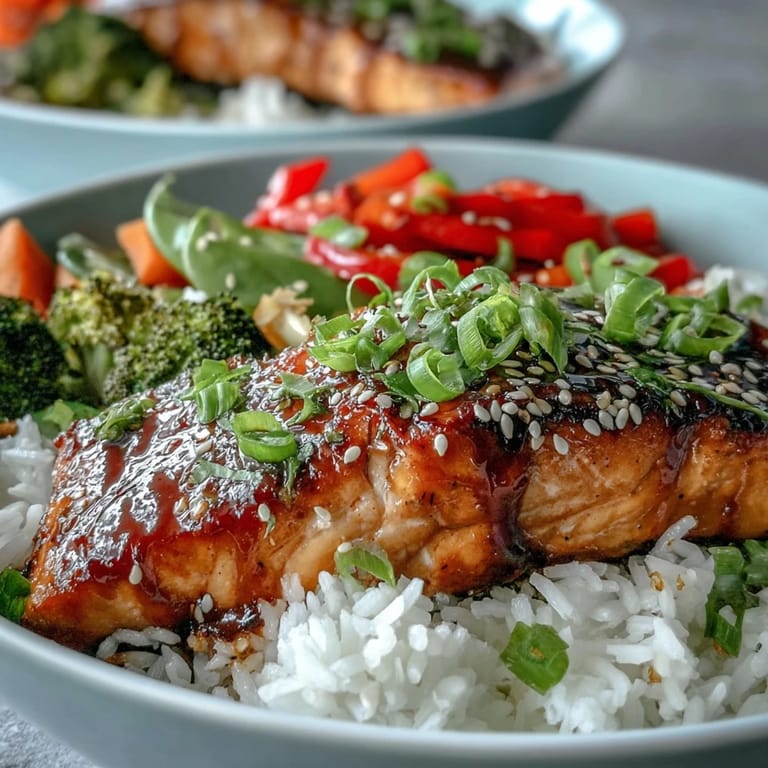
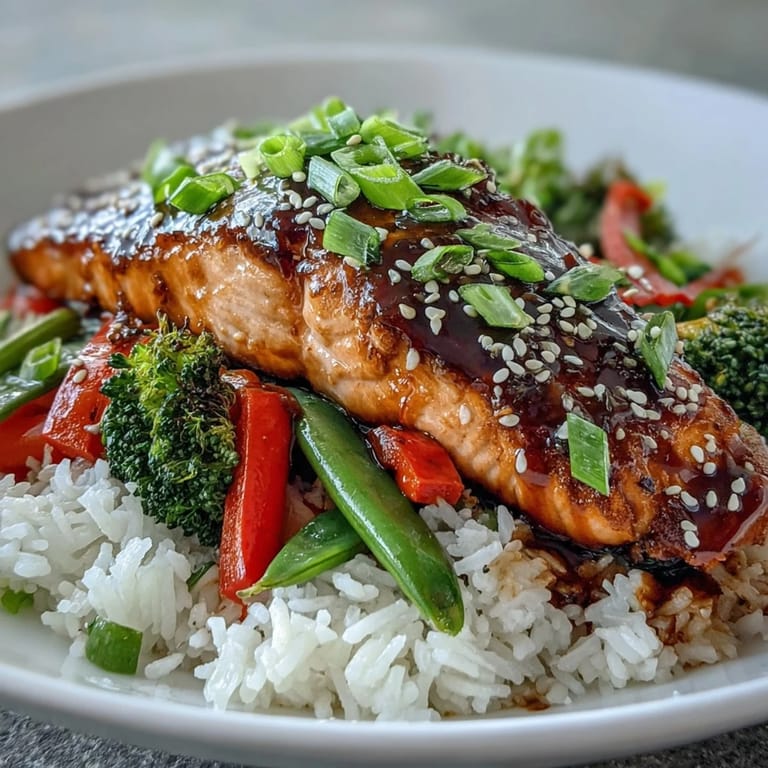
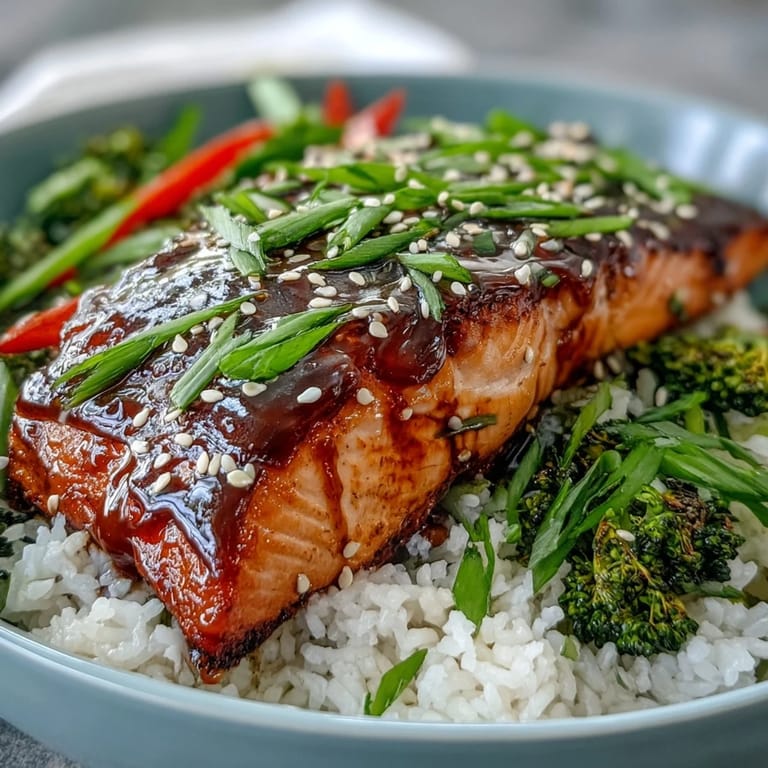
- Divide the fluffy rice between bowls, top with your jewel-bright vegetables and the glossy salmon fillet, then drizzle with extra sauce and scatter sesame seeds and sliced spring onions over everything.
 Save to Pinterest
 There was a night when I made this for my partner after a particularly frustrating day at work, and something about the process of slicing vegetables and building the sauce seemed to unknot the tension in the room. By the time we sat down with those steaming bowls, the bad mood had somehow gotten smaller, and the food tasted like care in the simplest way.
Why This Tastes Like Restaurant Food
The secret is less about technique and more about not skipping steps or cutting corners on heat and timing. High heat on that salmon gets you a little crust while keeping the inside tender, and letting that rice rest gives the starches time to set up properly so each grain stays distinct. When everything finishes at roughly the same time and gets assembled while still warm, you get that moment where all the components come together and suddenly taste more than the sum of their parts.
How to Customize This Bowl
This recipe thrives on flexibility because the teriyaki sauce works with almost any vegetable you have on hand, which means you can follow the seasons instead of a rigid ingredient list. Winter calls for mushrooms and bok choy, spring brings sugar snap peas and asparagus, and summer is the time to pile on zucchini and baby corn. The salmon stays constant and everything else can shift based on what looks good at the market or what happens to be in your crisper drawer.
Timing and Make-Ahead Options
The entire meal comes together in about thirty-five minutes, which includes rinsing the rice and making the sauce from scratch, so there are no hidden shortcuts needed. If you want to prep ahead, you can make the teriyaki sauce the night before and keep it in the fridge, or you can marinate the salmon in half the sauce for about fifteen minutes before cooking if you want extra depth of flavor.
- Cook the rice ahead and reheat it gently with a splash of water if needed, which takes stress off timing on busy nights.
- Slice and prepare all your vegetables before you start cooking so everything happens quickly once the heat comes up.
- Have your garnishes prepped and within arm's reach so the final assembly feels effortless instead of rushed.
 Save to Pinterest
 This bowl has become one of those reliable meals that tastes different depending on your mood but always lands exactly where it needs to. Make it once and it becomes part of your regular rotation without feeling like a chore.
Recipe Questions & Answers
- → What cut of salmon works best?
Fillets about 150g each work perfectly, whether skin-on or skinless. Skin-on helps keep the fish moist during cooking and adds crispy texture when seared properly.
- → Can I use other rice varieties?
Absolutely. While jasmine or sushi rice is traditional, brown rice, basmati, or even quinoa work well. Just adjust cooking liquid and time according to package directions.
- → How do I store leftovers?
Store components separately in airtight containers in the refrigerator for up to 3 days. Reheat gently and assemble fresh bowls to maintain texture and flavor.
- → Is the teriyaki sauce make-ahead friendly?
Yes, prepare the sauce up to a week in advance and store it in the refrigerator. It may thicken when cold—just warm gently with a splash of water before using.
- → What vegetables can I substitute?
Any quick-cooking vegetables work beautifully. Try zucchini, mushrooms, baby corn, snow peas, or bok choy. Use whatever's in season for the best flavor and value.