 Save to Pinterest
 There's something almost meditative about standing over a hot wok, watching thin slices of beef transform from raw to caramelized in what feels like seconds. I discovered this teriyaki bowl on an ordinary Tuesday when I had leftover flank steak and a craving for something restaurant-quality but doable on a weeknight. The magic isn't in fancy technique—it's in that glossy, umami-rich sauce that clings to every grain of rice and vegetable. Once you nail this, it becomes the dish you make when you want to impress someone or just treat yourself right.
I made this for my partner on a rainy evening after they'd had one of those days where everything goes wrong. The sizzle of the beef hitting the hot oil, the way the kitchen filled with that sweet-savory aroma—it seemed to shift the entire mood of the apartment. By the time we sat down with those steaming bowls, the day didn't matter anymore. Food doesn't always have to be complicated to feel like comfort.
Ingredients
- Flank steak or sirloin, thinly sliced (500 g): The thinner you slice it, the faster it cooks and the more tender it becomes—a sharp knife or a partially frozen steak makes this easier than you'd think.
- Cornstarch (2 tbsp total): This does double duty: it coats the beef for a silky texture and thickens the sauce to glossy perfection without corniness.
- Vegetable oil (1 tbsp): Use something neutral and high-heat tolerant—this isn't the moment for delicate oils.
- Soy sauce (80 ml): This is your umami backbone; don't skimp on quality, and if you need it gluten-free, tamari works beautifully.
- Mirin (60 ml): Sweet rice wine that adds depth without tasting cloying—there's really no substitute here.
- Honey or brown sugar (2 tbsp): Honey dissolves more smoothly, but brown sugar gives a deeper molasses note if that's your preference.
- Rice vinegar (2 tbsp): The acidity cuts through the richness and keeps everything balanced and bright.
- Garlic and ginger (2 cloves and 1 tsp): Fresh is non-negotiable—they perfume the entire sauce with warmth and life.
- Mixed vegetables (carrot, bell pepper, broccoli, spring onions): Choose vegetables that hold their shape slightly—you want a little resistance when you bite, not mush.
- Cooked rice (2 cups): Warm rice absorbs the sauce beautifully; day-old rice works too, just reheat it gently.
- Sesame seeds and extra spring onions: These aren't just garnish—they add textural contrast and a fresh finish that makes the dish feel complete.
Tired of Takeout? 🥡
Get 10 meals you can make faster than delivery arrives. Seriously.
One email. No spam. Unsubscribe anytime.
Instructions
- Build your sauce foundation:
- In a small saucepan, combine soy sauce, mirin, honey, rice vinegar, minced garlic, and grated ginger over medium heat. Let it come to a gentle simmer—you want to see tiny bubbles breaking the surface, not a rolling boil. The aromatics will start releasing into the liquid, and your kitchen will smell incredible.
- Thicken it to glossy perfection:
- Mix your cornstarch slurry (cornstarch plus water) and whisk it into the simmering sauce in a slow stream, stirring constantly. You'll watch it go from thin to silky-thick in about 2-3 minutes—stop before it gets gluey, and remember it'll thicken a bit more as it cools. Set it aside and let it cool slightly.
- Coat your beef:
- Toss your thinly sliced beef with 1 tablespoon of cornstarch in a bowl until every piece is lightly dusted. This coating is what gives you that restaurant-style texture—don't skip this step.
- Sear with confidence:
- Heat your oil in a large skillet or wok over high heat until it shimmers and moves like water. Add the beef in a single layer (work in batches if needed—crowding the pan is the enemy) and resist the urge to move it around for the first minute. Let it develop color, then toss and cook for another 1-2 minutes until it's browned on the outside but still tender within. Remove it to a clean plate.
- Stir-fry your vegetables:
- In that same skillet, add your carrots, bell pepper, and broccoli and keep the heat high. Stir constantly for 3-4 minutes—you're looking for vegetables that have some color and slight softness but still have a whisper of crunch. This is where you taste and trust your instincts about doneness.
- Bring it all together:
- Return the beef to the skillet, pour that beautiful sauce over everything, and toss gently but thoroughly so every piece gets coated. Heat it all through for just 1 minute—you're warming, not cooking further.
- Plate and finish:
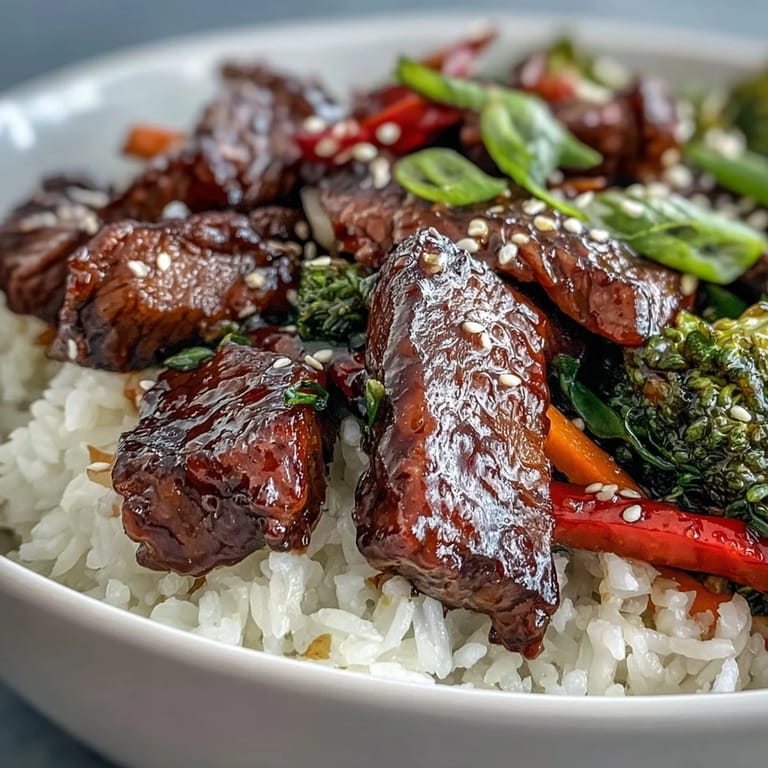
- Divide hot rice among bowls, top with the beef and vegetable mixture, scatter with sliced spring onions and sesame seeds, and serve immediately while everything is still steaming.
 Save to Pinterest
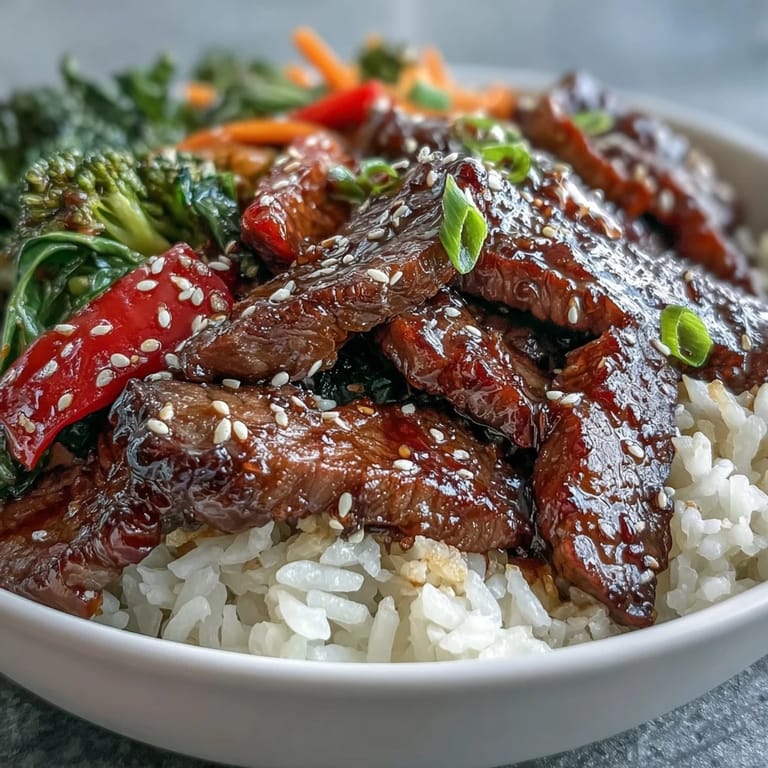
 What strikes me most about this dish is how it bridges the gap between weeknight cooking and feeling genuinely special. There's no pretense, no complicated techniques, yet it delivers that moment of satisfaction when everything comes together just right.
The Secret to Tender Beef
Slicing against the grain isn't just technique—it's the difference between beef that melts on your tongue and beef that requires actual chewing. If your butcher can slice it for you, even better. The cornstarch coating then becomes a little insurance policy: it helps the meat cook evenly while creating that silky mouthfeel you'd otherwise only get from a longer braise.
Why This Sauce Works
The teriyaki sauce is a four-part harmony: soy brings salt and umami, mirin adds sweetness and body, vinegar provides brightness and cut, and the cornstarch slurry gives you that glossy cling. The garlic and ginger whisper underneath, never loud, just essential. Once you understand how these elements work together, you'll start reaching for this sauce for grilled chicken, pan-seared tofu, or even roasted vegetables.
Variations and Swaps
Chicken thighs work gorgeously here if you prefer poultry, and tofu becomes silky-edged perfection if cooked the same way. For vegetables, think beyond my suggestions: snap peas add crunch, mushrooms contribute earthiness, edamame brings protein and pop. The structure stays the same; only the players change. Here's what I've learned works best:
- Swap proteins mindfully—darker meats like chicken thighs stay juicier than white meat in this style of cooking.
- If using tofu, press it first and pan-fry it separately to develop color before adding to the vegetables.
- Add tougher vegetables (carrots, broccoli) first and quicker ones (snap peas, asparagus) toward the end so everything finishes together.
 Save to Pinterest
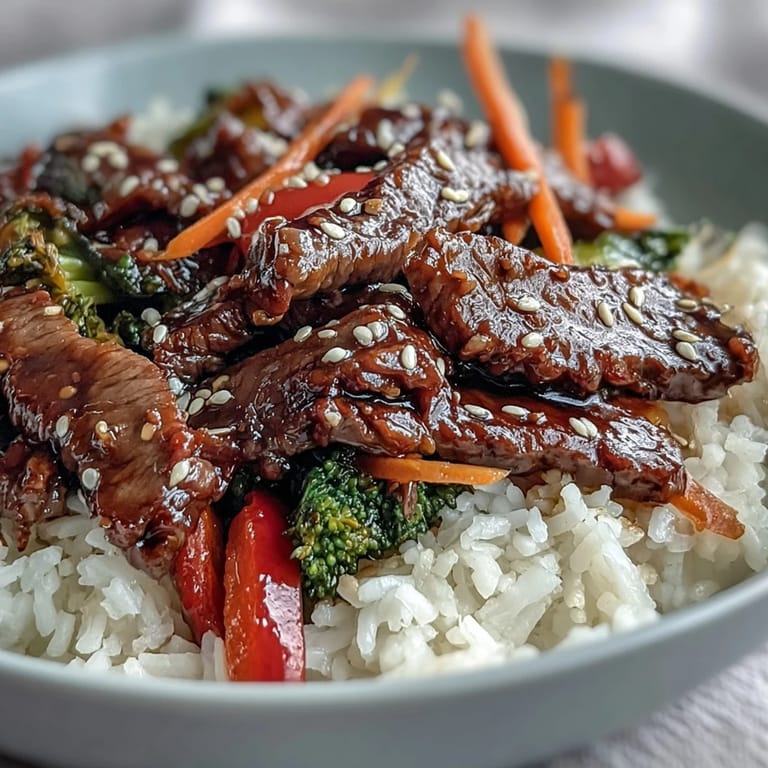
 This bowl has become my go-to when I want something that feels indulgent but doesn't require hours of effort. It's proof that good food is more about understanding your ingredients and keeping your technique simple than it is about complexity.
Recipe Questions & Answers
- → What cut of beef works best?
Flank steak or sirloin are ideal choices because they're tender and slice beautifully against the grain. Look for well-marbled pieces that will stay juicy during quick stir-frying.
- → Can I make the sauce ahead?
Absolutely. Prepare the teriyaki sauce up to 5 days in advance and store it in an airtight container in the refrigerator. Reheat gently with a splash of water if it becomes too thick.
- → How do I get restaurant-style tender beef?
Coating the beef slices in cornstarch before cooking creates a protective layer that seals in juices. Stir-fry over high heat for just 2-3 minutes to avoid overcooking.
- → What vegetables can I add?
Snap peas, edamame, shiitake mushrooms, or baby corn all work wonderfully. The key is cutting everything into similar-sized pieces so they cook evenly.
- → Is this gluten-free?
The traditional version uses soy sauce which contains wheat. Simply substitute with tamari or a certified gluten-free soy sauce to make it completely gluten-free.
- → Can I use brown rice instead?
Brown rice is an excellent choice and adds nutty flavor plus extra fiber. Just note it may require about 45 minutes to cook, so start it before prepping other ingredients.