 Save to Pinterest
 My roommate in college used to make this every Sunday night with whatever kimchi was left in the fridge. The smell of gochujang hitting hot oil would drift through our tiny apartment, and I'd wander into the kitchen pretending I wasn't already salivating. She taught me that day-old rice was the secret, that fresh rice turns to mush. Now I cook extra rice on purpose just so I can make this the next day.
I made this for my sister after she had a terrible week at work, the kind where you just need something warm and a little aggressive on the palate. She sat at my kitchen counter, quiet at first, then halfway through her bowl she looked up and said it tasted like a hug that also slapped you awake. We laughed so hard I nearly burned the second batch. That's the thing about kimchi fried rice: it's comfort and fire all at once.
Ingredients
- Cold cooked white rice: Day-old rice is drier and separates beautifully in the pan, while fresh rice clumps and gets gummy no matter how hard you stir.
- Napa cabbage kimchi: The soul of this dish, bringing sour, spicy, funky depth that no other ingredient can replicate, and that juice is liquid gold for flavor.
- Eggs: They add richness and a silky texture that balances the heat, plus scrambling them right in the pan saves you a dish.
- Onion and green onions: The regular onion gives a sweet base, while green onions add a fresh, sharp bite at the end that brightens everything up.
- Gochujang: This Korean chili paste is sweet, savory, and spicy all at once, coating every grain of rice with a deep red glow.
- Soy sauce: It brings umami and saltiness, tying all the bold flavors together without overpowering the kimchi.
- Toasted sesame oil: Just a drizzle at the end adds a nutty aroma that makes the whole dish smell like a street food stall in Seoul.
- Vegetable oil: A neutral oil with a high smoke point lets you get that wok heat without burning anything.
- Sugar: A tiny bit tames the acidity of the kimchi and rounds out the flavors, though you can skip it if your kimchi is already on the sweeter side.
- Optional pork belly, Spam, or tofu: Any of these add protein and another layer of texture, turning this from a side into a full meal.
- Toasted sesame seeds and seaweed strips: They're the final flourish, adding crunch and a hint of the ocean that makes every bite feel complete.
Tired of Takeout? 🥡
Get 10 meals you can make faster than delivery arrives. Seriously.
One email. No spam. Unsubscribe anytime.
Instructions
- Start with the aromatics:
- Heat your oil until it shimmers, then toss in the onion, white parts of the green onion, and carrot if you're using it. Let them sizzle and soften for a couple of minutes until your kitchen smells sweet and welcoming.
- Bring in the kimchi:
- Add the chopped kimchi and let it fry for a few minutes, stirring occasionally so it caramelizes at the edges. This is where the magic starts, when the tangy funk turns into something deeper and almost sweet.
- Mix in the sauces:
- Stir in the gochujang, soy sauce, and sugar, coating everything in that glossy red paste. It should smell bold and a little spicy, making you lean back from the steam.
- Scramble the eggs:
- Push everything to one side of the pan and crack your eggs into the empty space. Scramble them quickly until they're just set, then mix them back into the kimchi mixture.
- Add the rice:
- Break up any clumps of cold rice with your hands or a spoon, then toss it into the pan. Pour in the kimchi juice and stir-fry everything together for a few minutes until the rice is hot and every grain is coated in that spicy, tangy sauce.
- Finish with sesame and greens:
- Drizzle sesame oil over the top and fold in the green parts of the green onions along with any cooked meat or tofu. The sesame oil will perfume the whole dish, and the green onions add a fresh snap.
- Taste and serve:
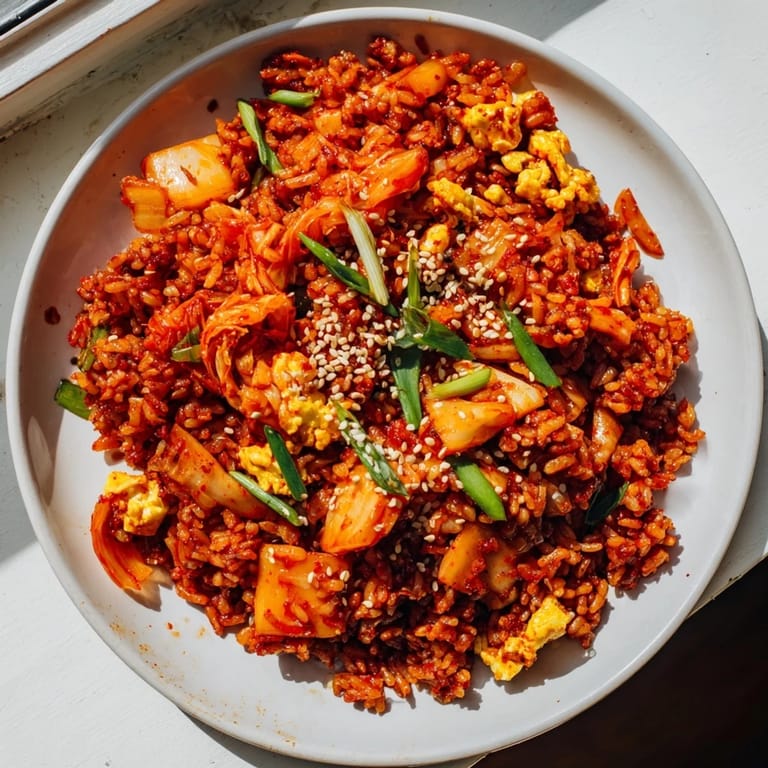
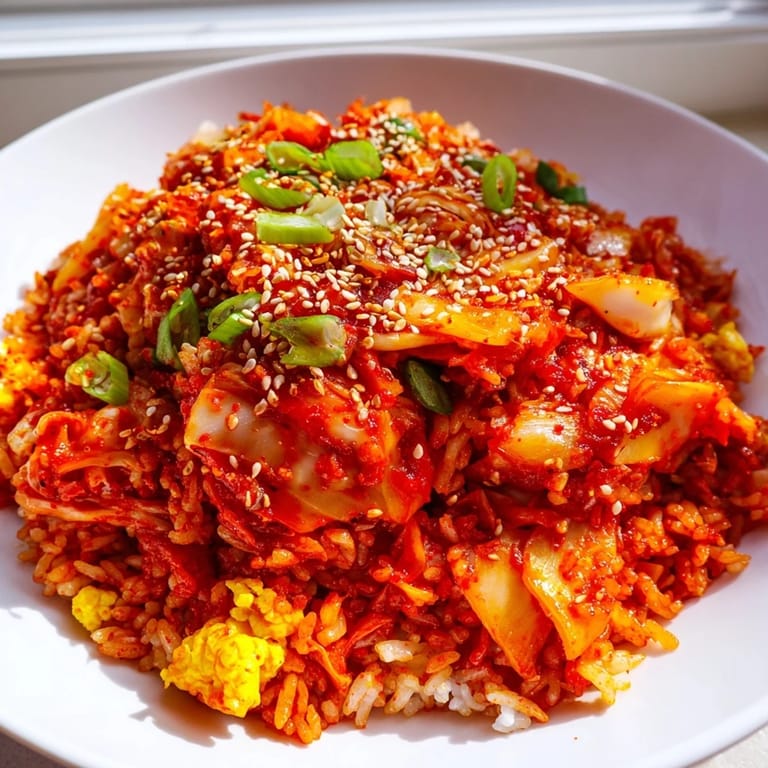
- Give it a quick taste and adjust with more soy sauce or gochujang if needed. Plate it up hot, sprinkle with sesame seeds, more green onion, and seaweed strips if you have them.
 Save to Pinterest
 One night I made this for a friend who swore she didn't like spicy food. I toned down the gochujang, worried she'd hate it, but she finished her entire bowl and asked for seconds. She said it wasn't the kind of spice that punished you, it was the kind that made you feel alive. We sat on my balcony with our bowls, the city humming below us, and I realized some recipes don't just feed you, they open doors.
Making It Your Own
This recipe is forgiving and adaptable in ways that make it perfect for whatever you have on hand. If you're out of eggs, skip them or cube up some firm tofu and fry it until golden before adding the rice. I've made this with brown rice when I was trying to be healthy, and it worked beautifully, just needed an extra minute of stirring. You can also swap the carrot for zucchini, mushrooms, or even frozen peas. The core is always the kimchi and gochujang, everything else is just along for the ride.
Pairing and Serving Ideas
I like to serve this with a simple cucumber salad dressed in rice vinegar and a pinch of sugar, something cool and crunchy to balance the heat. A fried egg on top with a runny yolk is a classic move, the yolk breaks and mixes into the rice like a creamy sauce. If you're feeding a crowd, double the recipe and serve it family-style in a big bowl with all the garnishes on the side so people can customize their plates. It also reheats surprisingly well, though it never lasts long enough in my house to test that theory properly.
Storage and Meal Prep
Leftovers keep in an airtight container in the fridge for up to three days, and they reheat beautifully in a hot skillet with a splash of water to loosen things up. I've even packed this cold for lunch and eaten it straight from the container, and it still tasted great. If you want to meal prep, cook a big batch of rice at the start of the week and keep it in the fridge so you can whip this up in minutes whenever the craving hits.
- Store kimchi separately if you're prepping ahead so the rice doesn't get too tangy.
- Reheat in a skillet instead of the microwave for the best texture and those crispy edges.
- Freeze portions in individual containers for up to a month, thaw overnight, and fry them up fresh.
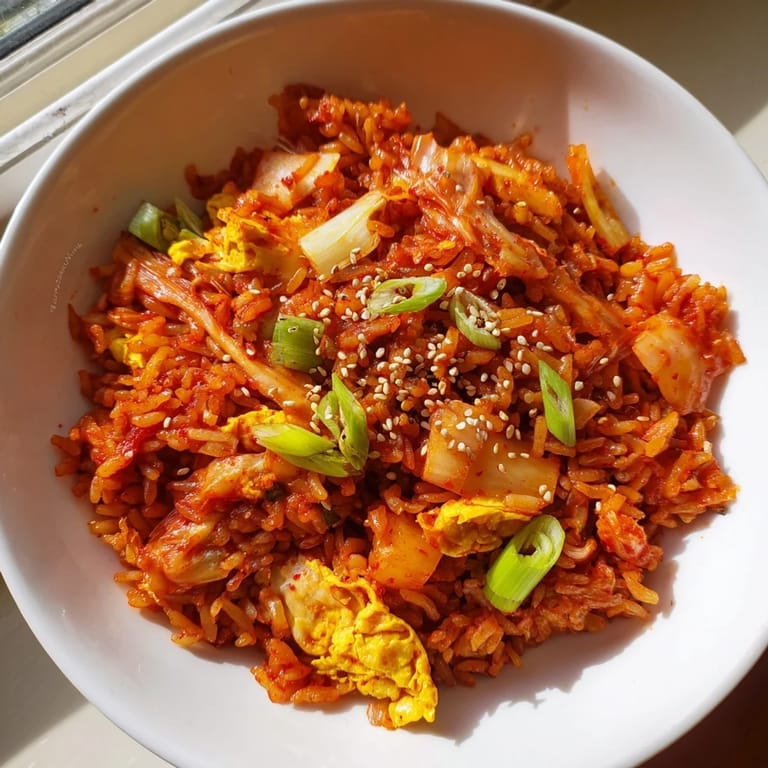 Save to Pinterest
 This dish has pulled me out of more dinner slumps than I can count, and it never feels like I'm settling for leftovers. It feels like I'm making something on purpose, something bold and alive and entirely mine.
Recipe Questions & Answers
- → Why should I use day-old rice?
Day-old rice has less moisture, which prevents the dish from becoming mushy or clumpy during stir-frying. Cold rice also separates more easily, creating individual grains rather than a dense mixture.
- → Can I adjust the spice level?
Absolutely. Reduce gochujang for milder heat or add more for extra kick. Start with 1 tbsp and taste as you cook, adjusting to your preference. Fresh red chili flakes are another option for heat.
- → What are good protein substitutes?
Cooked pork belly, Spam, tofu, shrimp, chicken, or mushrooms all work well. For vegetarian versions, use extra-firm tofu or skip protein entirely. Cook and dice any additions before stir-frying.
- → Can I make this vegan?
Yes. Omit eggs and add extra tofu or mushrooms for protein and texture. Ensure your gochujang and soy sauce are vegan-friendly, and use sesame oil instead of vegetable oil for authenticity.
- → How do I prevent sticking in the pan?
Use medium-high heat and ensure your pan or wok is properly preheated before adding oil. Stir frequently throughout cooking, especially after adding the rice. Non-stick or well-seasoned carbon steel works best.
- → What pairs well with this dish?
Serve alongside kimchi, cucumber salad, or pickled vegetables for bright contrast. Cold Korean lager, green tea, or traditional sikhye complement the bold flavors beautifully.